
Boost History Skills Now: Kid-Friendly Teaching Tips
Ready to transform your history lessons from dull to dynamic? This post is packed with kid-friendly teaching tips designed specifically for grades 2-5.
We’ll show you how to swap out your stale textbook for interactive, engaging activities that will get your students excited about the past. From story telling with pictures to being community detectives, these ideas will help you boost your students’ history skills and make every lesson engaging and effective.
Immigration
Storytelling with Pictures
Use picture books or photos to help students visualize the immigrant journey. Look for stories that show both the challenges and the triumphs of moving to a new country (see below for a link to a list of my suggestions). After reading, have students draw or write about what they imagine it would be like to leave their home and start a new life.
Create a “Push and Pull” Chart
This is a great way to introduce the vocabulary of immigration. As a class, brainstorm reasons why people might leave their home country (push factors) and reasons they might want to move to a new one (pull factors). This helps students understand the complex reasons behind migration.
Make an Immigrant Suitcase
Have each student pack a pretend suitcase with things they would bring if they had to move to a new country. This can be a simple drawing or a writing activity (or bring in a suitcase from home to make it even more impactful). Encourage them to think about what is most important to them and what they would miss from home.
Map the Journey
Use a large map to trace the journeys of immigrants, either historical or modern. You can use yarn or markers to show different routes. Students could use examples from their own family history for this. For example, a student whose father immigrated from India could use purple yarn and one whose grandparents immigrated from Vietnam could use green yarn. This helps students visualize the distances and the effort involved in migrating
Pro Tip:
Take a look at my previous blog post which highlights books that you can use to teach immigration!
Native American History
Authentic Children’s Literature
A powerful way to teach this topic is by using books written and illustrated by Native American authors. These books offer authentic perspectives on history, daily life, and culture, helping students move past old stereotypes. Look for titles like Fry Bread: A Native American Family Story or We Are Grateful: Otsaliheliga to use as a springboard for classroom discussions.
Tap into Traditions
Engage your students’ creativity by exploring the artistic traditions of different tribes, such as the symbolism in Navajo weaving or the storytelling in Plains beadwork. This is a great way to understand that art is a form of communication and history-keeping. For a hands-on activity, students can create their own personal story through drawings, much like a winter count*.
*A winter count is a historical record kept by some Native American tribes, like the Lakota and Kiowa. It’s a timeline where a single pictograph is drawn for the most important event of each year. Historically, these were painted on bison or deer hides to help a “keeper” remember and retell the tribe’s history.
Early Explorers and Colonial America
Map the Journey and Pack Your Suitcase
Get students engaged with a hands-on geography activity. Use a large wall map to trace the routes of explorers like Magellan ,Henry Hudson, or the Pilgrims on the Mayflower. As you follow their journey, dig into the challenges they faced at sea. A related activity is the “Pack Your Suitcase” lesson. Have students imagine they are a colonist preparing to sail to a new land with limited space. What would they bring? This simple exercise helps students understand scarcity and the difficult choices people had to make when leaving everything behind.
Jamestown and Plymouth: Building a Colony
When teaching about the first English colonies, turn the lesson into a creative and collaborative project. Divide students into groups to research different aspects of life in Jamestown or Plymouth, such as what settlers ate, the jobs they held, or the shelters they built. Students can then create a model of the settlement, a diorama, or a write a skit to present what they’ve learned, giving them a real sense of what it was like to build a new community.
Keep reading for more tips!

Local and Community History
Street Names and Statues: A Community Scavenger Hunt
Every community has clues about its history hidden in plain sight. Turn your students into “history detectives” by having them investigate the names of local streets, parks, or buildings. You can provide a list of names and have students use the internet or library to research who the person was and why they were important to the community. For a more hands-on activity, take a class field trip or a “virtual walking tour” of your town. Students can photograph a historical marker or a statue and then research the story behind it.
The History of Our School
Your school building itself is a living piece of local history! Students can explore the history of their own school. When was it built? What was it like back then? Was it a different type of school, or were there different grades? You can reach out to former teachers or long-time staff members to come in and be interviewed by the students. You could even look at old yearbooks or photographs from the school archives. This project helps students feel a personal connection to the place where they spend so much of their time.
Ready to Go Activities from Teachers Pay Teachers
These activities can help your students learn about immigration in a fun and meaningful way, building empathy and understanding. Remember to focus on stories of people who immigrate, connecting the past to today.
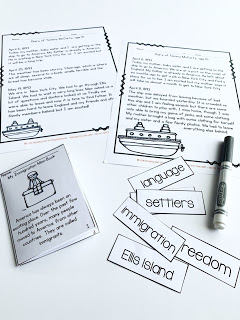
For a more comprehensive approach, check out my full Immigration Unit on Teachers Pay Teachers, which includes even more engaging lessons and resources. The unit makes it easy for you to bring the topic to life for grades 2-5. Designed with differentiation in mind, it includes a variety of engaging activities.
Key Features of the Immigration Resources
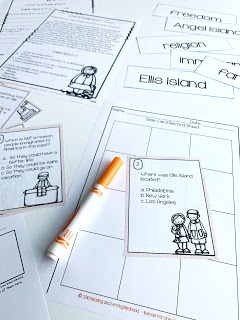
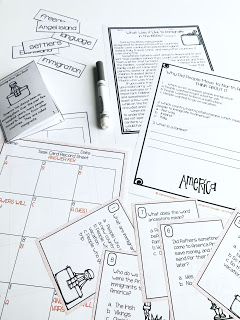
- vocabulary cards
- writing prompts
- task cards
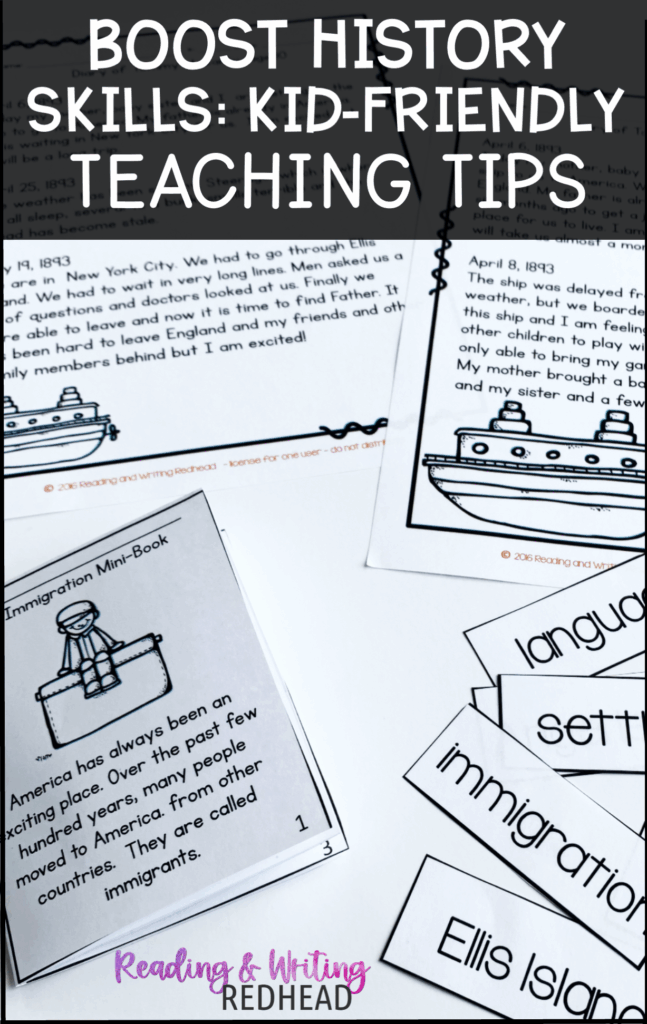
- differentiated reading passages
- think-about-it questions
- a homework project
- differentiated immigrant diary entries
- an immigrant diary assignment
- and a foldable mini book
How to Use This Resource
This resource can be easily integrated into your classroom in various ways:
- Small group instruction: Use the task cards for targeted review or bring students to the teacher table to complete the reading passages or writing activities with you
- Reading center: Place the task cards or writing assignments in a center for independent work.
- Whole class activity: Incorporate the activities
- Homework: the immigrant interview is a homework project!
Download the resource today and watch your students’ understanding of the immigrant experience in the 1800s and early 1900s soar! You can also click on the cover or any of the sneak peek images below.
There is also a digital immigration resource and a bundle of both available on TPT.
These resources have more than 100 reviews on TPT which is great if you’re like me and don’t commit to anything without reading a few reviews. So you don’t have to look them up, here are a few:
Five Star Reviews
“This resource has so much to do! My 3rd graders have been learning about immigration and the journal entry writing was a huge hit! They loved pretending to be someone traveling to Ellis Island and making up a story. I can’t wait to do more with them.”
“Thank you for the wonderful resource! This worked very well with our third grade unit on immigration and my students found the activities to be fun and engaging!”
“My students were really engaged and as a teacher I loved that they got to practice a lot of different skills!”
Other blog posts you may want to check out:
- Empower Your Students: 10 Tips to Teach Clocks and Telling Time
- 5 Ways to Boost Phonemic Awareness Now for Your Early Learners
- The Top 6 Teacher Bags You Need This School Year
- The Classroom Lifesavers: 5 ELA Resources Your Students (and You!) Will Love
- ✔️ Teacher’s Ultimate 5 Time-saving Geography Tips
If you want to save this blog post for later, pin this Pinterest ready image below!
Good luck this week and remember: you got this!