
Empower Your Students: 10 Tips to Teach Clocks and Telling Time
Let’s be honest, teaching kids telling time can be a little tricky. From figuring out which hand is which to understanding elapsed time, it’s a concept that can leave them (and you) feeling a bit stuck.
But don’t worry, you’re in the right place! I put together these tips to help make the whole process easier for you. Let’s check out 10 effective tips to empower your students so they can read clocks with confidence.
To Do Before You Even Teach about the Clock
Skip Counting
Before you start teaching telling time (since the space between each number represents five minutes), your students need to be able to count by fives. Counting by tens would also help students read analog clocks and eventually solve elapsed time problems with more ease.
Understanding Fractions
There are so many fractions associated with telling time and clocks. Think of half a hour (30 minutes), and phrases like “half past”, “quarter past”, “quarter to”. They are going to be harder to understand without knowing some basic fractions.
Judy Clocks (the yellow clocks)
A Judy Clock is a teaching tool that many teachers and parents use to help kids get a hang of telling time. It’s basically a big, sturdy model of a clock with hands you can actually move (you can see a full sized Judy Clock here).
So, what makes it so special? The best part is the exposed gears. When a child turns the big minute hand, they can physically see the little hour hand move along with it. This hands-on connection is huge because it helps them see how the two hands work together. It’s a game-changer for understanding why the hour hand slowly inches forward as the minutes pass.
Because it’s so big and durable, kids can get their hands on it and experiment and no one needs to worry about it breaking. You can use it for everything from showing “half past” to working through trickier elapsed time problems by just moving the hands forward. It’s a simple tool that makes a complicated concept click for kids in a way a flat picture or a digital clock just can’t.

Focus on the Hour Hand
If you can take the minute hand off the clock, or make a a paper plate clock with only the hour hand (secured with a brad/paper fastener) even better. Your students need to see that the hour hand doesn’t just jump from the numbers 2 to 3 for example; that it moves slowly and it’s position between numbers will depend on the minute (unless the time is exactly 2:00, 2:05, 2:10 etc.).
Don’t forget to show students that when the minute hand moves on a teaching clock like the Judy Clock, that the hour hand always moves and vice versa.
Bingo
Bingo is still a fun way to practice any skills and would be a great review for telling time and clock knowledge. Freebingogenerator.com has a clock bingo version, but you’d need to show your students the time on an analog teaching clock and have them find the matching time on their boards. I bet if you went over to Teachers Pay Teachers, you could find a free bingo game with clock faces on the cards (or an inexpensive one).
I also used to have this Trend Enterprise Bingo game, but not sure if it’s still on Amazon.
Telling Time 4 in a Row
Telling Time 4 in a Row is a fun, fast-paced game that works like bingo. Each player gets a game board filled with analog clocks. The caller draws a card with the digital time, and players cover the matching clock on their board. The first student to get four clocks in a row—horizontally, vertically, or diagonally—wins the game.
You can make your own or find free ones with an internet search or by checking TPT.
Keep reading for more tips!

Clocktopus Learning Clock
The image of this clock kind of speaks for itself, right? I mean, it has everything you need: labels, minutes, clock hands, telling time terms and more. I also love the color coding and this might even be a better tool than the Judy Clock. Check it out here.

Hands on Clock
Buuild a hands on clock! There are lots of options for what you can use… you can go to the playground with chalk, use paper plates with the clock numbers on them and have students lie down to be the hour and minute hand. Kids could use building blocks for the clock hands, a hula hoop for the clock face and simple papers or index cards with the numbers written on them.
Building these interactive clocks really help kids’ brains make the connections and solidify their understanding.
Modified Paper Plate Clocks
I first saw this idea on the blog called The Frugal Fun for Boys and Girls. Check it out here.
What is cool about these types of clocks is that they are made of 2 paper plates. On the top plate you write the clock numbers 1-12. You cut flaps into the top plate and when you flip each one up, students can see the minutes (so under the number 2, you would see 10 for 10 minutes).
This type of clock would help students understand that those digits on the clock stand for minutes too. It’s another great alternative to try if kids are stuck or need more practice.
Looking for More Telling Time Practice?
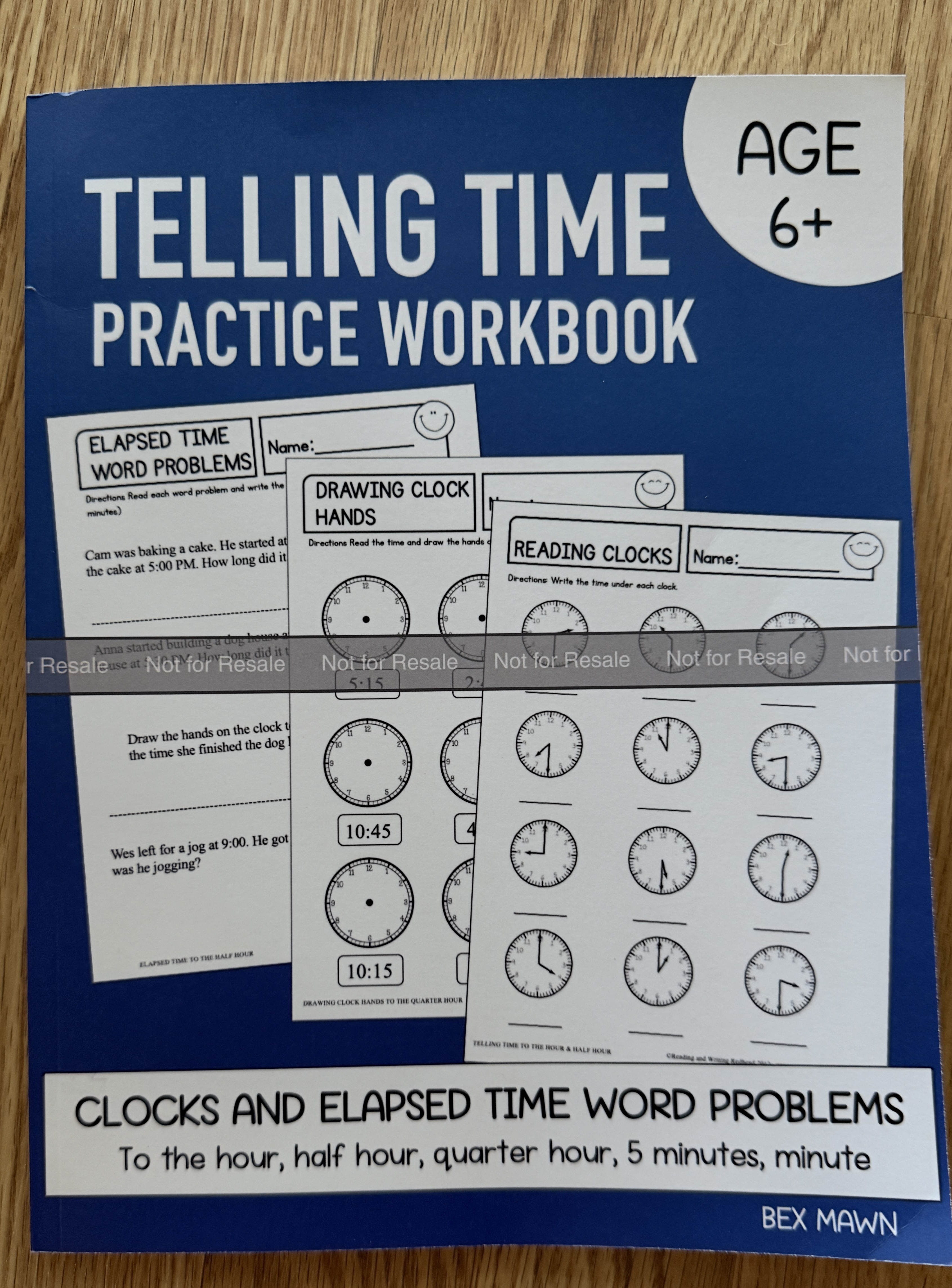
For families and teachers who want a comprehensive resource, the Telling Time Practice Workbook offers hundreds of progressively challenging problems, including sections on reading analog clocks, drawing hands, and solving elapsed time problems. It’s a great companion to help reinforce the concepts discussed in this post. And there are answer keys to make life easier for you!
Here’s the cover (yours won’t have the gray band in the middle – that’s just because it’s an author’s proof copy). There is a section at the beginning with some more teacher info and tips for you.
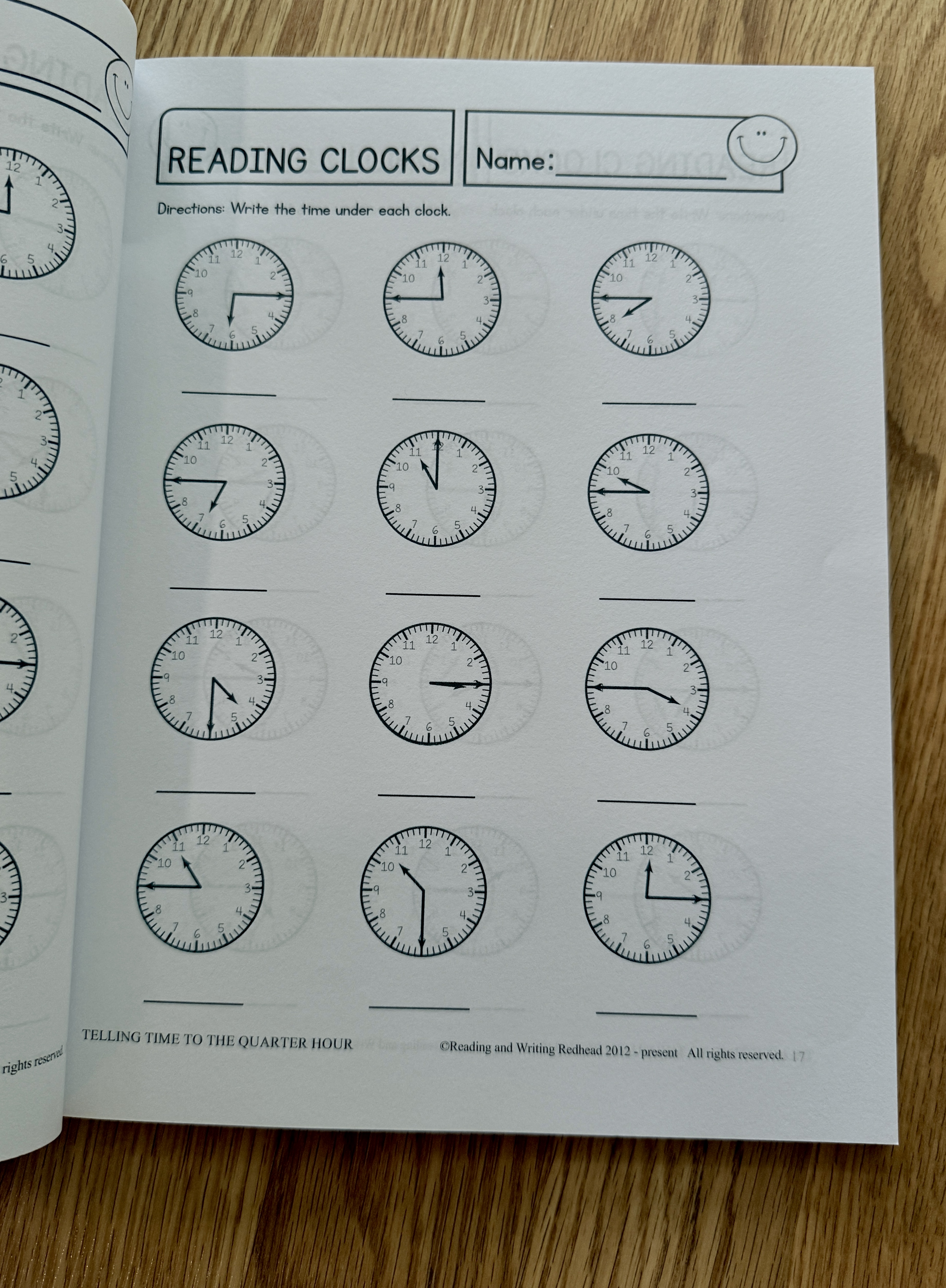
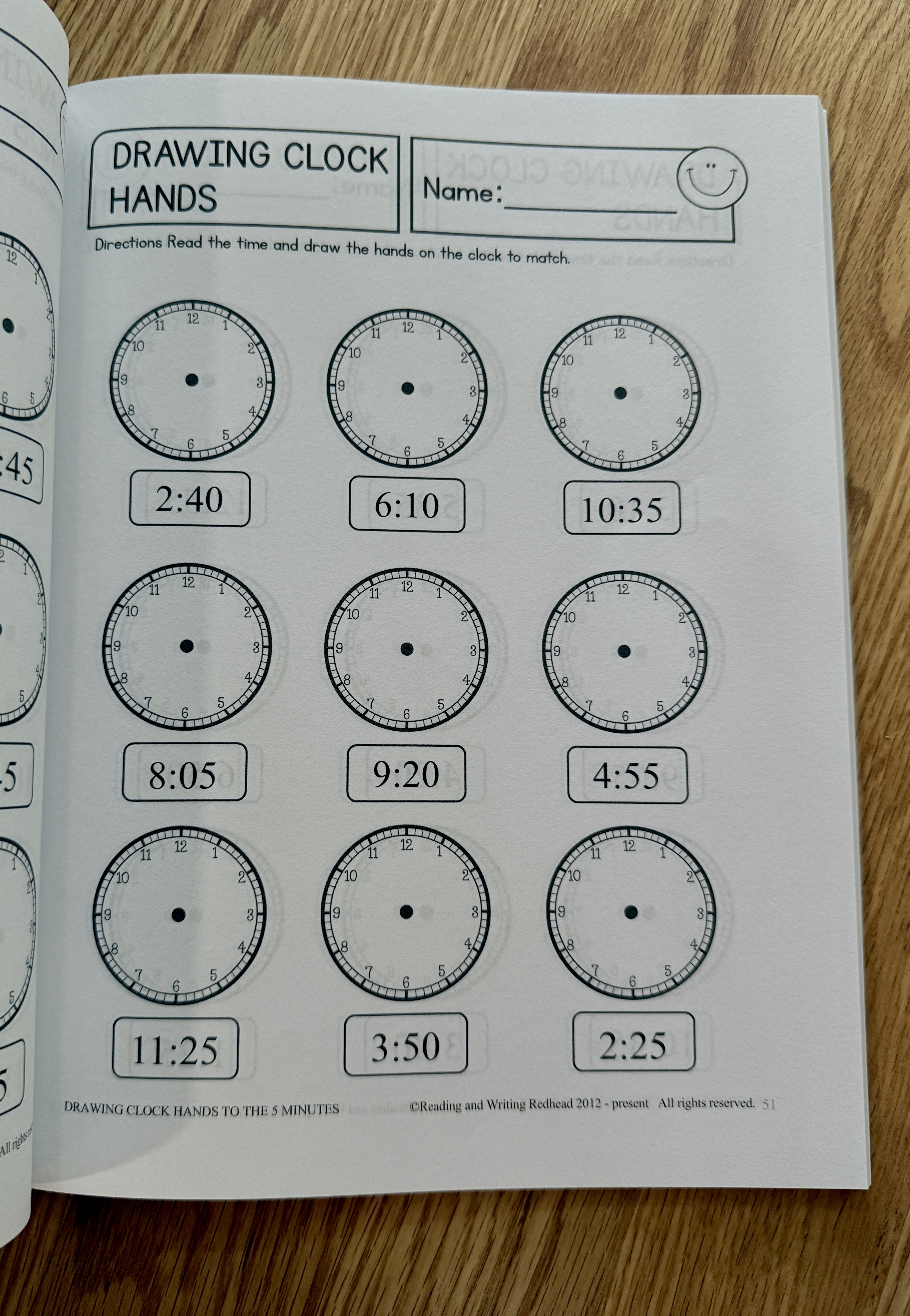
The beginning of the book starts with reading clock faces to the hour and then students will practice drawing clock hards. Each section gets progressively harder, all the way to telling time to the minute.
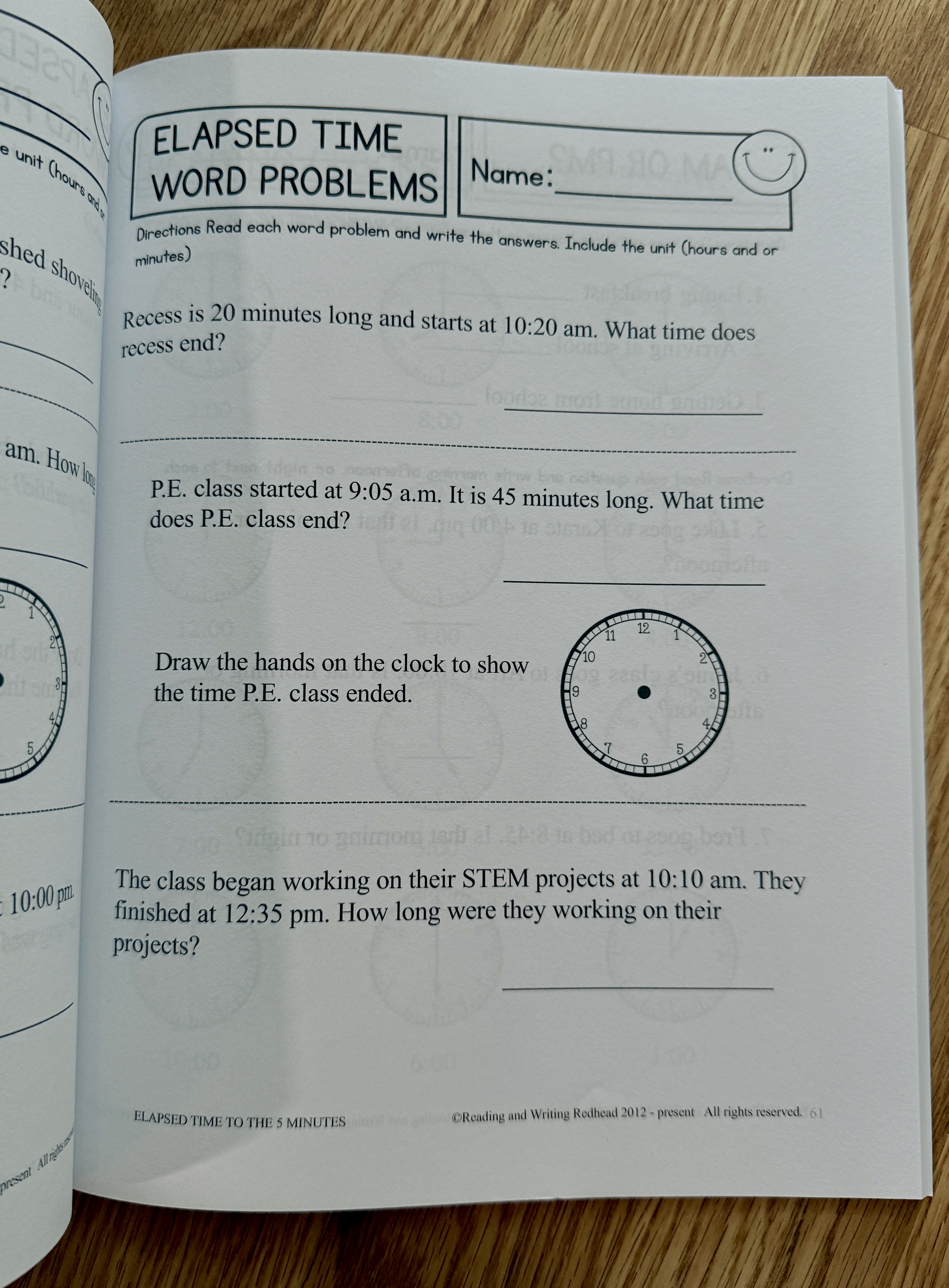
The third section is the all important elapsed time word problems. The ultimate goal is to have children be able to problem solve with time in the real world. And the end of the book is the answer key. You can have students check their own work, they could check a classmate’s work or you can use it!

Other blog posts you may want to check out:
- Making Math Approachable: The Best Ways to Teach Rounding and Estimation in Elementary Grades
- 5 Ways to Boost Math Skills with Fidget Poppers
- Making Math Practice Engaging: How to Review Key Math Skills in Second Grade
- The Classroom Lifesavers: 5 ELA Resources Your Students (and You!) Will Love
- Engaging Your Students with Interactive Notebooks (That Actually Save You Time)
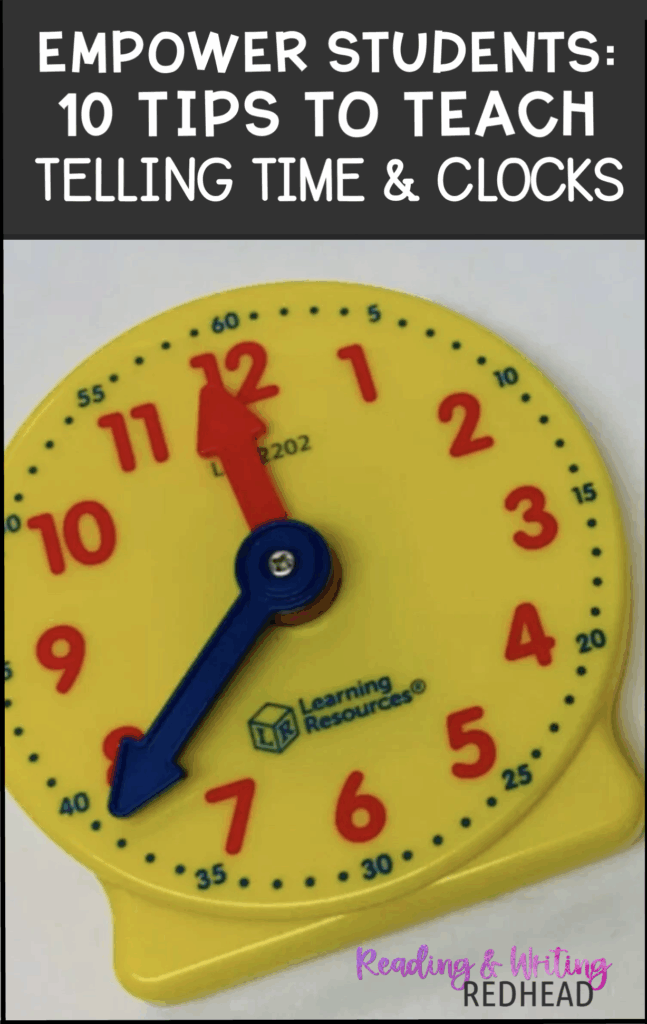
If you want to save this blog post for later, pin this Pinterest ready image below!
Let me know if you have any other fun tips for teaching clocks and telling time.