
5 Ways to Boost Phonemic Awareness Now for Your Early Learners
Phonological and phonemic awareness are the building blocks of literacy. Without a strong foundation in these skills, it can be tough for our youngest learners to develop effective reading and writing abilities.
Let’s explore the importance of teaching phonological and phonemic awareness! I also have some practical strategies for incorporating these skills into your preK, kindergarten and first grade curriculum.
Master Blending and Segmenting First (The Foundation)
The foundation to phonemic awareness skills is blending phonemes, which is hearing someone say sounds and putting them together to determine what the words are, ie. “What word is this: /c/ /a/ /p/ ?” (cap) . Segmenting is basically the opposite of blending – hearing a word and being able to say the sounds, ie. “What are the sounds in cap?” ( /c/ /a/ /p/).
Pro tip: To do this effectively, start with simple two- and three-sound words (e.g., “at,” “in,” “cat,” “dog”). You can also use your fingers to represent each sound as you say it—a simple but effective kinesthetic cue.
Focus on Isolating Sounds (Beginning, Middle, and End)
Isolating Initial sounds is identifying the first sound of a word. Isolating medial sounds is identifying the middle sound of a word and isolating final sounds is naming the final sound in a word. These are more important phonemic awareness skills to practice with your young learners.
Pro tip: You should start with initial sounds, as they are the easiest for children to hear, then move to final sounds and finally work on medial sounds. This creates a clear, sequential path for you and your students.
Practice Phoneme Discrimination and Rhyming
Let’s talk about two more phonemic and phonological awareness skills: phoneme discrimination, which is the ability to hear the similarities and the differences in phonemes (two or more), usually within words. So you could practice this by asking your class : Which word has a different beginning sound: “cat, cop, jam?”
Rhyming is a fantastic way to build sound awareness with listening skills. Provide simple rhyming examples for your students, like “Do ‘cat’ and ‘hat’ rhyme?” or “Can you think of a word that rhymes with ‘map’?” This is a classic and highly effective activity. If you don’t want to brainstorm your own prompts, keep reading for a solution you can find at Teachers Pay Teachers.
Pro tip: working on alliteration (words that start with the same sound) is another fun way to practice phoneme discrimination. “Peter Piper picked a peck of pickled peppers” is a classic example. Try sharing some of these with your class or working together to come up with your own.
Introduce Deleting and Adding Sounds (Manipulation)
Now we are moving into more advanced phonemic awareness skills – these are skills that may not come up in a phonemic awarness program until first grade, but you can definitely try them with younger students if they are ready!
Deletion of phonemes is removing one phoneme from a word completely. This can lead to a new word or a nonsense word, ie. “What is cup without /c/?” and “taking a word and adding or deleting a sound from it. Here’s an example of a task card from my Phonemic Awareness Task Cards and Lesson Plans resource that has students practice just that:
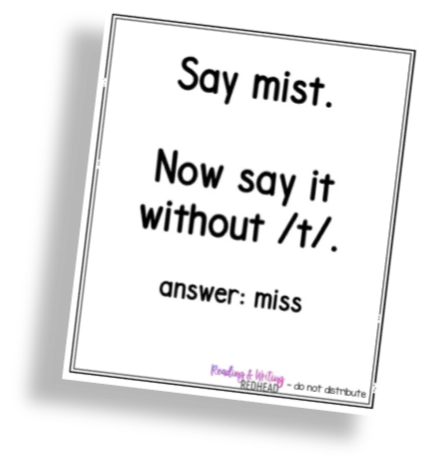
Pro tip: You can try using manipulatives (like bingo chips or pom poms) to physically remove or add a chip to represent the sound being deleted or added.
Keep reading for more tips!

Challenge Learners with Phoneme Substitution
The third way to help your students boost their phonemic awareness skills is by having them practice phoneme substitution and this should come only after practicing phoneme addition and deletion. Substitution is the most complex skill of the three because it involves several different skills in one! Students remove one phoneme and replace it with another. For example, the teacher might say “Say lot. Replace the /l/ in lot with /p/. What’s the new word?” and the student says “pot”.
This is the most complex skill—it requires the student to hold a word in their mind, delete a sound, and then add a new one. And phoneme substitution is the ultimate goal of the phonemic awareness skills that your students have built..
Putting it all together: Make it Fun
Make learning fun and active! Try these ideas to incorporate movement and hands-on activities into your phonemic and phonological awareness lessons:
- Movement and Sounds: Do a lunge or squat for each sound in a word.
- Hidden Sounds: Place small objects in plastic eggs or bags and have students identify the sounds in the word.
- I Spy Sounds: Play “I Spy” but focus on sounds instead of objects.
- Manipulative Magic: Use objects like bingo chips or pom poms to represent each sound in a word.
These activities will help students understand the structure of words and make learning more engaging.
Ready to Go Activities from Teachers Pay Teachers
Of course, it would be convenient to have ready-to-use activities and resources from Teachers Pay Teachers! This resource makes teaching phonological and phonemic awareness easy and engaging.
Check out the Phonological Awareness Bundle!
You can take a look at my new teacher led Phonemic Awareness Activities! With these teacher lesson plans and task cards, you can have everything you need at your fingertips. There are 30-36 task cards for each skill (80 pages or so of task cards) plus 20 lesson plans!
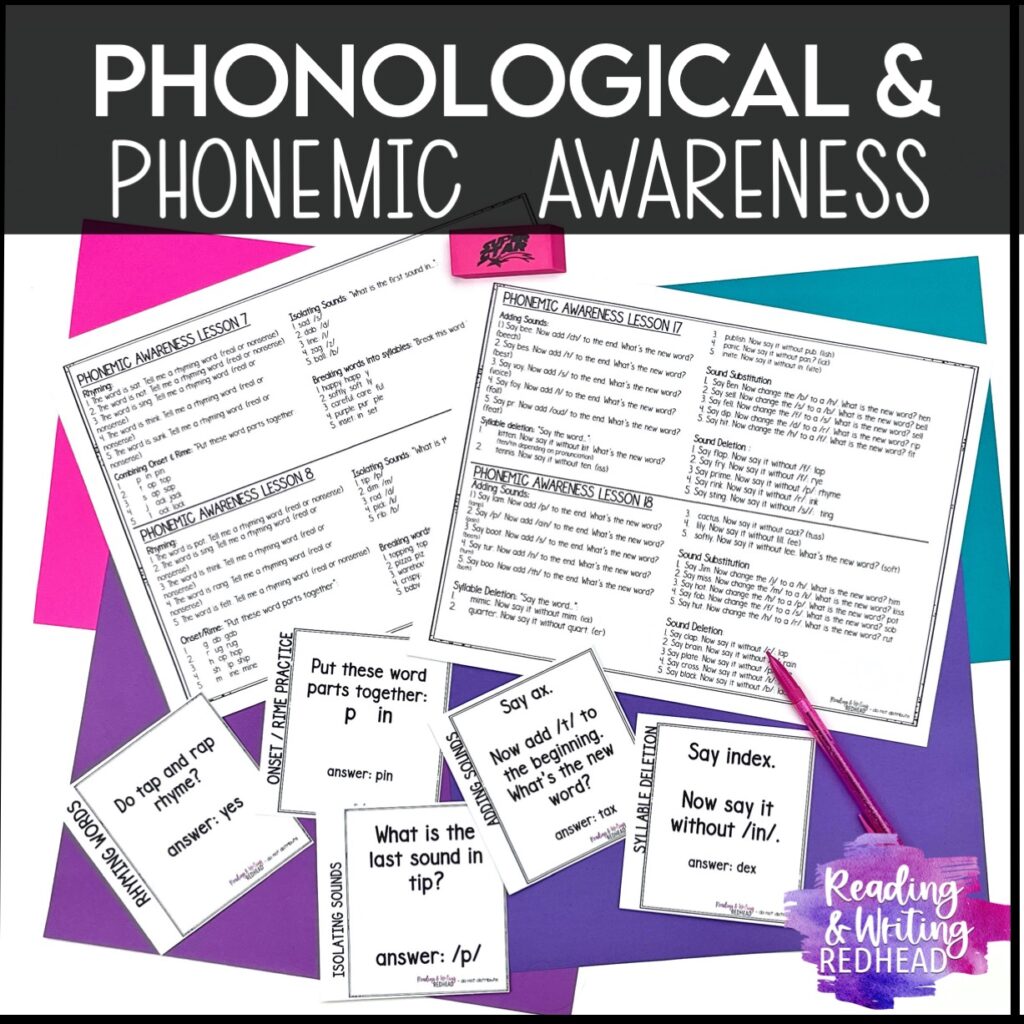
Save almost 15% by grabbing this resource, instead of paying for each of its components separately.
Covering everything from phoneme deletion to syllables, this resource offers targeted practice to support your Science of Reading instruction. With over 900 task cards and differentiated activities, you’ll have everything you need to help your students master these essential skills. Perfect for small groups or independent work. Check out some examples to see how it would help you and your students.
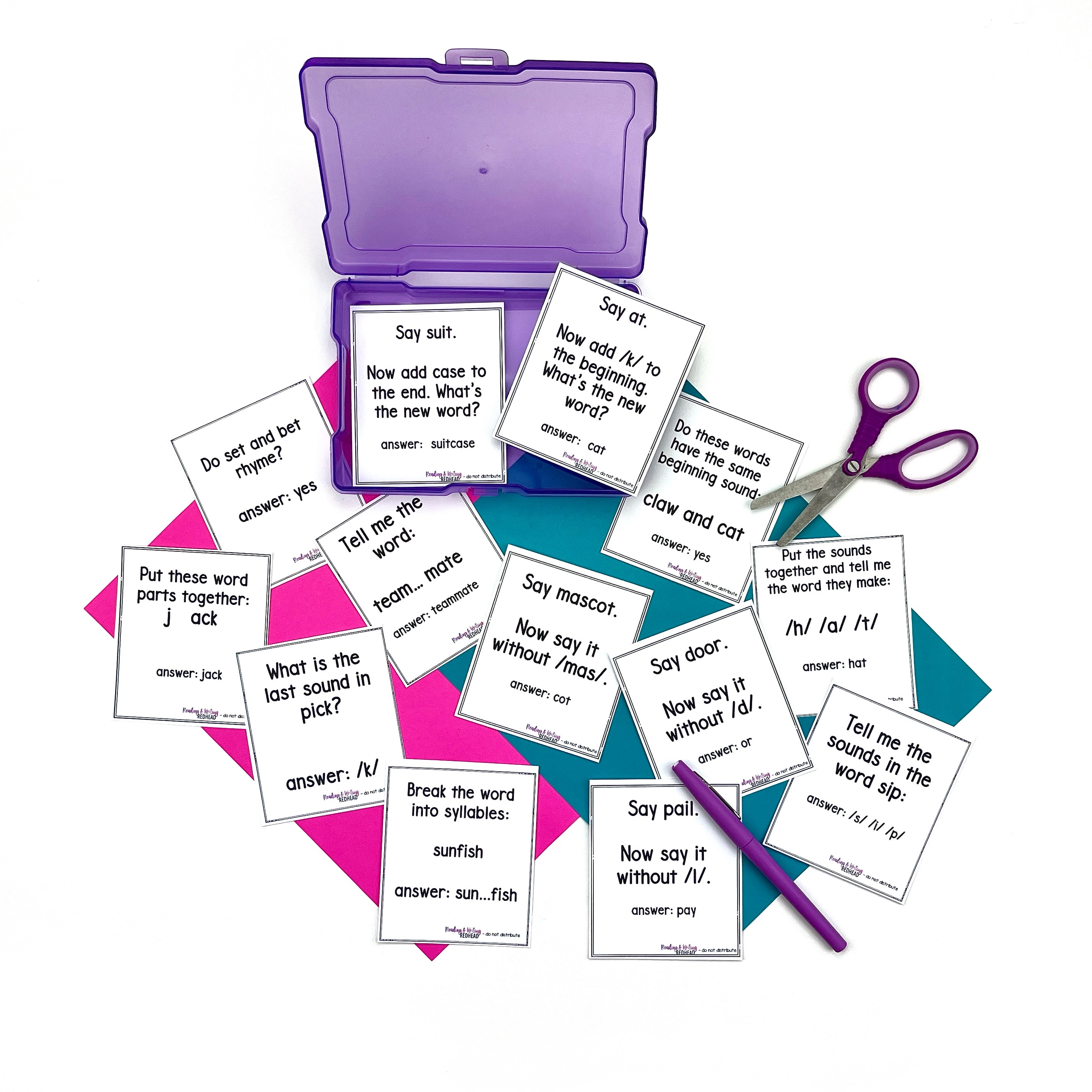
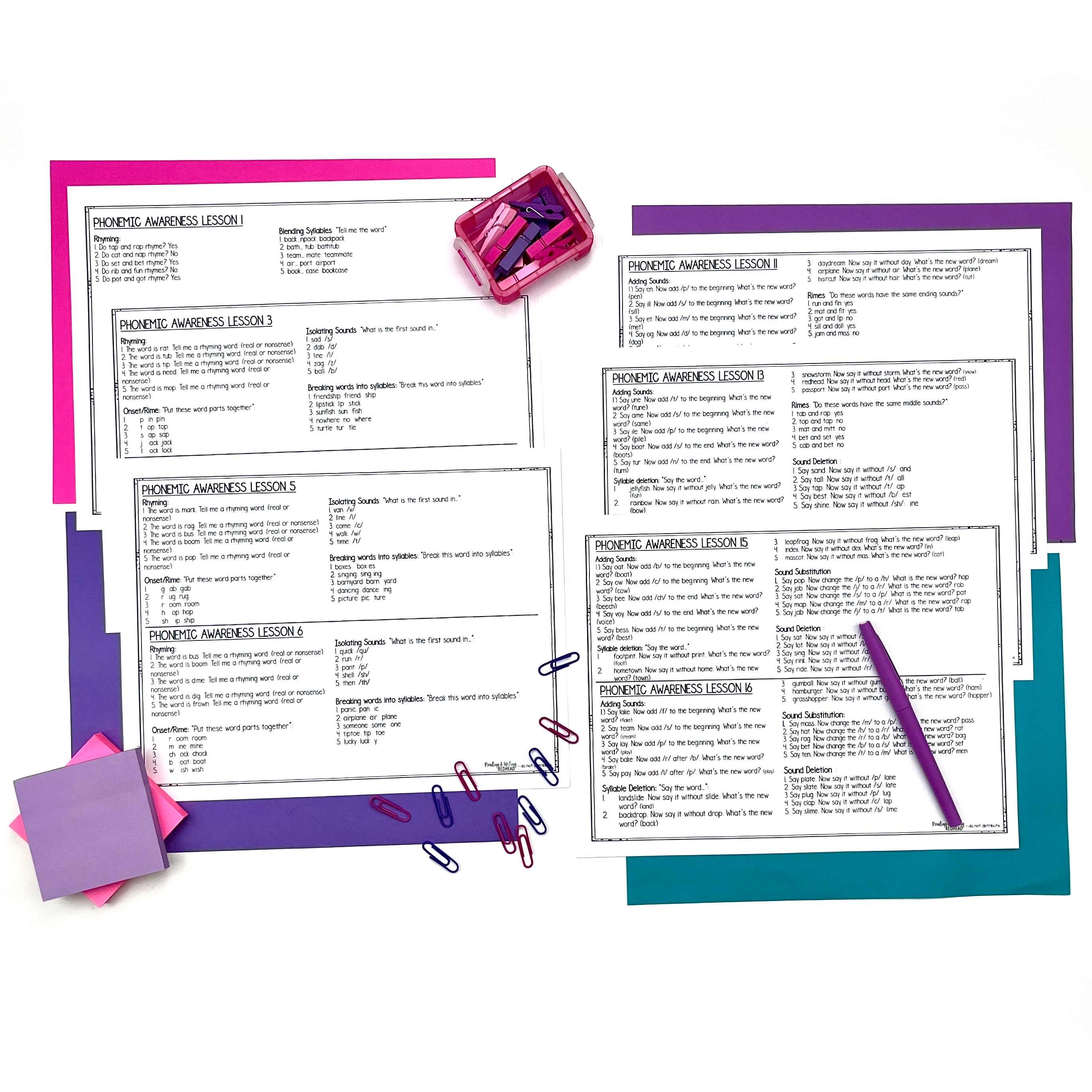
Ready to make a difference in your students’ skills? Grab that phonemic awareness task cards and lesson plans big bundle (as shown above) and watch their skills soar!
If you don’t need as many task cards but would love the 20 lesson plans and 700 (that’s still a ton, right?) teacher led phonemic awareness task cards, check out this resource:
This resource provides a complete framework for your lessons. Even though it has fewer task cards, there is plenty included to practice everything from rhyming to complex sound manipulation. Its differentiated approach makes it easy to meet the needs of all your students, whether they are just starting out or are ready for more of a challenge.

Ready to make a difference in your students’ skills? Grab this resource and watch their skills soar!
And Peek at Phonological Awareness Bingo
Phonological Awareness Bingo will engage your students in essential PA skills. With seven different bingo boards, your students will have ample opportunities to practice rhyming, syllables, phoneme deletion, and more.
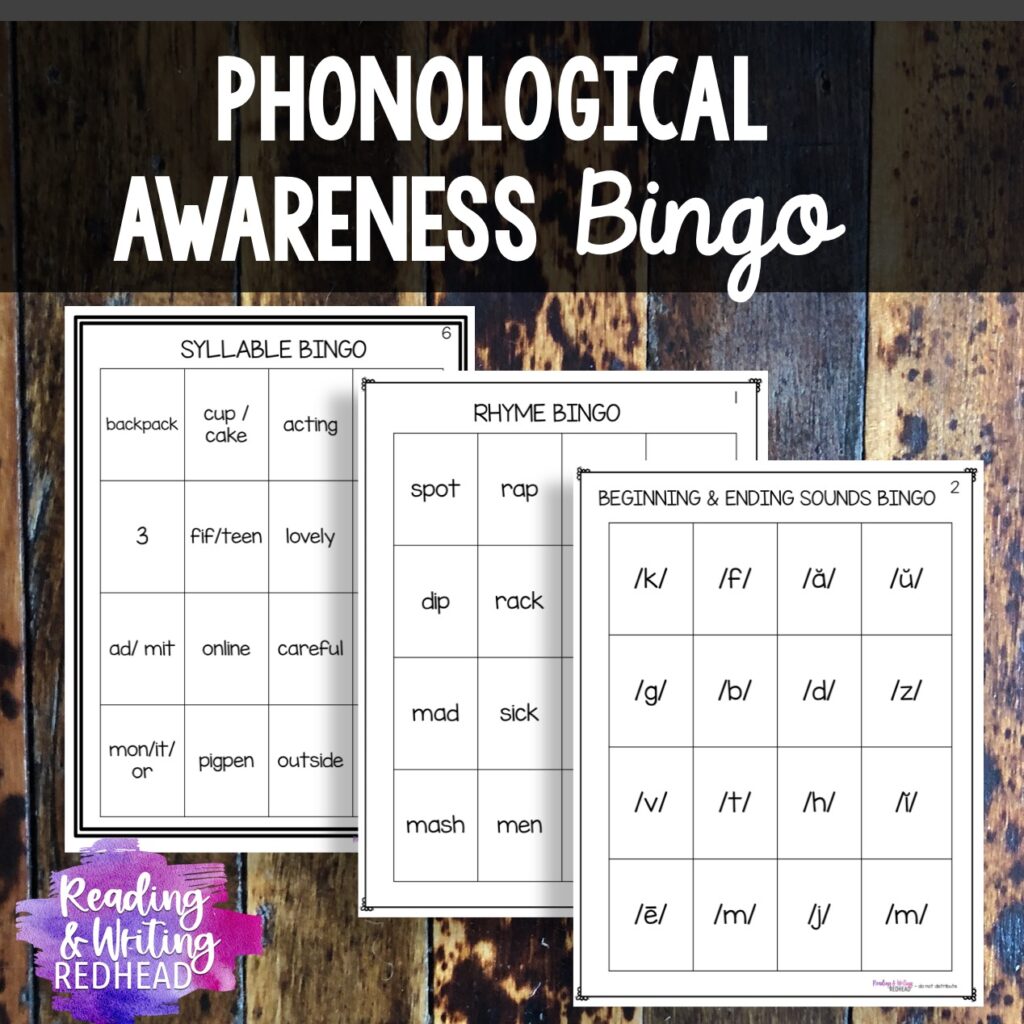
Key Benefits of This Resource
- Aligned with the Science of Reading: Provides targeted practice of essential skills.
- Engaging and Fun: Bingo games make learning exciting and interactive.
- Differentiated Instruction: Suitable for students of all levels.
- Easy to Use: Perfect for small groups, independent work, or with teacher assistants.
How to Use Phonological Awareness Bingo
This resource is simple to implement in your classroom. Simply print the bingo boards, provide markers (like bingo chips, coins, or mini erasers), and start playing! You can also use this resource as a warm-up activity, center activity, or independent practice.
Download the bingo resource today !
Other blog posts you may want to check out:
- Empower Your Students: 10 Tips to Teach Clocks and Telling Time
- The Classroom Lifesavers: 5 ELA Resources Your Students (and You!) Will Love
- Engaging Your Students with Interactive Notebooks (That Actually Save You Time)
- ✔️ Teacher’s Ultimate 5 Time-saving Geography Tips
- The 6 Teacher Bags You Need This Year
If you want to save this blog post for later, pin this Pinterest ready image below!

Let me know if you have any other fun tips for teaching phonological awareness.