Why Students Don’t Catch Their Own Writing Mistakes (And What Helps)
You can see it right? That student who can perfectly identify a capital letter on a worksheet turns in a story with lots of writing mistakes – for example, every sentence starts with a lowercase letter.
It’s easy to feel frustrated. These writing mistakes are not necessarily laziness or defiance. It is actually more often a developmental phenomenon. When children write, their entire brain is occupied by their executive function—what they want to say, how to spell the next word, (even how to form the letters if printing is a challenge) and where the story is going. There is literally no “bandwidth” left for the mechanics of punctuation.
Identifying an error in someone else’s writing (or on a worksheet) is passive skill, but applying it to their own writing is an active activity. But regardless, kids need practice with both!
Here’s a quick analogy – Asking a 7-year-old to write a story AND remember every period is like asking a new driver to navigate a complex highway while also trying to simultaneously learn how to operate the infotainment screen! Eek – am I right?
What to Do
I always used to say “check your work” but it’s not that effective. We have to build a bridge between the rules (what they learn in grammar lessons) and the application (their own writing).
This bridge is built through repeated, low-stakes exposure. They need to “see” the mistakes in controlled settings (worksheets/daily edits or exit tickets) so many times that it eventually becomes an automatic habit they can apply to their own work.
Keep reading to find out about strategies and a resource that will help!
The goal is to move from ‘I didn’t notice the mistake’ to ‘I know how to find it.’ Here are three quick strategies you can teach your students tomorrow to help them catch those missing capitals and periods before they even turn their paper in…
3 “Quick-Fix” Strategies for the Transfer Gap
The Backward Read
When students read their own writing normally, their brain “autocorrects” errors because they know what they meant to write. Try this to reduce writing mistakes:
- The Strategy: Tell students to read their sentences from the last word to the first word, or sentence-by-sentence starting from the end of the paragraph.
- Why it works: Reading backward breaks the flow of the story. It forces their brain to look at the mechanics of each individual word and sentence in isolation, making those missing periods and lowercase pop out.
The Punctuation Hunt (Color Coding)
Sometimes, young writers are so focused on the meaning of their story that they forget the “traffic lights” (punctuation).
- The Strategy: Give students a specific color (like a blue crayon or highlighter) and tell them, “I want to see a blue dot at the end of every sentence and a blue stick (capital) at the beginning.”
- Why it works: This turns an abstract grammar rule into a concrete visual task. It’s no longer “edit for punctuation”; it’s “make sure there are blue dots.” You won’t see as many writing mistakes after trying this!
The “Voice Recording” Feedback Loop
- The Strategy: Have students record themselves reading their piece out loud (not too quickly) on a tablet or a device, then listen to the playback while looking at their paper.
- Why it works: When they hear their own voice pause, they naturally recognize where the sentence ends. It bridges the gap between speaking (which they understand well) and writing (where they struggle to place the physical period). This helps them to notice their own writing mistakes.
Ready to Build that Bridge?
If you are looking for ready-to-use materials to help your students master these skills, I have put together resources specifically designed to bridge the gap between “knowing” the rules and applying them.
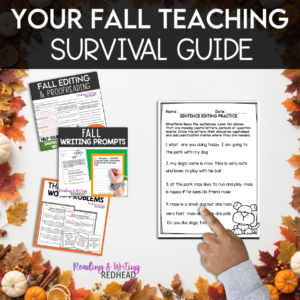
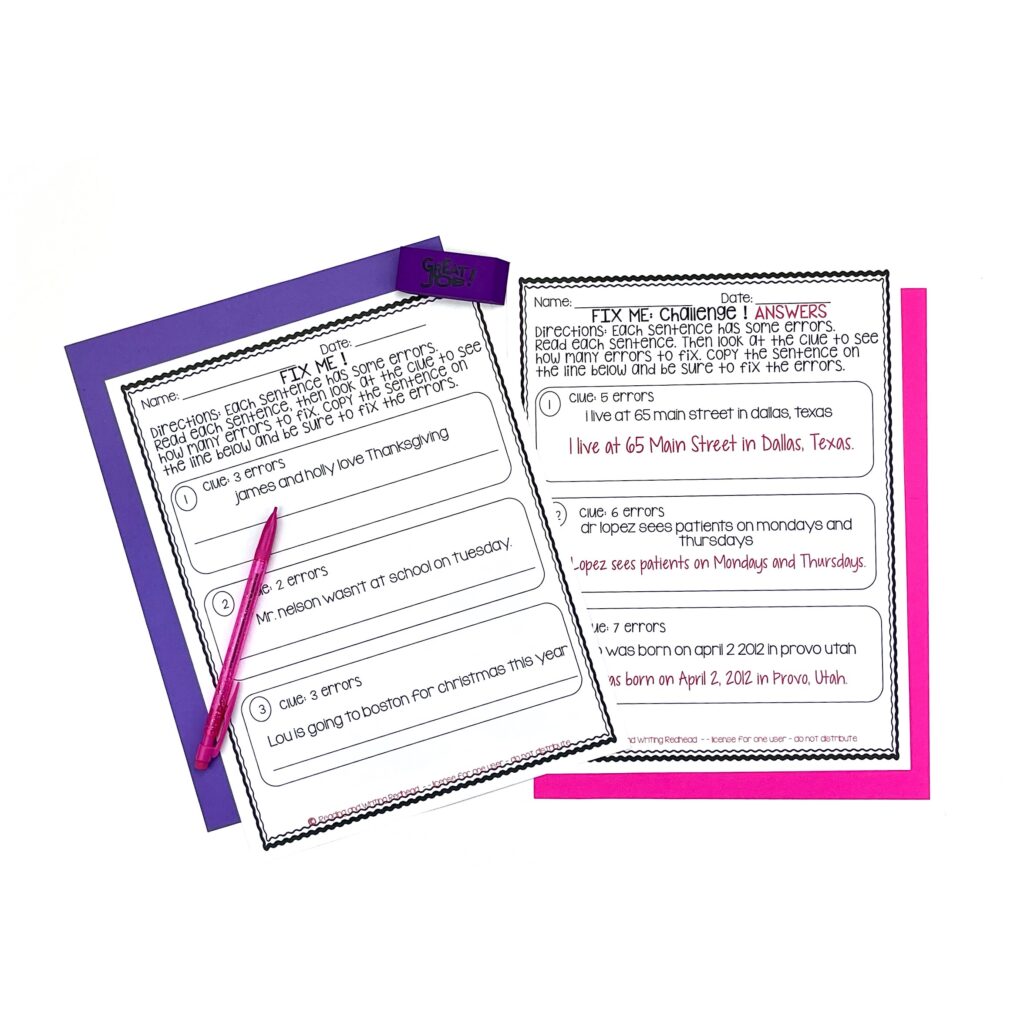
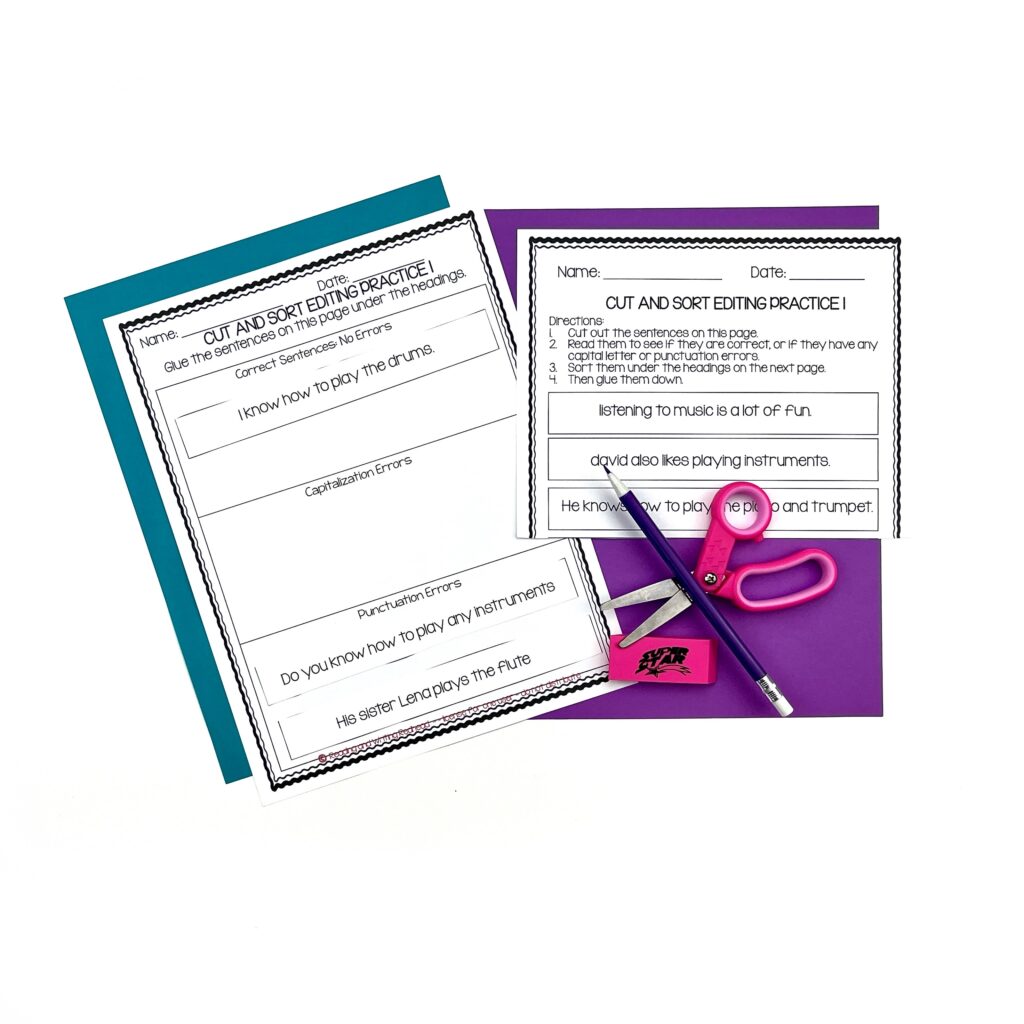
Why did do this? After teaching 2nd grade for a while, I realized my students needed a way to bridge this gap! I created the Editing and Proofreading Worksheets to serve as kind of a set of ‘training wheels.’ By isolating the error-spotting task, it takes the creative pressure off. It gives students the repetition they need to build that muscle memory, so when they return to their own writing, sticking a period at the end of a sentence feels more like second nature.
Editing and Proofreading Activities
These Editing and Proofreading activities offer focused practice to help young writers develop the habit of checking their own work.

Benefits for Teachers:
- Saves time: Answer keys are included, making them perfect for quick centers or emergency sub plans.
- Targeted support: Designed specifically for primary grade learners who need extra help with basic mechanics.
- Low prep: These are ready-to-print, meaning you spend less time planning and more time teaching.
Benefits for Students:
- Builds confidence: Students gain the repetitive practice needed to turn editing from a chore into an automatic habit.
- Differentiated learning: Includes a variety of activity types to meet the needs of all your young writers.
- Improved writing quality: Consistent practice helps students move from identifying errors on a page to correcting them in their own compositions.
Take Your Practice Even Further
If you are ready to make proofreading a consistent part of your weekly routine, this bundle is a go-to for ensuring students get enough reps to see real change in their writing.
If you find that your students need a wider variety of practice to really “lock in” those proofreading skills, you can grab this popular bundle:
Editing and Proofreading Bundle
This Editing and Proofreading Bundle gives you double the practice resources to keep your students sharp all year long.
Why you should grab this bundle:
Consistency is Key: Having a bundle on hand ensures you never run out of “fix-it” activities, allowing you to maintain consistent editing routines for the entire school year without the stress of planning.
Ultimate Value: You get two of my most popular editing resources in one money-saving set, giving you a massive library of sentence-level practice.
Other blog posts you may want to check out:
- Making Math Approachable: The Best Ways to Teach Rounding and Estimation in Elementary Grades
- Get Reluctant Students Writing Now: 10 Writing Prompts that Get Their Pencils Moving
- Transform Your Sunday Nights: Reusable Resources vs. One-Time Printables
- The Classroom Lifesavers: 5 ELA Resources Your Students (and You!) Will Love
- Engaging Your Students with Interactive Notebooks (That Actually Save You Time)
If you want to save this blog post for later, pin this Pinterest ready image below!