👉🏻 Must-have Tools For New Second and Third Grade Teachers
You know that feeling in the last week of summer when your to-do list is a mile long and you’re pretty sure you’ve forgotten at least five major things? Well, whether you’re a new second or third grade teacher (or any other elementary grade to be honest), I got you!
I’ve been there, and after teaching for 28 years, I can promise that the secret to a smooth start is having the right systems in place. Whether you’re setting up your very first room or just looking to streamline your process, there are a few absolute must-have that save teachers’ sanity every single year.
From tracking student contact info to having a solid plan for that chaotic first week, let’s talk about the must-have tools that will help you actually enjoy the beginning of the school year. Grab a coffee, and let’s get you organized!
The Organizational Foundation
Class Checklist/Checklists
This may seem small but…. all new second or third grade teachers need checklists (and actually all teachers need them too)! They could be digital, printable, editable or not- but they are invaluable. I love this simple to use and free editable checklist from Life in Primary! But look around and find one you like on TPT or just on the internet.
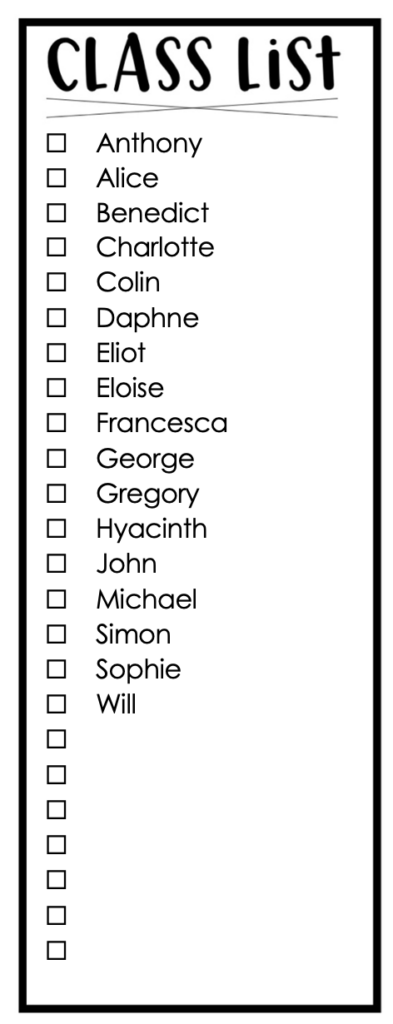
You can use checklists for everything from home reading log and center work check offs, attendance at the beginning of the year when you’re frazzled and don’t know everyone’s names, to who has had a turn for show and tell. There are infinite uses!
A Way to Organize Parent Info
As a new second or third grade teacher, you get a lot of information on your students’ parents/guardians. Your school may have a website that has important info for each child (parent/guardian names, their phone number, e-mails, any medical needs) like Aspen. If so, start there.
But if you’re like me, you also might want to make your own spreadsheets so the information is all in one place and you don’t have to click around and find each students’ name in a database. I like to have all of the kids’ names down the left side of page, a column with each parent/ guardian names, their email address, best phone number, notes (could be custody notes like “M-W Dad, Th-Fr Mom”) language spoken at home, and anything else you can think of (such as “permission for child to be on my teacher IG page” or which language to send email/printed communication in).
Labels
With young students, you need to help get them organized. Labels need to go on just about everything! You can use Avery sticky labels or just print out labels on paper and tape them on. I like the 1″x3″ Avery Labels here because they’re a little bigger than the address labels.
Or you might prefer sticky labels with color borders like these from Amazon. They can be used as name tags on the first day of school and to label coat hooks, devices, folders and binders.
And TPT has tons of labels like these editable ones from Creative Sisters Studios. Take a look!
A Sub Binder or Sub Plans
Ask your mentor teacher or admin what the requirement is for your school. Most places require either sub plans and materials be located in an easy to find sub binder like this one at TPT or for digital sub plans to be uploaded to Google.
And don’t snooze too long on this – I know back to school is overwhelming but you never know – during the first week or two of school you might get injured, sick or have a family emergency.
The Information Hub
Copies of Student IEPS
Yes, as a new second or third grade teacher at your school, hopefully a special education teacher will find you and either hand you a hard copy of your students’ IEPS or send you access via email or a portal. But they may not! I had years where I didn’t see the IEPS until after school had started and then I had to find someone and ask for it. So stay on top of it and if you’re in before the first day of school and haven’t seen IEPs, find out where/when you can get copies.
A “Password Keeper” Tracker
At this age, students start using more digital platforms. If you’re a new second or third grade teacher you might not realize how many kids will not be able to remember their logins. You and your students really need a simple and secure system to track student logins for platforms like IXL or your district reading programs. It will be a life-saver. There are lots of options out there on Google or TPT, including some free options. I like this one from Flair in Fifth on TPT (and it’s free), or make your own!
Transportation and After School Activities Logs
Whether you’re a new second or third grade teacher, you’ve been teaching many years, or you teach K, first grade, fourth or fifth grade, the end of the day is super hectic and keeping track of how all students get home every day if important so you don’t put someone on the bus that should be staying after school.
Get your hands on or make a quick-reference chart for transportation methods (who takes the bus vs. pick-up) and after-school clubs. I’d recommend also having a laminated version to hang up by the classroom door so kids can check their schedule themselves.
Again, many options are available online if you don’t want to make your own. I am a sucker for good design though, and like this “How Do We Get Home? Transportation Visual from Early Learning Intervention Station on TPT (another freebie).
Student Getting to Know You Survey
A simple one-pager for students to fill out (hobbies, favorite subjects, “what I want my teacher to know”) is invaluable for building early relationships. You don’t want to give one with too much language – consider EL students or students who struggle with reading. This is a good option from TPT. You can also do this as a whole class activity and either read it to students or have kids volunteer to reach each item out loud.
Pro tip: You could use some of the questions as a community building activity later such as 4 Corners. For example for favorite colors: “If your favorite color is red, go to the north corner, blue, go to the east corner , green, to the south corner, and other colors go to the west corner”. Then, from day one, students will already know some classmates who share their interests or favorites.
Keep reading for more back to school must-haves for new second or third grade teachers!
Setting the Environment
A Seating Plan
This is another great thing to ask your mentor teacher about. There are tons of options out there and they might be able to give you some good guidance. You can also look for ideas on TPT such as this one which I think has nine different seating plan options for you to consider (and is editable) from the store Bright Eyed and Organized.
Desk Name Plates/Desktop Helper
Compared to when I started teaching, there now seem to be infinite options. For new second or third grade teachers and your students, I narrowed it down to five options. You can also go wild and find themed options, from boho or cactus, to superhero and many more. Here are some great ones that I tracked down:
- Traditional, high quality, includes 120 grid, shapes and colors: this one from Really Good Stuff
- Traditional, great for 3rd grade, includes multiplication table, visual fractions and more: this one, found on Amazon (but made by Really Good Stuff, which means it’s also high quality)
- Chalkboard theme, multiplication table, visual bar fractions: This one at Amazon
- For 2nd grade, this one is highly rated, not returned often, has a 100 chart, shapes, colors and a ruler: grab it here
- If you’d like something a little different, check out the Desktop Name Plates/Helpers from The Template Teacher on TPT. This one has a 2nd grade word wall, that is right on top of the name tag, and she also has differentiated word wall options, editable desktop helpers, a 1st grade version and more. Here’s the one I like. You will need to print it out yourself on 11×17 paper.
Visual Schedule Cards:
Second and third graders are getting more independent, but a visual reminder of the day’s flow on the whiteboard or in a mini pocket chart helps minimize the constant “what’s next?” questions. Here are a few options:
- This visual schedule pocket chart has write on/wipe off times too. And if you have a schedule with times, believe me, several of your students will track the time, and never let you be late for lunch, recess etc.!
- Here is a simple, clear, black and white visual schedule option that is designed to help support neurodiverse students. The clean design will not overwhelm students.
- I am pretty sure I used this set at one point -it’s colorful, clear, and simple and can be found on TPT.
The “First Week” Survival Kit
A Plan for the First Few Days of School
As a new second or third grade teacher, you also need a plan for the few couple days While you’re planning your first week, don’t feel like you have to reinvent the wheel for every transition or activity.
I developed classroom-tested packets for 2nd Grade and 3rd Grade that include everything from scavenger hunts to writing prompts. Using a pre-made resource for those first few days allows you to step back, observe your students’ dynamics, and actually enjoy the energy of the new school year. Also, I did design one for the first week of 1st grade if you first grade teachers are reading this!
Here’s an example of a community-building activity included in both resources.
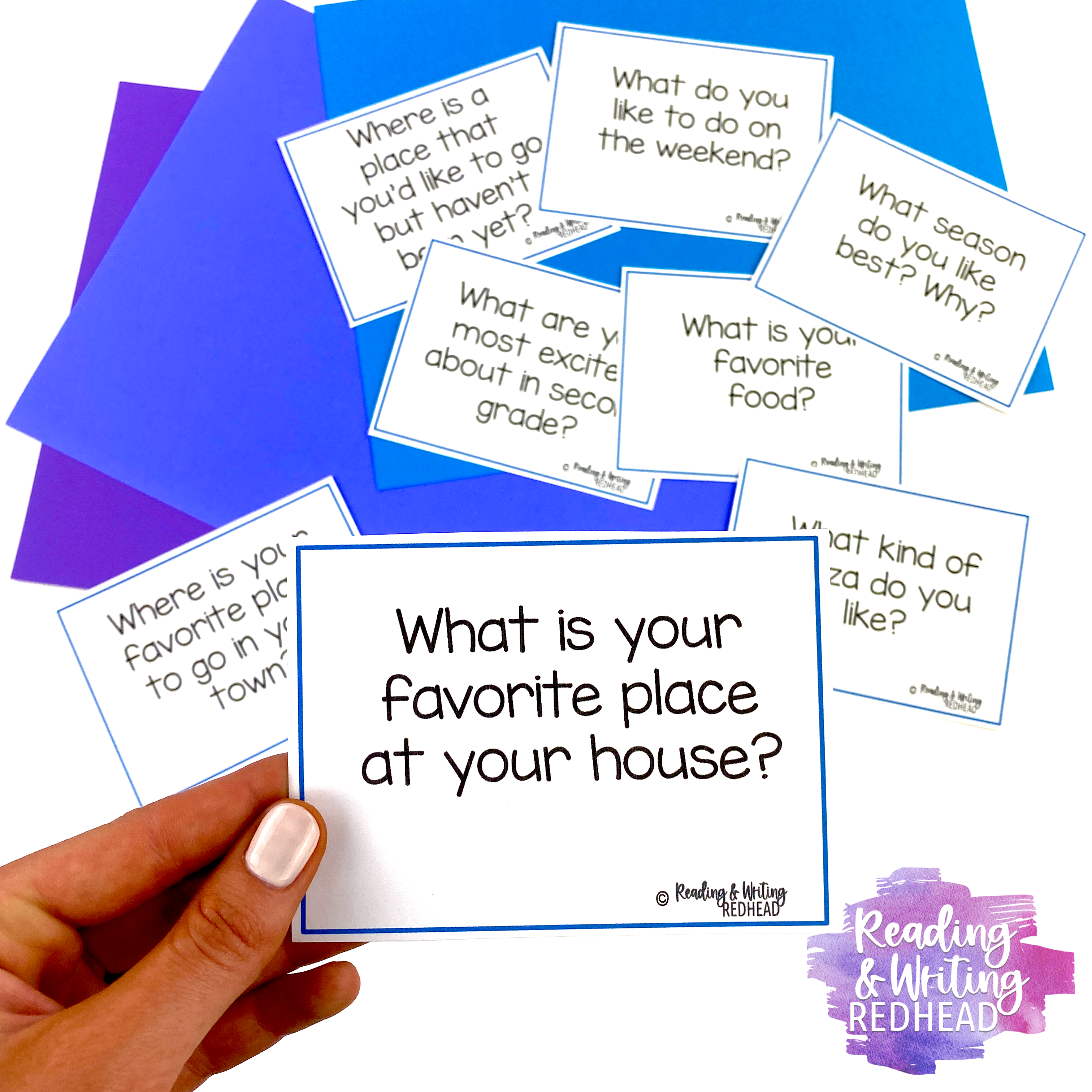
Benefits for Teachers
- Reduces First-Week Anxiety: You don’t have to scramble for content or wonder if your activities are grade-appropriate; these materials are ready-to-go and student-tested.
- Promotes Classroom Management: By keeping students engaged with activities like scavenger hunts and writing prompts, you free yourself up to handle back-to-school situations like collecting forms or adjusting seating.
- Seamless Transitions: The resources include a variety of activities that help you transition smoothly between subjects, preventing that “dead air” where students might get restless.
- Time-Saving Prep: Instead of spending your August evenings scouring Pinterest, you can simply print (or digitize) and go.
Here’s a example of a writing prompt from the second grade resource. It also includes options without sentence starters and with standard width handwriting lines. A similar prompt is in the first and third grade kits too!
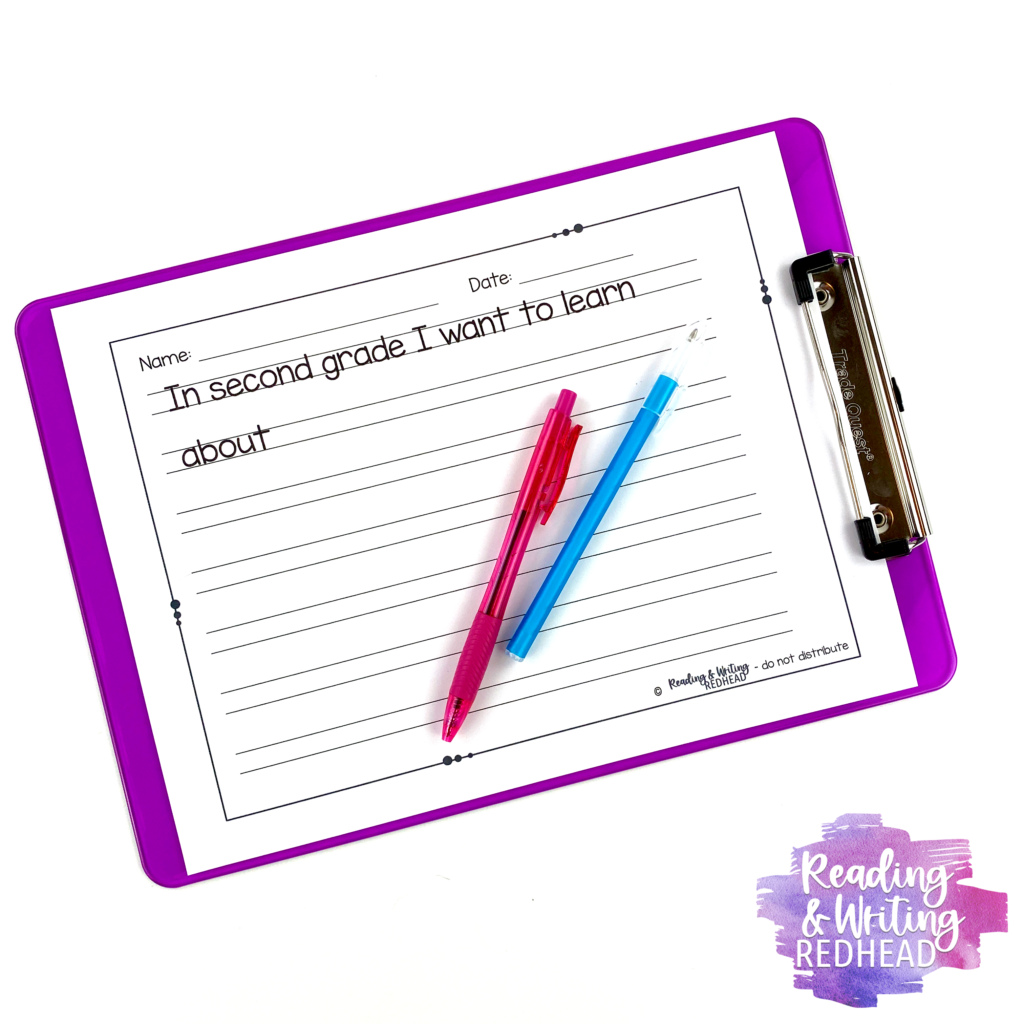
Benefits for Students
- Provides Clarity and Comfort: Knowing there’s a plan for their first week helps reduce the “back to school jitters” for even the most nervous students.
- Builds Instant Confidence: Activities like the scavenger hunt are designed to be low-pressure and high-engagement, helping students feel successful from day one.
- Fosters Peer Connections: Through interactive games and group writing tasks, students get to know their new classmates in a way that feels like fun, not “work.”
- Eases the Transition Back to School: Moving into a new grade is a big jump; these activities provide a comfortable, welcoming environment that helps students settle into the classroom routine.
- Encourages Active Learning: Instead of just listening to rules, students are moving, exploring, and actively participating.
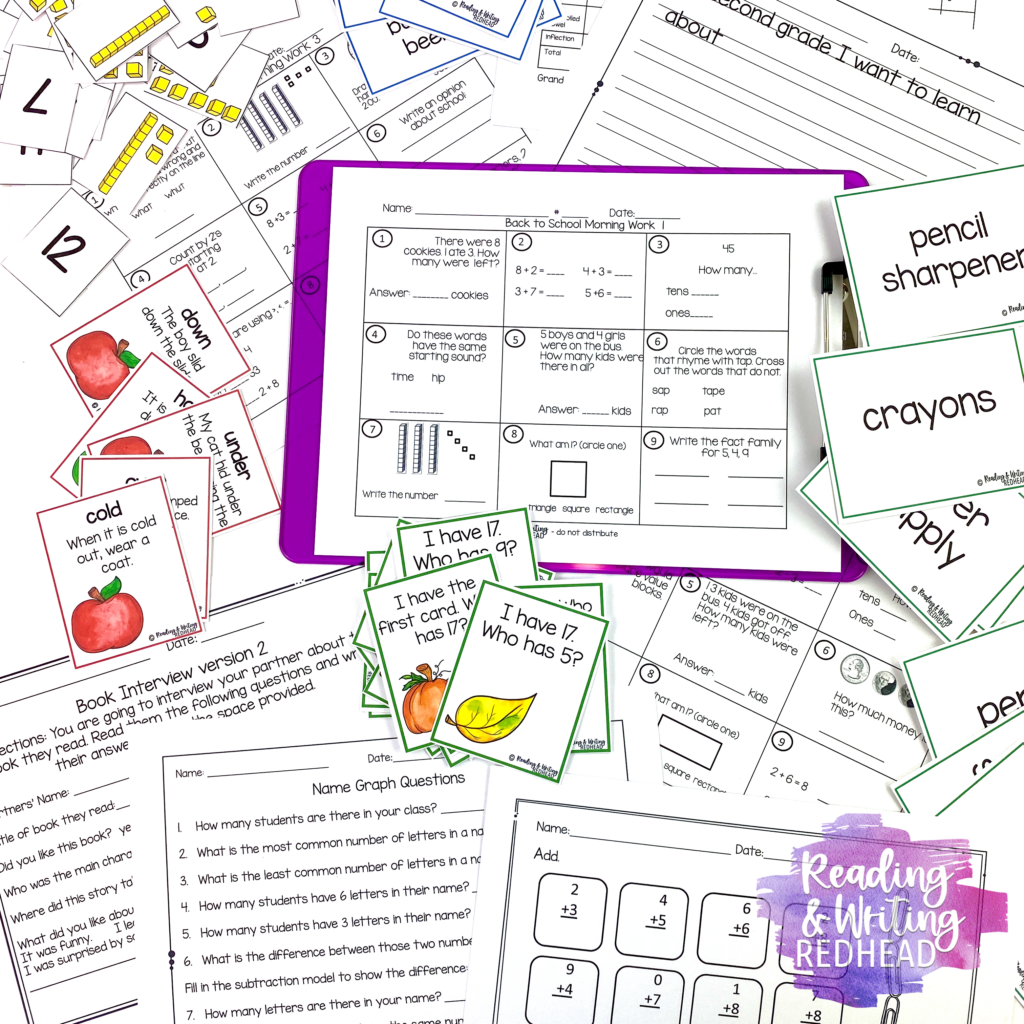
Ready to cross ‘plan the first week’ off your list? You can grab my 2nd Grade First-Week-of-School Activities here or the 3rd Grade Back to School Kit here and reclaim your summer evenings.
Looking for the 1st Grade First Week of School Resources? Check it out here!
Other blog posts you may want to check out:
- 5 Minute Magic: Building Phonemic Awareness
- 6 Ways to Use Riddles to Enhance your Teaching
- Transform Your Sunday Nights: Reusable Resources vs. One-Time Printables
- Boost History Skills: Kid-Friendly Teaching Tips
Hey new second or third grade teachers (or anyone), if you want to save this for later, pin this image!