Closing the Gap: 10 Phonemic Awareness Skills That Lead to Reading Success
Teachers, we all know that moment when a student suddenly “cracks the code” and reading starts to click, but getting them there requires consistent, targeted daily practice.
However, as busy teachers, finding the time to learn about and plan engaging phonemic awareness skills practice that evolves with our students is often the biggest hurdle in our daily routine.
In this post, I’ll break down 10 core skills that truly drive reading success, and I’m sharing how you can turn these daily “sound play” sessions into a stress-free, grab-and-go part of your morning.
Phonemic Awareness Skills
Rhyming:
Can they tell if mat and hat rhyme? This type of ‘listening’ warm-up helps get students them tuned into sound patterns. Also, can students produce a rhyme for a word you give? Could they give a real or nonsense word rhyme for turn? For candy?
Alliteration:
A child that understands alliteration notices that the two words in buzzy bee start with the same sound. It’s like a scavenger hunt for sounds
Sentence Segmentation:
This is basically being able to count words in a sentence – for example, ‘I like school’ is three distinct words. It’s the first step in realizing that speech is made of units.
Syllable Blending/Segmenting:
Segmenting is breaking down words into ‘chunks.’ If they can clap out sun-shine, they are halfway to hearing individual phonemes. Blending is combining syllables to say a word like “han-dle is handle”. I find blending is easier to master for very early readers such kindergarteners.
Onset/Rime:
When we talk about onset ad rime, onset is the ‘head’ of the word and rime is the ‘body.’ Think: /c/ (onset) + /at/ (rime).
Phoneme Isolation:
Can your students hear that /m/ is the very first sound in mop? It’s the ‘sound detective’ work that makes later blending of sounds to read words possible.
Phoneme Blending:
This is basically where I want all kindergarteners to be by the end of the year. It’s kind a phonemic awareness ‘Superpower.’ For example, can students take /c/-/a/-/p/ and read cap? This is where the magic of reading begins.
Phoneme Segmenting:
This is the flip side-taking ‘cap’ and hearing /c/, /a/, /p/. It’s essential for spelling.
Phoneme Deletion:
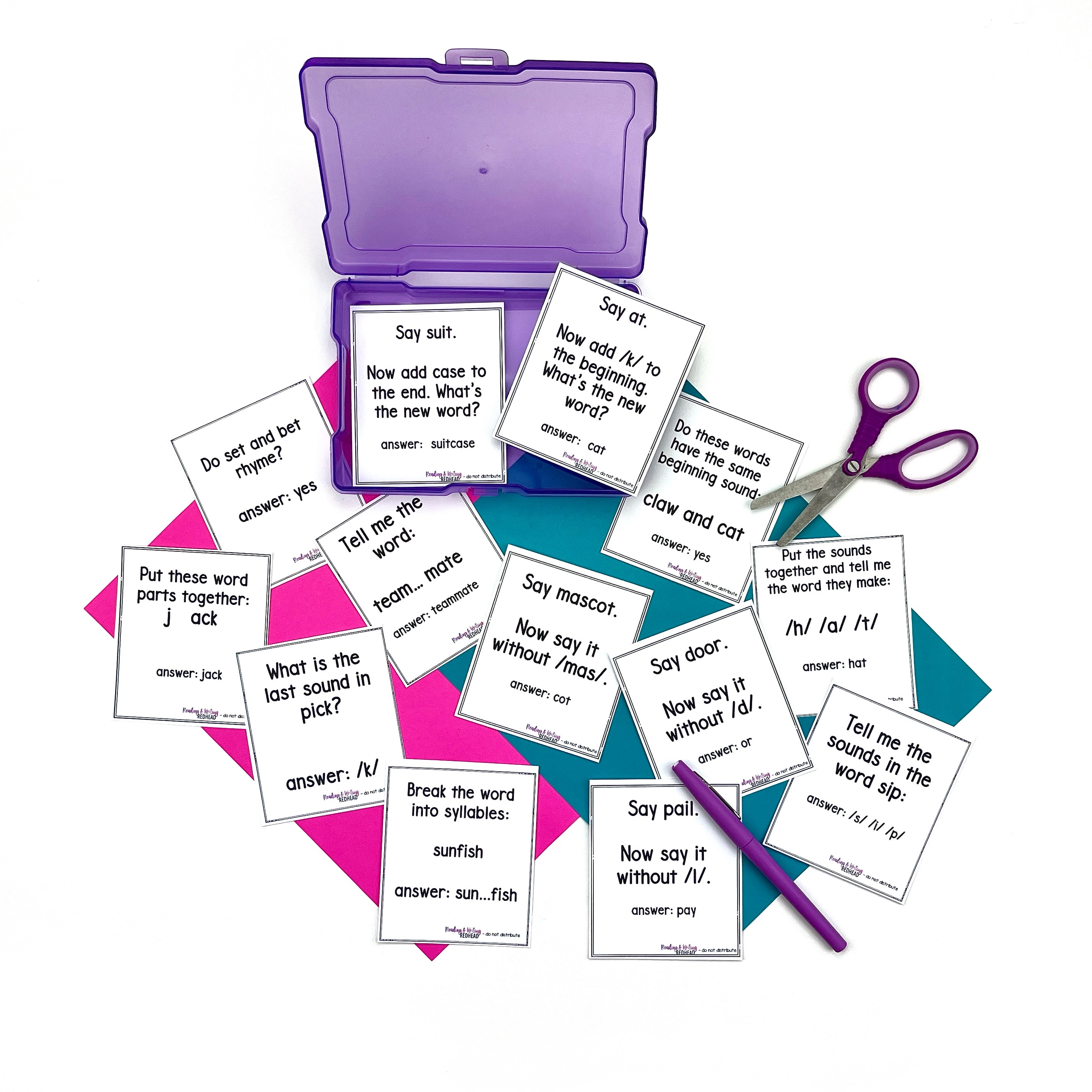
Sometimes I call it the ‘Magician’ skill. Here’s an example: “Say stop without the /s/”. (top) It forces students to really pay attention to every single sound unit.
Phoneme Substitution:
The is the most advanced level. Here’s an example: “Change the /t/ in mat to /p/. Say the new word (map)”. It’s the ultimate flexibility test for their brains. Students might not master this skill until the end of first grade or even second grade, which is totally fine. Wait to put this into your daily phonemics awareness until at least the second half of first grade (or a little later).
Keep reading for more help with phonemic awareness skills!
PAST (Phonemic Awareness Skills Test)
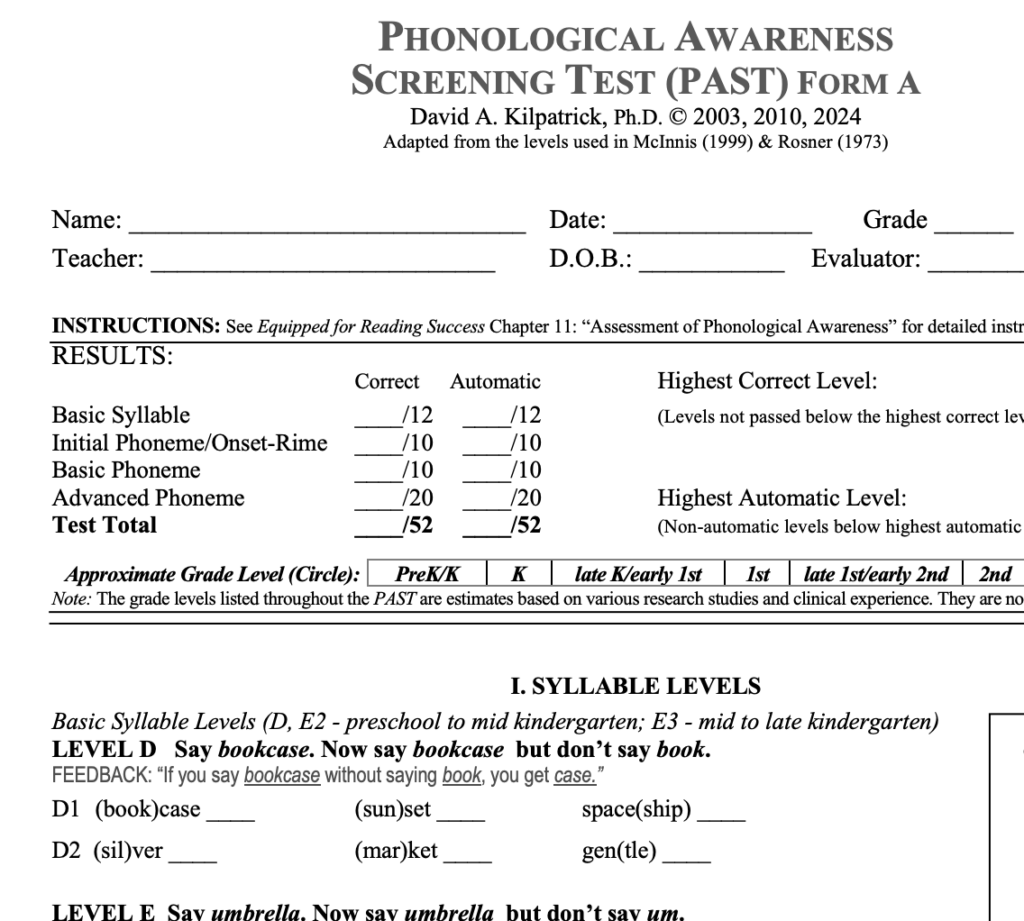
As a reading specialist, I work with students who have difficulty learning to read. Sometimes I want to rule out a difficulty with their phonemic awareness skills – especially when bringing a student to the Student Success Team at our school. So, I complete the PAST with at least 4-5 students a year. It is from David Kilpatrick and you can download it for free here. Below is a little sample from form A.
There are also teacher directions and other details at the link. I find it super helpful. It has to be done one on one with a student though, so if you’re a classroom teacher, you can not do it with your whole class. But you could grab one student to try the phonemic awareness skills test with or ask your ESP to help. The directions are that straightforward!
Why Teaching Phonemic Awareness Skills Might Seem Overwhelming Right Now
“I’m Not a Trained Speech Pathologist”: You worry you aren’t pronouncing sounds correctly or don’t know the proper sequence.
The Planning Black Hole: You might already know you should do 5–10 minutes of PA daily, but finding the right level, the best skills to practice, and even just examples of what to do
A Solution
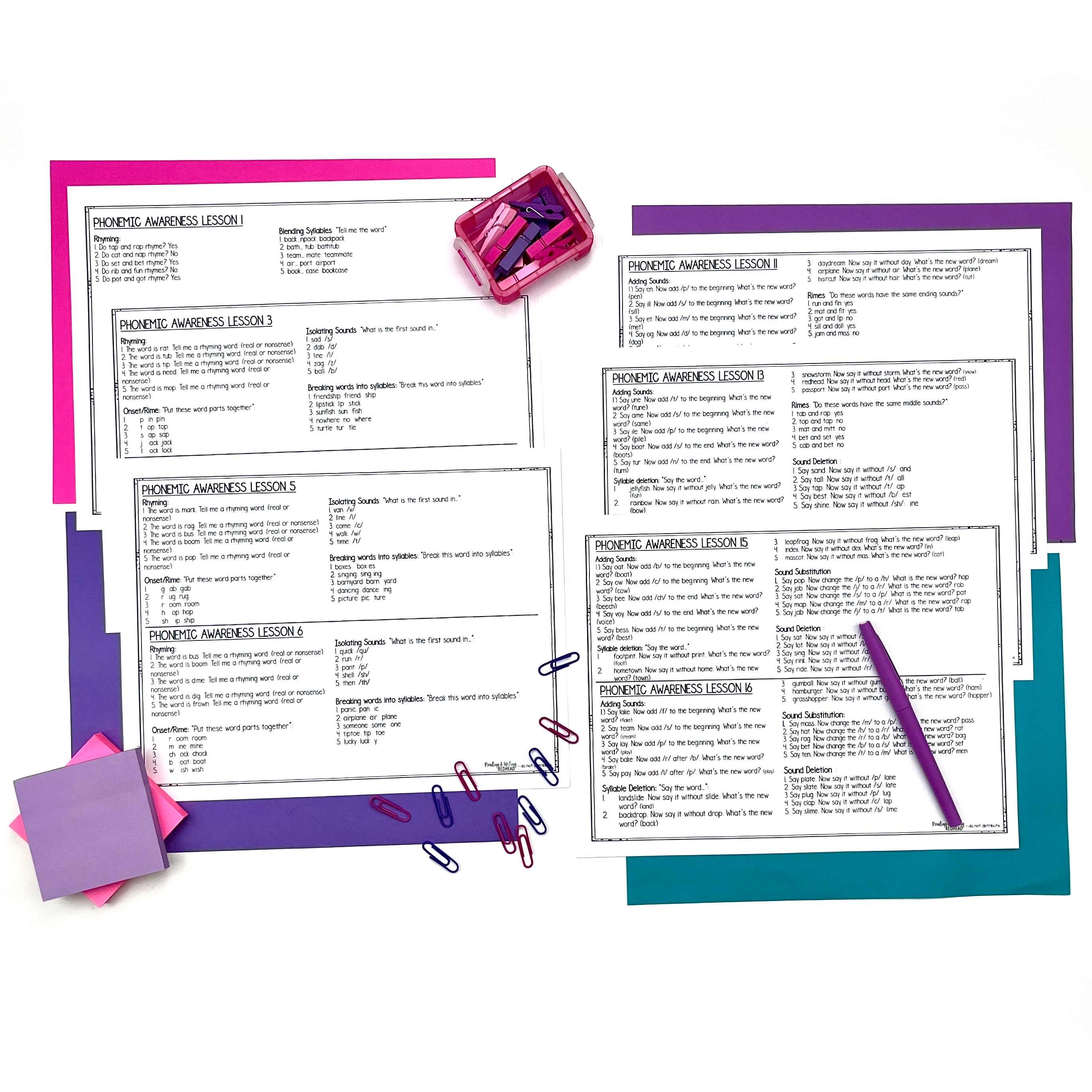
If you are tired of wondering, “Am I covering enough?”, “Is this sequential?”, and even “Do I have a consistent phonemic awareness routine?” this Year-Long Bundle has the structured progression built in. It’s essentially a ‘grab-and-go’ scripted program that ensures you never have to scramble for a lesson again, whether you are live or leaving plans for a sub.
If you don’t want a year-long PA curriculum, there are several options:
- The complete year long set of 132 lesson plans and task cards
- A set of 112 phonemic awareness lesson plans
- 20 lesson plans and over 700 teacher led task cards
- The 20 lesson plans and about 900 teacher led phonemic awareness skill task cards
Benefits for Teachers
- Zero Planning Stress: These lessons are completely scripted and sequenced, meaning you can walk in, open your binder (or pull up your slides), and start teaching immediately.
- Consistency That Works: You won’t have to wonder if you’re covering every necessary skill—the progression is built-in, ensuring you hit every milestone all year long.
- Perfect for Sub Plans: Because the routines are so predictable, they are the easiest activities to leave for a substitute teacher. They can keep your students on track without needing a crash course in literacy instruction.
- Efficient Time Management: You get to reclaim the time you used to spend hunting for word lists and activities, allowing you to focus your energy on small-group intervention and data-driven instruction.
Benefits for Students
- Building Fluency through Routine: Students thrive with daily routines. When they know what to expect, they spend less brainpower trying to figure out “what we’re doing” and all of their brainpower on mastering the phonemic awareness skills.
- Increased Confidence: As they move from foundational skills like rhyme and alliteration to advanced tasks like substitution, it will help them to develop a “growth mindset” that carries over into their reading and writing.
- Active Engagement: With 132 lessons and 900+ teacher-led task cards, including varied activities each day, the lessons stay fresh and exciting, turning what could be a dry drill into a fast-paced game of “sound detective.”
- Bridging the Gap: These activities specifically target the auditory processing needed to “crack the code,” giving students the solid foundation they need to become confident, independent readers.
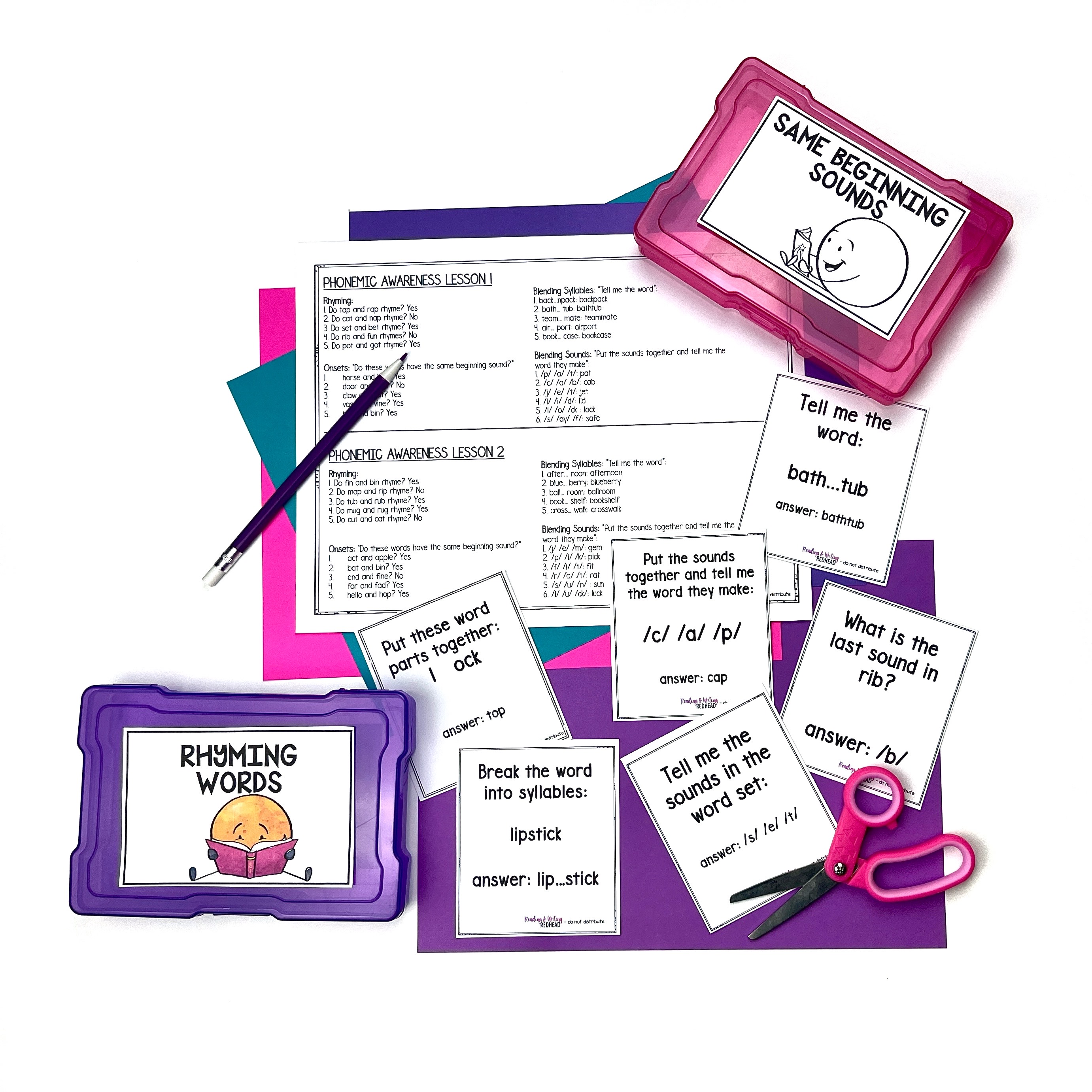
Ready to simplify your life and give your students the practice they need to thrive? Click the links below to preview these resources and see exactly how they can take the stress out of your daily phonemic awareness block!
- The complete year long set of 132 lesson plans and task cards
- A set of 112 phonemic awareness lesson plans
- 20 lesson plans and over 700 teacher led task cards
- The 20 lesson plans and about 900 teacher led phonemic awareness skill task cards
Other blog posts you may want to check out:
- Why Students Don’t Catch Their Own Writing Mistakes (And What Helps)
- 6 Ways to Use Riddles to Enhance your Teaching
- Must-have Tools For New Second Or Third Grade Teachers
- Boost History Skills: Kid-Friendly Teaching Tips
If you want to save this for later, pin this image!