
Bounce Back from the Summer Slide: 6 Fun Phonics Review Ideas for First Grade Back to School
Hey there, teachers! As the new school year approaches, we all know the “summer slide” can sometimes mean our students need a little phonics review. But getting them back into the swing of things doesn’t have to be a bore!
I want to help you make a phonics review of those essential kindergarten skills fun and engaging (and easy for you). These ideas are great for students who need to review beginning phonics skills, and CAN also be used for any student regardless of age or grade. I know sometimes my second grade reading intervention students really need a good basic phonics review, so let’s dive in.
Phonics Review Scavenger Hunt
For a fun phonics review scavenger hunt, hide CVC word cards or pictures representing CVC words and digraphs around the classroom (you can make your own with index cards, or print some from the internet). Students find them and then read or write the word, segmenting the sounds as they go. Students will be engaged in word reading fluency and practicing sound-spelling correspondence.
“Build a Word” with Magnetic Letters or Blocks
Provide magnetic letters, letter tiles, or foam letters for a phonics review. Call out CVC words, words with digraphs, or have students identify medial/initial/final sounds. Students then build the word or identify the specific sounds. This tactile activity supports segmenting and spelling skills.
Bonus tip: At the end of the phonics review, give students 2 minutes at the end to spell whatever they want. My students love spelling their own name. their pet’s name, “mommy”, etc.
Decodable Sentence Puzzles
Create simple puzzles where each piece contains a word from a decodable sentence. The easiest way (in my opinion) to do this is to write a sentence on sentence strip paper and cut it up! Students read the words, build the puzzle to form the sentence and then read it aloud, focusing on fluency and decoding the words. This phonics review activity is a great way to practice decodable sentence fluency.
Phonics Bingo
Create Bingo cards with CVC words, digraphs, or images representing words with specific medial/initial/final sounds. Call out words or sounds, and students mark their cards. This game-based approach makes identifying sounds and reading words fun. You don’t need to make own from scratch – you can use the My Free Bingo Cards generator for it!
Keep reading for more strategies!
“Sound Sorting” Stations
This is another fun phonics review option for students who need to review kindergarten phonics skills. Set up different stations with sorting mats for CVC words, digraphs, or even initial, medial, and final sounds. Provide picture cards or word cards for students to sort into the correct category. This helps students practice identifying and differentiating sounds.
Phonics “Minute to Win It” Challenges
Set up quick, timed phonics review challenges such as “How many CVC words can you read in a minute?” or “How many words can you tap and blend in 60 seconds?” Use word lists found on the internet or on Teachers Pay Teachers, or you can use lists included in the resource below. This adds an element of excitement and helps improve fluency.
Word of caution though – this can lead to anxiety for students who do not like competing or to be timed. This would be a good activity to keep optional so only students who are excited to do it participate.
Ready-to-Go Activities from Teachers Pay Teachers!
Wouldn’t it be easy if you could have something already created hat makes phonics review a breeze, especially during the hectic back-to-school season? Something that reverses the summer slide?
Well you’re in luck! I have some activities that cover essential kindergarten phonics skills, perfect for independent work, small groups, or even substitute days. My Science of Reading 1st Grade Back To School Review includes everything you need to help your students review kindergarten phonics skills.
You’ll find activities that align with the Science of Reading principles, ensuring your students build a strong foundation without you spending hours on prep.
Skills addressed include:
- tapping and blending sounds in words to read
- segmenting sounds in a word
- counting sounds in words
- reading CVC words, and word with digraphs and following the floss rules
- Identifying medial vowel sounds
- identifying initial sounds
- identifying final sounds
- spelling CVC words
- word reading fluency
- decodable sentence fluency
What is included?
- 100 pages of phonics practice
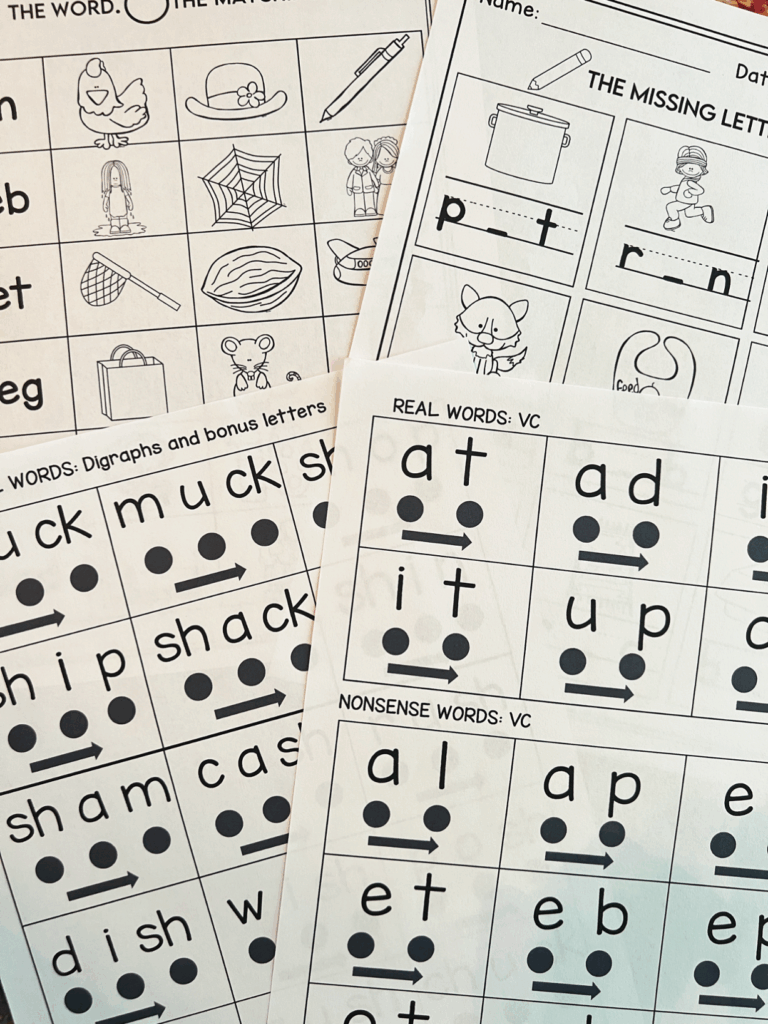
- tap and blend practice pages
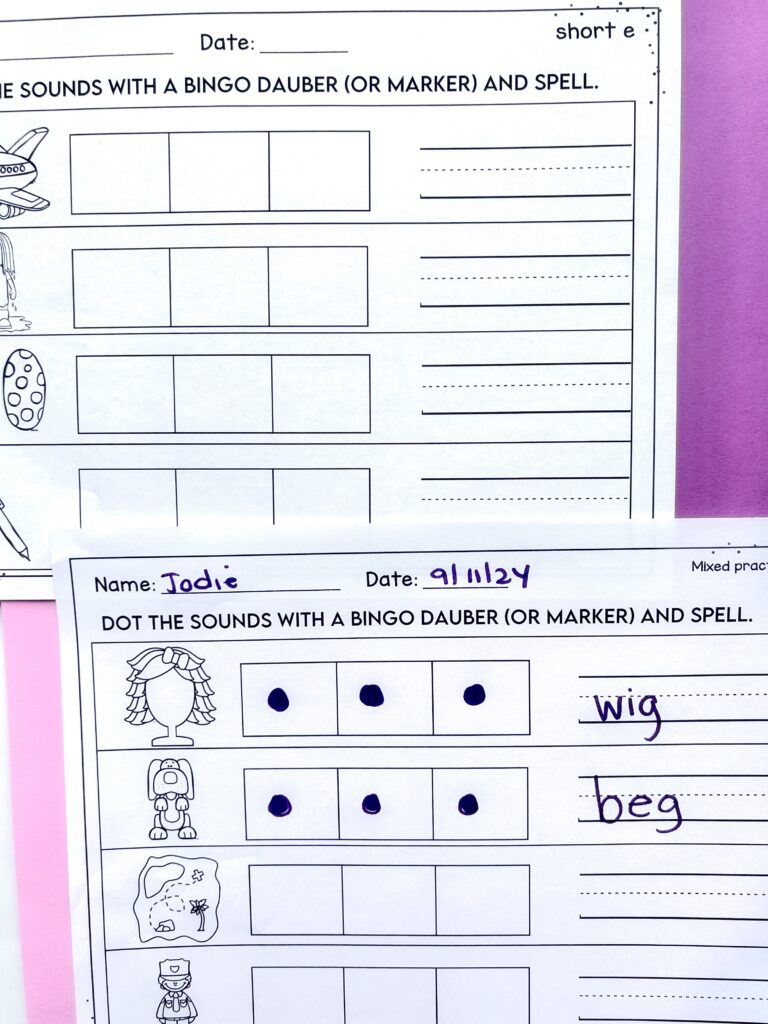
- dot the phonemes and spell the word activities
- word and sentence fluency roll and read pages
- word reading practice strips
- read the word and illustrate activity
- sort the pictures by the initial vowel sound practice
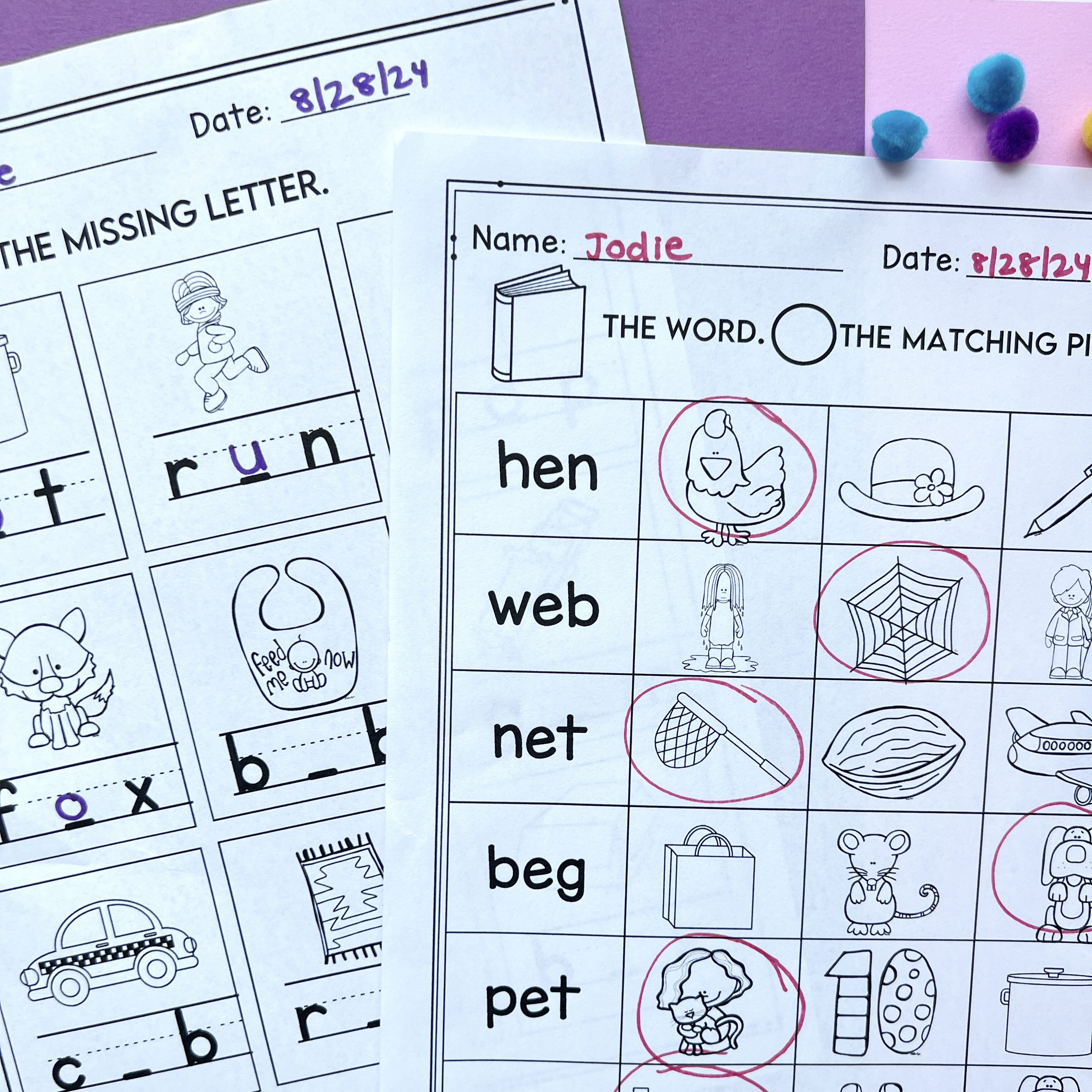
- read the word and circle the matching picture pages
- fill in the missing medial vowel activities
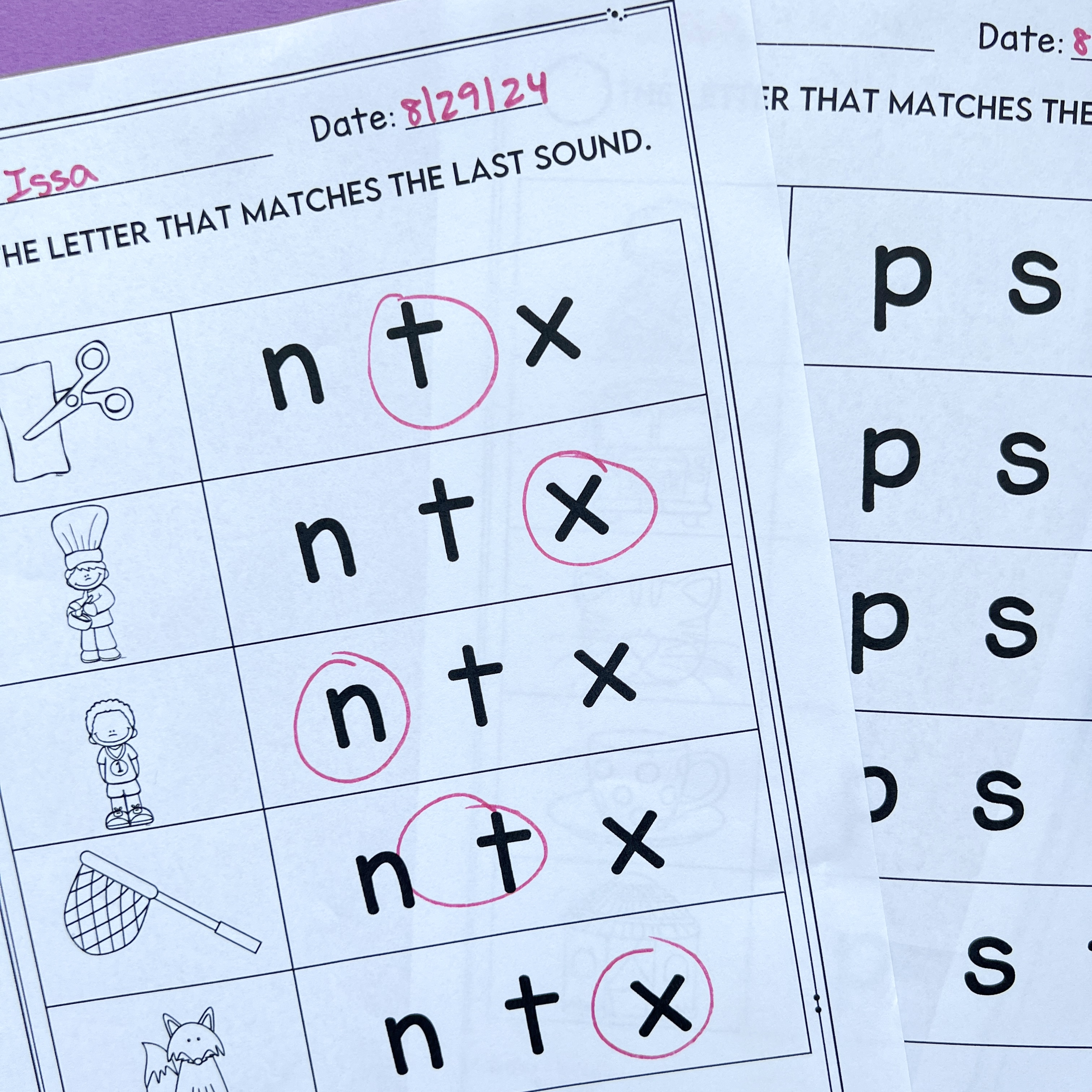
- circle the final sound pages
- answer keys
If you teach 2nd grade or need a review of first grade phonics skills for your students or home school, I have one of those too!
- Grab the Back to School Phonics Review for 1st Grade
- Get your Back to School Phonics Review for 2nd Grade
Let’s also take a peek at some of the activities in action.
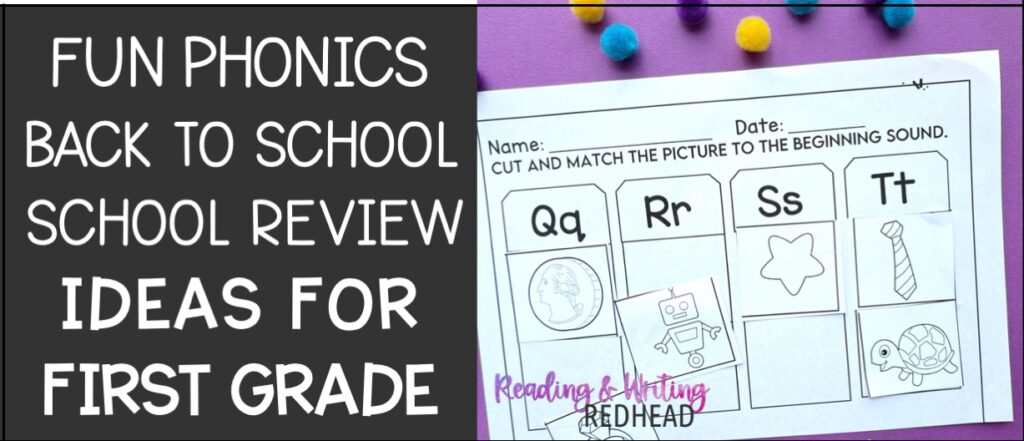
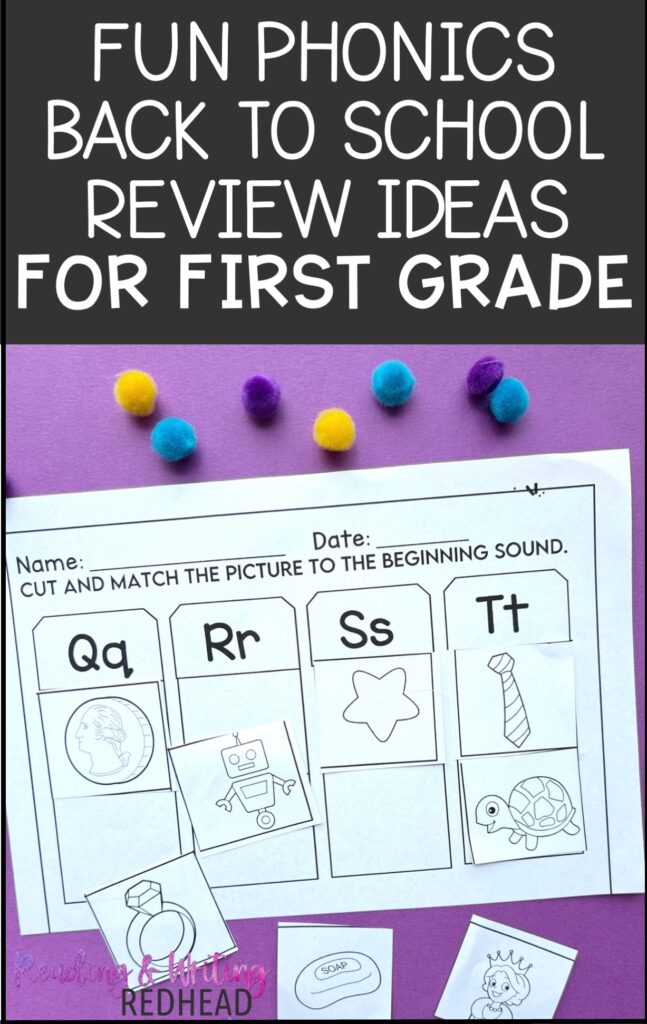
From the left, the first picture is of the CVC and digraph word blending pages. The dots and arrows help students remember to tap and blend the words. The middle picture is a cut and match activity. Students match the picture to the initial sound. For example, ring and robot would get glued under Rr. And on the right students practice sound symbol correspondence with CVC words and also identify pictures that match CVC words. Clicking on any photo will bring you to more information about the resource at Teachers Pay Teachers.
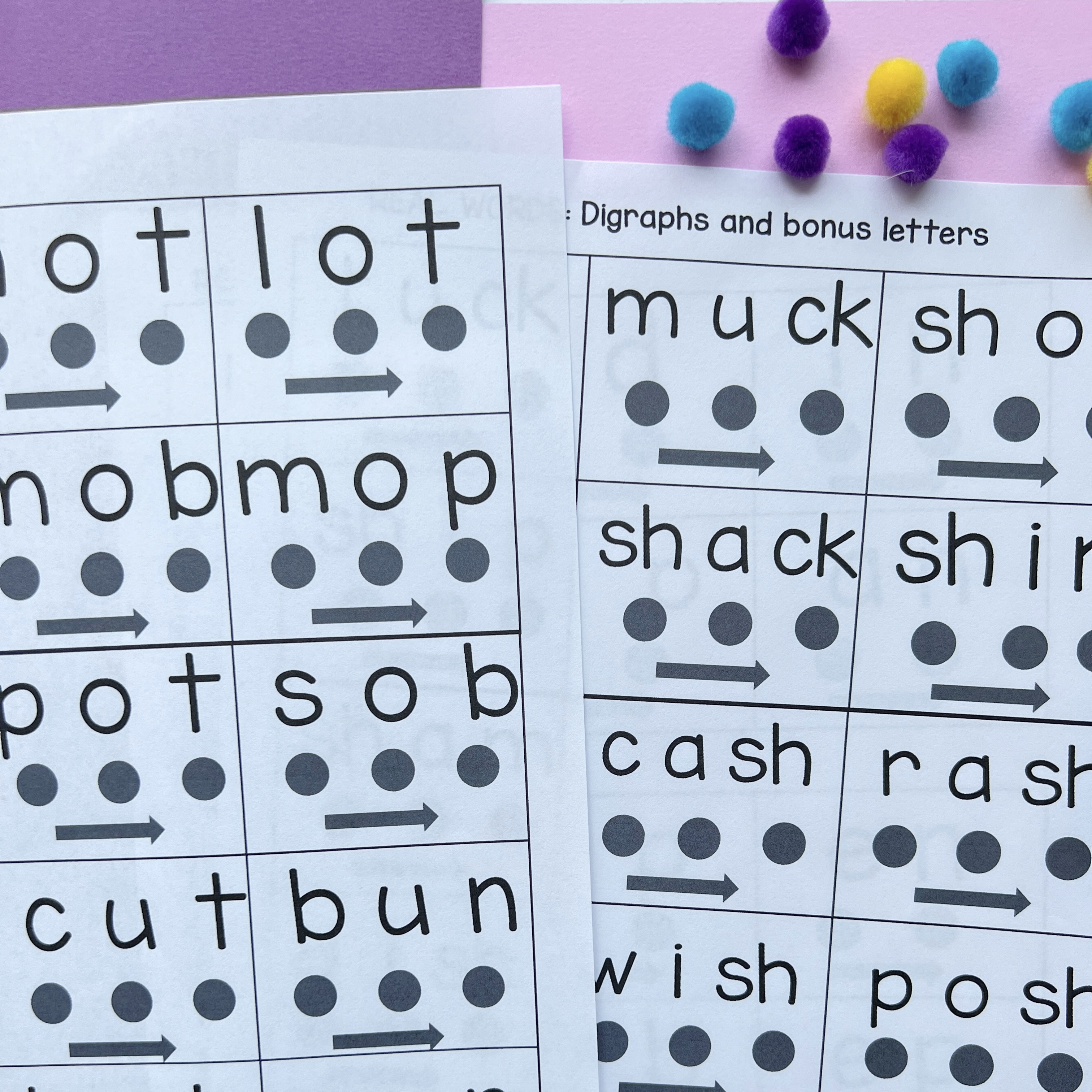

The three photos below show more phonics review activities, starting on the left. If you have bingo daubers, students will look at the picture, dot each sound in a box and then practice spelling. If you don’t have daubers, students can just use markers to dot each sound. Then we have assorted activities in the middle picture, including practice for tapping and blending VC words (real and nonsense). You might have some students that aren’t ready for that and need to start with those words instead of CVC. Finally, on the right, students practice identifying final sounds. Again, click on any to check them out at Teachers Pay Teachers.
Other blog posts you may want to check out:
- 5 Minute Magic: Building Phonemic Awareness
- Mastering Phonics in Grades K-2: Engaging Young Learners
- Unlock Reading: Fun Ways to Teach CVC Words
- Stress-Free Start: Activities for the First Week of School
- Powerful Ways to Enhance Your Reading Curriculum
If you want to save this blog post for later, pin this Pinterest ready image below!
Do you have any other fun ways to teach cause and effect? Share your ideas!