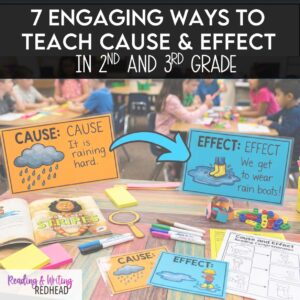
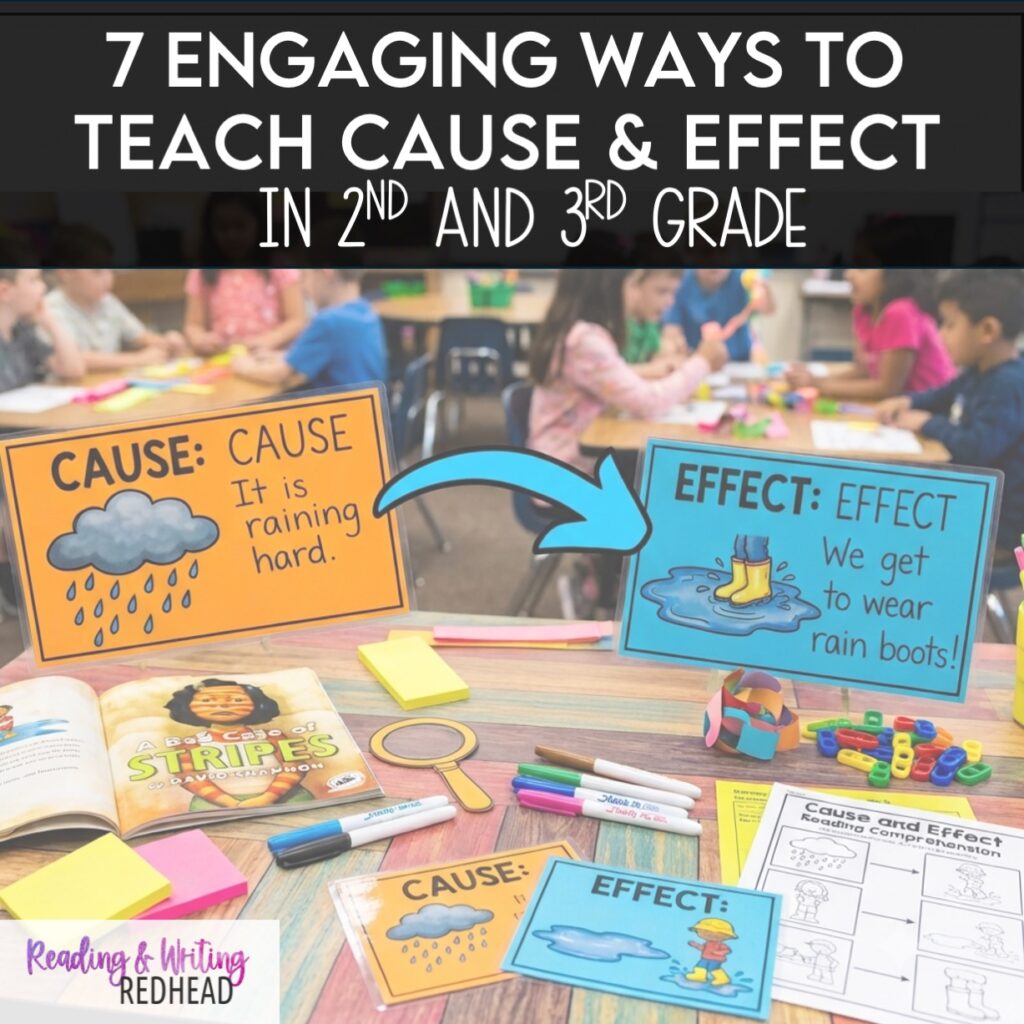
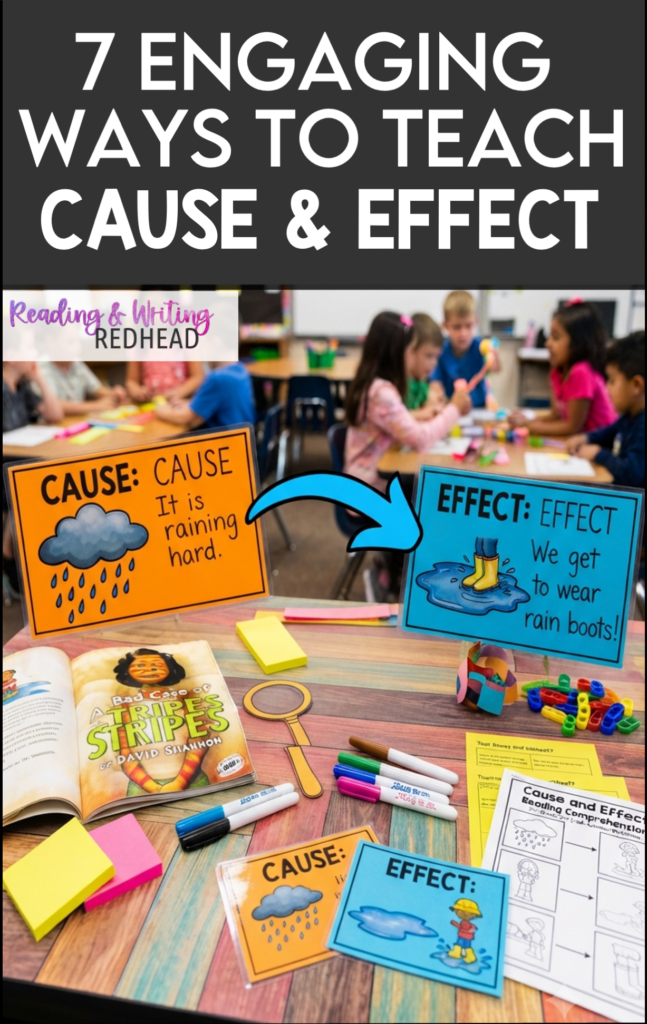
7 Engaging Ways to Teach Cause and Effect in 2nd and 3rd Grade
If you have ever listened to a group of seven-year-olds, you already know they are naturally obsessed with the word “why.” Every single thing that happens requires an immediate explanation!
Teaching cause and effect in 2nd and 3rd grade is all about tapping into that natural curiosity and helping young readers connect the dots.
But let’s be honest – finding fresh, hands-on ways to practice this skill without spending your entire Sunday searching for ideas and prepping can be a total drag.
I’ve got you covered. Let’s dive into seven fun, engaging ways to help your students master cause and effect without the planning stress!
“Cause & Effect Detective” Magnifying Glasses
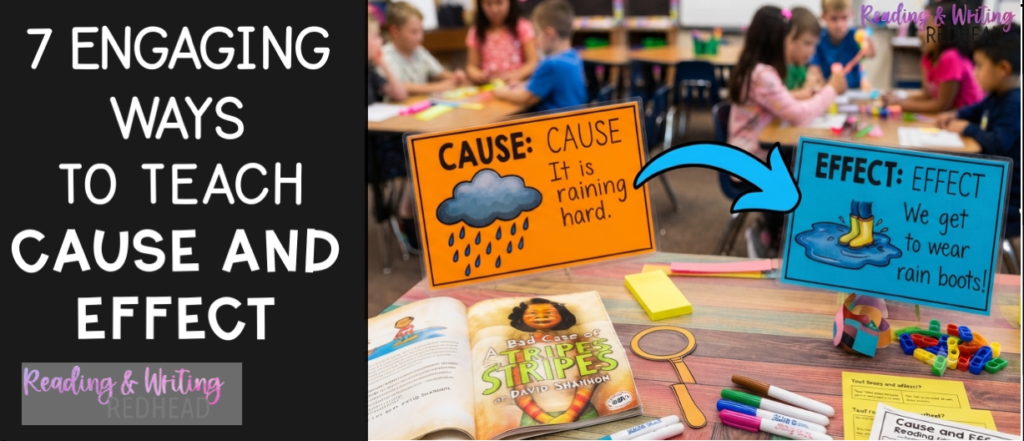
Give students physical or paper magnifying glasses to “investigate” a page in a picture book or nonfiction text. Have them hunt specifically for trigger words (because, so, if/then, due to) and highlight the cause-and-effect pairs they uncover.
Partner “What’s My Effect?” Roleplay
Pair your students up. One student acts out or states a situation (such as “I forgot to water the garden all week”), and their partner has to quickly jump in with the logical effect (“And the flowers started to get limp and dry”). It’s quick, low-prep, and gets kids moving.
The Classic Story Chain
You might already be familiar with this one – have students write causes and effects on paper strips and link them together physically to map out a sequence of events after a read-aloud.
Keep reading for more engaging ways to teach cause and effect!
.
Picture Book “Stop and Jot” Sticky Notes
While reading aloud, pause at important moments in a story. Instead of just asking comprehension questions, have students slap a sticky note on their desk divided down the middle: “Trigger” on the left, “Result” on the right (or “Cause” and “Effect”). It keeps everyone accountable during whole-group instruction.
These picture books are just right for this activity:
- If You Give a Mouse a Cookie
- The Napping House
- If You Ever Want to Bring an Alligator to School, Don’t!
- Click, Clack, Moo: Cows that Type
- The House on Dirty-Third Street
- Alexander and the Terrible, Horrible, No Good, Very Bad Day
Digital or Printable “What Doesn’t Belong?” Puzzles
Create a quick warm-up or transition routine where you present three cards on the board—two causes and effects that match logically, and one “rogue” card that doesn’t fit the chain. Ask students to spot the mismatch and explain why the logic breaks down.
Here’s an example: three cards saying “Miss Lopez felt sick this morning”, “We have a substitute teacher”, and “Miss Lopez went to her best friend’s house”.
Interactive Matching Cards / Go Fish
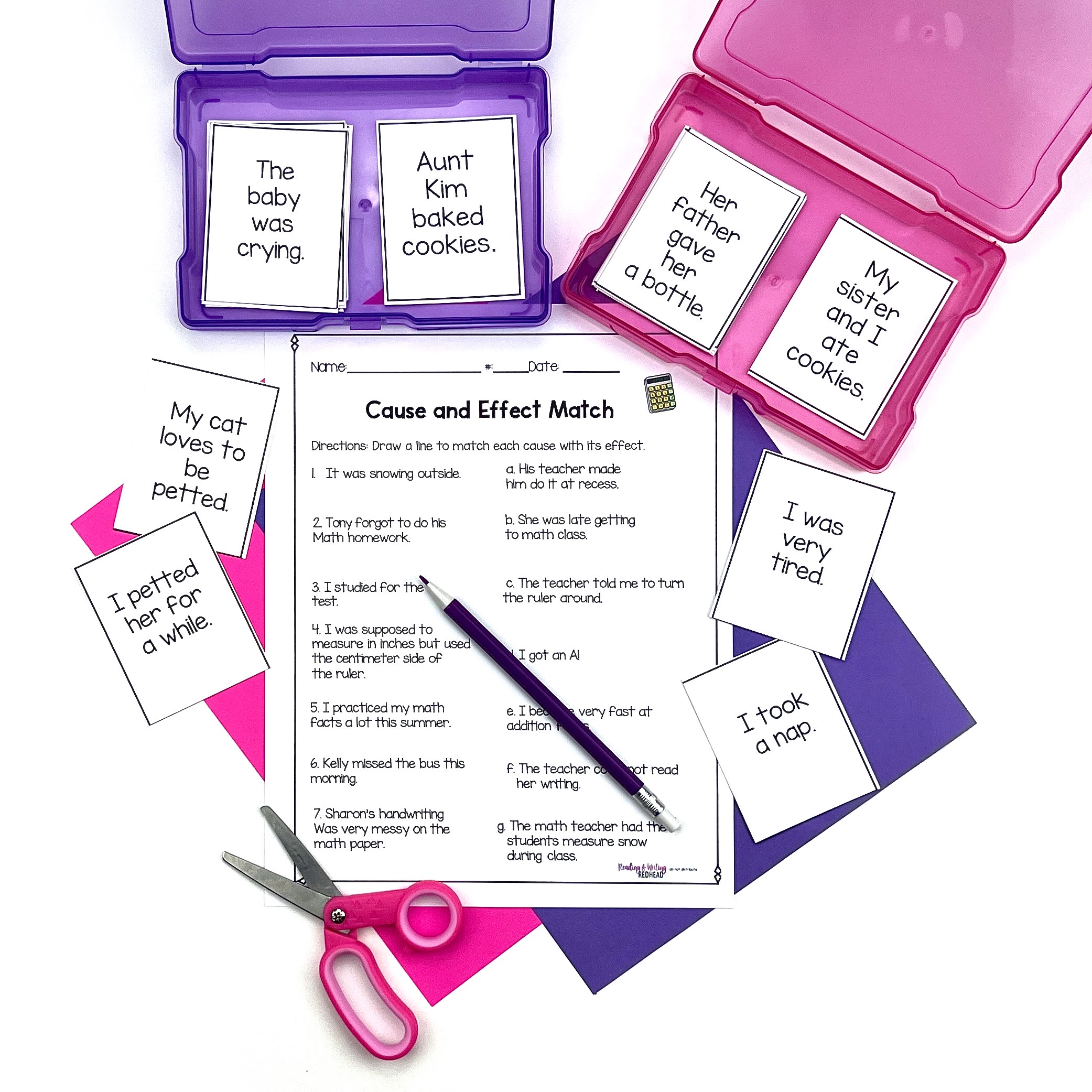
Try using color-coded index cards (one color for causes, another for effects) for small-group matching games or memory concentration. I’d recommend writing in pencil because often, my students can see through index cards with pen or marker on them during card games like this.
Pro Tip: If you’d rather not make your own, try this Cause and Effect Matching Game from Fun Express. It has 50 pieces to match and would be great for small groups or at the teacher table!
Skip the Prep with Ready-to-Use Cause & Effect Practice
Want to skip the prep work and dive straight into ready-to-use practice? Teaching students to spot the “why” behind the text is so much easier when you have engaging, no-prep tools ready to go.
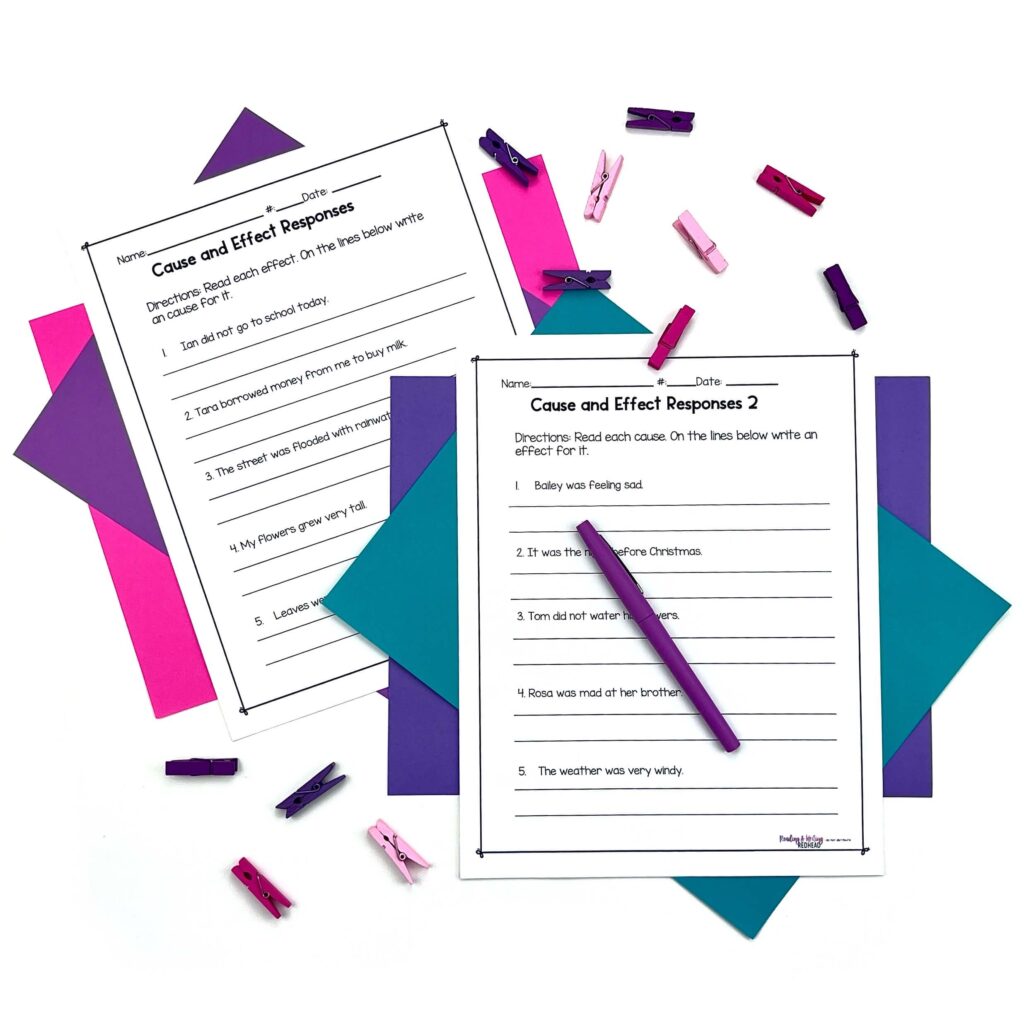
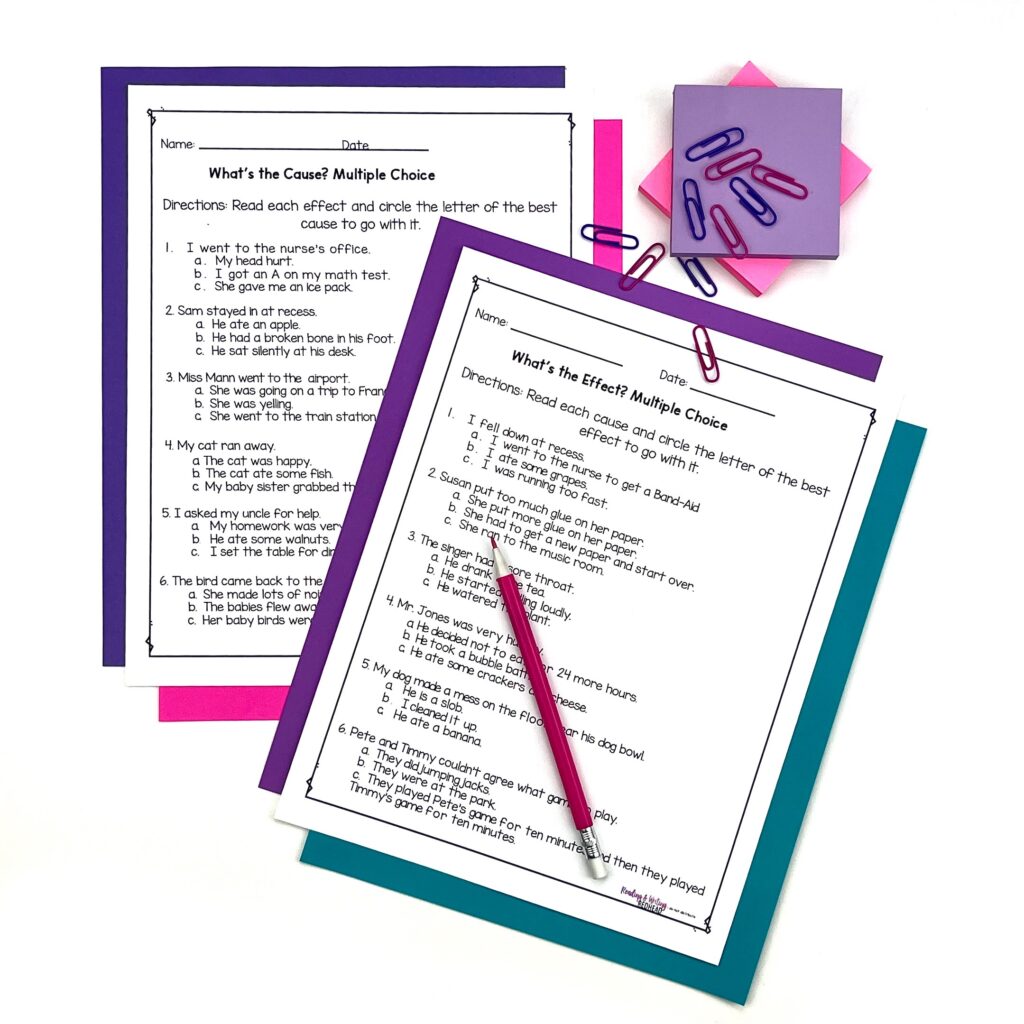
Whether you need cut and paste sorting pages, multiple choice check ins, or game cards for your literacy centers, the Cause and Effect Activities resource has you covered. Grab it to make your lesson planning a breeze this week!
Why You’ll Love It:
- Zero prep required for Most Activities: Simply print and copy for instant reading centers, morning work, or emergency sub plans.
- Versatile formats included: Packed with a mix of visual matching cards, task cards for “Scoot” or reading rooms, open-ended writing prompts, and straightforward worksheets.
- Built-in answer keys: Saves you valuable time during grading and makes student self-checking a breeze.
Benefits for Students:
- Bridges reading to real life: Helps young readers move beyond memorizing to truly understanding the “why” behind events in a text.
- Builds critical thinking skills: Moves kids from answering multiple choice questions to actively writing their own cause-and-effect scenarios.
- Engages visual and tactile learners: Features kid-friendly scenarios, and hands-on matching activities that make this tricky comprehension concept finally click.
Grab the resource today and watch your students’ cause-and-effect comprehension soar! You can also click on the cover or any of the sneak peek images below to take a closer look.

This resource has more than 160 reviews on TPT which is super helpful if you’re like me and don’t commit to anything without reading a few reviews. So you don’t have to look them up, here are a few:
Five Star Reviews
“This product helped to introduce cause/effect to my students with special needs. They enjoyed the tasks and have enjoyed making it a part of their daily routine. Thank you for a great product.“
“My students loved these activities. They are used for reinforcement and differentiation. These are great for small groups, independent work, and homework!”
“Excellent Resource! Exactly what I needed to further inspire the Cause & Effect lessons in our SPED Homeschool. Thank you!”
Other blog posts you may want to check out:
- Super Sleuths! Uncovering the “Why?” with Cause and Effect
- 5 Ways to Boost Phonemic Awareness Now for Your Early Learners
- Science of Reading Activities for Small Groups
- The Classroom Lifesavers: 5 ELA Resources Your Students (and You!) Will Love
- Boost Map Skills Now with 7 Engaging, Hands-on Activities
If you want to save this blog post for later, pin this Pinterest ready image below!
Good luck this week and remember: you got this!