Science of Reading Phonics Activities for Small Groups
Are you ready to kick your phonics instruction into high gear and see your students genuinely excited about word work?
We have all watched a student stare at a word, skip the letters, and just guess based on the picture or initial sound, right? This is a gentle reminder that true reading success isn’t about guessing.
The Science of Reading shows us that while explicit phonics is key, getting students to truly master these skills means making sure they are decoding every single letter rather than relying on context cues. When students build confidence with active decoding, they can finally stop guessing and focus on what the ultimate goal is: comprehending more complex texts and building rich vocabulary.
So, how can you make your small group phonics word work centers impactful, rigorous, and still super fun for your students?!
Moving Beyond Guessing: Why Active Decoding Matters
Let’s be real: we’ve all been there at one point in the past. You’re working with one of your small groups, and a student gets stuck on a word, and we’ve said things like, “check the picture,” or “what makes sense here?” It was just how we were taught!
But the Science of Reading has completely flipped the script. We now know that encouraging kids to look for outside clues actually teaches them to guess, not read. Successful reading means keeping their eyes on the text and looking at every single letter. We want our students actively blending those sounds together instead of guessing based on context.
When our small groups focus on active decoding, we are training their brains to connect letters to sounds. Or even just tune into the letter-sound connections more – especially for students who quickly memorized their letters and sounds in kindergarten. This is how we get them to finally stop guessing and start truly reading the words on the page.
Hands-On Phonics: Turning Word Work into a Problem-Solving Game
Phonics practice, whether in your small groups of not, doesn’t have to be a boring worksheet drill that makes kids groan. When you turn word work into a hands-on puzzle – like using mystery word riddles where they have to decode clues to solve the word – learning feels like a game. Suddenly, they aren’t just memorizing spelling lists; they are actively hunting for digraphs, blending sounds, and cracking codes.
That little spark of gamification gets kids excited to practice, and when they are having fun, they are looking closer at the letters and building stronger decoding skills without even realizing it.
Streamlining Small Groups for Maximum Independence
We all know the absolute hardest part of small group instruction: keeping the rest of the room quiet, focused, and actually working while you are busy at the teacher table with one of your small groups. This is where predictable, self-checking task cards or activities are an absolute lifesaver.
When students have engaging word work routines they already know how to do independently, they stay on task. You get uninterrupted, high-impact small group time to pull kids who need extra support, knowing the rest of your classroom is happily and productively working away.
Take Advantage of Versatile, Easy-to-Use Activities
You know how when we find a pair of shoes we like, we buy them in a bunch of colors? Well the same should go when you find a really well designed resource like task cards or file folder games that has options covering many skills. For me in second grade, it was the Toothy Games. I got Toothy games for math and reading . The ones I bought covered most of the phonics skills that we needed to practice.
If the versatile activity (or activities) is no prep or easy to prep (or you are lucky enough to have a para, office staff member or parent volunteer that can help), get them all made and ready to go. Once you are prepped, then you can easily differentiate. While one group might be doing a review of cvc word work like this or using this super-engaging resource, most other students are working on consonant blends. But a small group of students are working on multi-syllabic words.
Spiraling Success: Keeping Phonics Skills Fresh All Year Long
How many times have you taught a phonics rule (whether to your whole class or in one of your small groups), had students ace the assessment, and then a month later, see that they completely forget it? It happens because many kids need repeat exposure to make learning stick. By spiraling your phonics review – regularly bringing back past patterns like short vowels, digraphs, and silent e through fun daily tasks – you prevent learning loss. Every time students revisit an old rule, they lock it deeper into their long-term memory so they don’t lose ground as the year goes on.
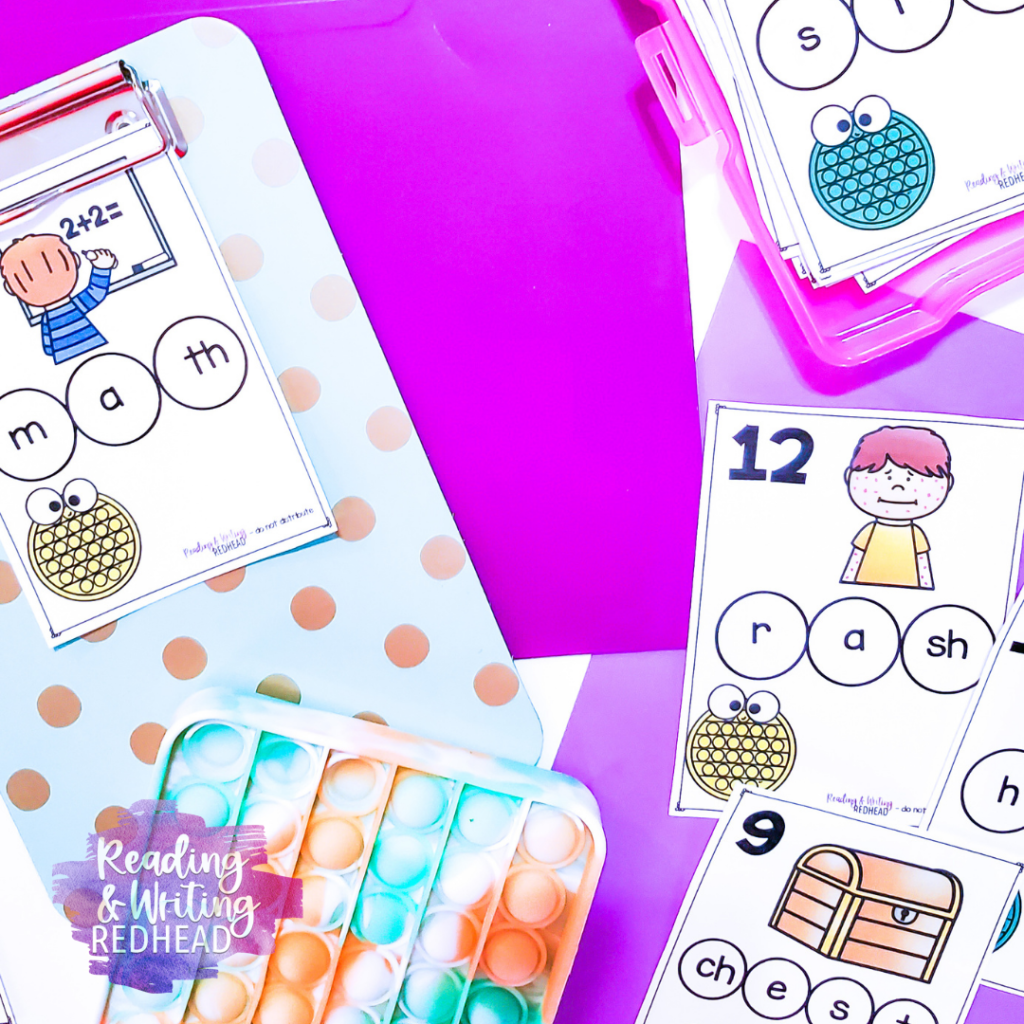
And make sure you provide practice of phonics knowledge in varied contexts, such as with practicing consonant digraph spelling words on Boom Cards, highlighting the digraphs in words in a passage, and doing a phonics task card that uses fidget poppers. Here’s an example of one of those activities:
Keep reading for more phonics activities for small groups!
From Phonics Practice to Powerful Comprehension
At the end of the day, all this hard work with decoding and phonics isn’t just about sounding out isolated words. When kids practice enough to make decoding totally automatic, their brains are finally freed up to focus on the big picture. They aren’t spending all their mental energy attacking individual words anymore. That means they can finally dive into rich vocabulary and feel completely confident understanding more complex texts. That is the ultimate win!
Stop Searching for Effective Small Group Activties
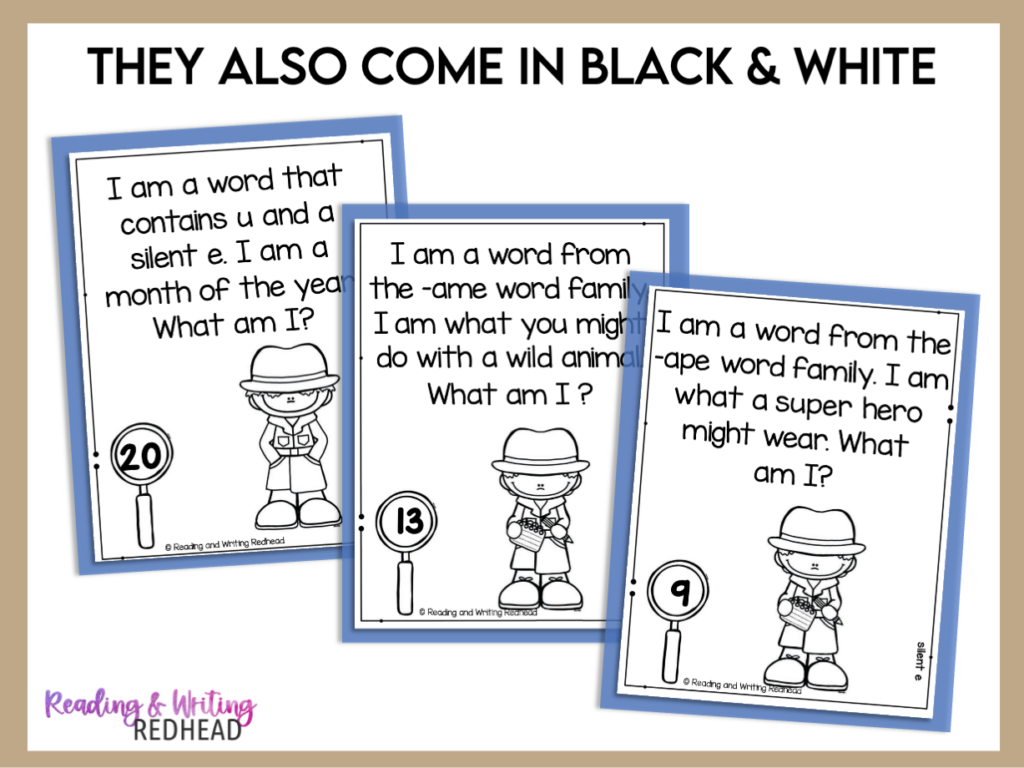
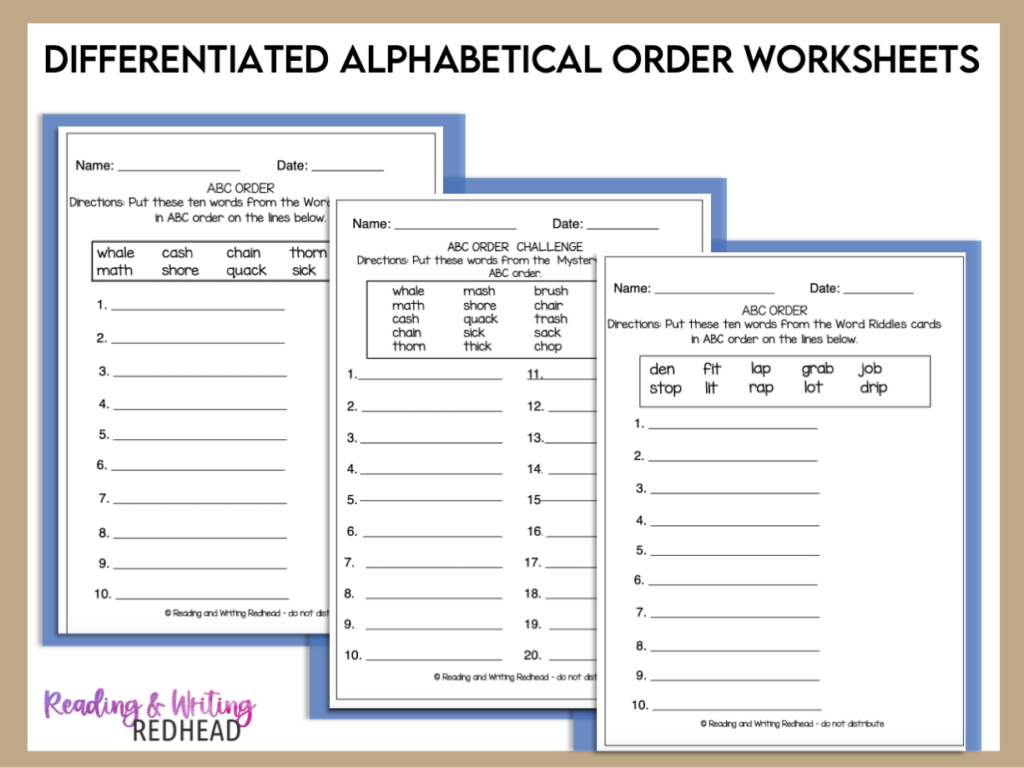
If you are looking for a ready-to-go center activity that gets your students actively decoding, thinking critically, and having fun with phonics, you have to check out the Phonics Task Cards and Word Riddles Mega Bundle. It packs 18 different Science of Reading-aligned word riddle resources – covering everything from short vowels and blends to silent e and vowel teams – into easy-to-prep task cards and worksheets that your small groups will actually beg to do.
By the way, students will not be able to guess on these. They will need to pay attention to the phonics pattern mentioned and then make connections to their real-world knowledge in order to solve them. And/or they can work together with classmates to solve them.
For example, one teacher said, “They really got a kick out of figuring out the riddles that were written at the perfect level to figure out each word without frustration. I especially loved when some students would explain their reasoning to other students who might have been stumped.“.
Click here or on the cover image to see if it is right for you! You can also grab just the individual sets with the specific phonics skills you need.

Here are just a few examples of what’s included:
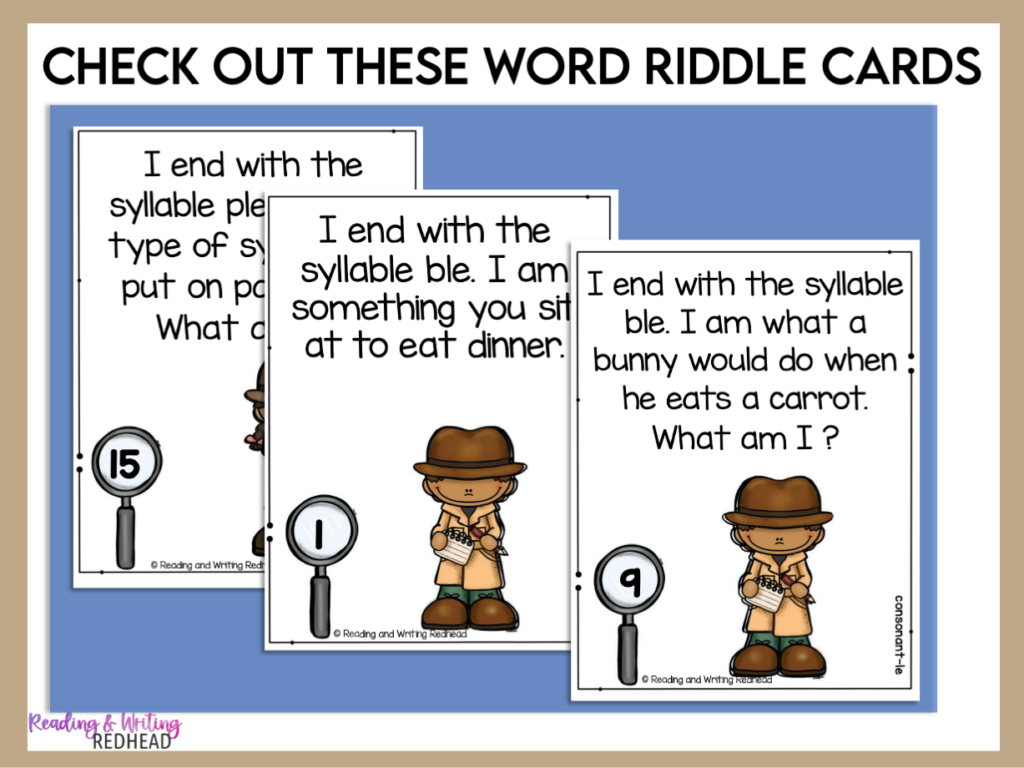
Note: answer keys are also included!
5 Star Reviews:
If you’re like me, you always read reviews first, so to help you out, here are a few from the bundle and from some of the individual resources included in the bundle.
“I really like this activity. I work with multiple groups of differing ages and even though its for younger kids my older kids enjoyed it as a quick opening brain exercise. I wish there were more!!”
My students love this game! We read the clues and they are real detectives paying attention to all the details. They love to play it!
“Just wanted to say that the resource was a huge hit! My small groups absolutely loved it and it really helped me meet their needs in teaching this standard. Thanks so much for creating such great materials. I appreciate you thinking about what teachers like me actually need”.
And what are the benefits of using Mystery Word Riddles?
Key Benefits for Teachers
- Built on the Science of Reading: Every riddle task card is designed to strengthen explicit phonics skills. Therefore, your instruction will align with research-backed decoding strategies.
- Ultimate Hero for Small Groups: Perfect for literacy rotations, independent stations, small groups, or pulling targeted intervention groups while the rest of the room stays happily occupied.
- Massive Variety & Zero Planning: With 18 different phonics sets packed into one bundle—ranging from CVC words and digraphs to vowel teams and suffixes – you are set for the whole year without scrambling for materials.
- Flexible Formats: Includes both color and black-and-white options, plus 35 printable worksheets and answer keys, giving you total flexibility for print-and-go practice.
Benefits for Students
Gamified Phonics Practice: Cracking the mystery word riddles turns standard word work into an fun puzzle that keeps kids engaged.
Active Letter-by-Letter Decoding: Forces students to look closely at every single letter and sound pattern rather than guessing based on pictures or context.
Builds Confidence: Self-checking and straightforward formats let your students successfully work through the riddles on their own or with a partner/small group. Working with others will help improve communication skills and students will be practicing working together with peers.
Other blog posts you may want to check out:
- Boost Map Skills Now with 7 Engaging, Hands-on Activities
- 6 Ways to Use Riddles to Enhance your Teaching
- How Interactive Notebooks Help Students Retain Learning
- Get Reluctant Students Writing Now: 10 Writing Prompts that Get Their Pencils Moving
If you want to save this for later, pin this image!