
5 Easy Ways to Start the 2nd Grade Day (Before the Bell!)
The first 10 to 20 minutes of the school day can feel like chaos, but it doesn’t have to be wasted time! By implementing a few structured, independent activities, you can start the 2nd Grade day with a calm and productive 10-20 minutes.
These five easy strategies keep students busy and focused from the moment they walk in, whether they’re settling in with activity tubs, making progress on incomplete assignments, or diving into a quick academic review with a reliable morning work product.
Lets check out how to start the 2nd grade day on the right foot!
Activity Tubs/Morning Bins
An excellent “soft start” strategy is using Activity Tubs or Morning Bins. These bins are pre-filled with independent, self-selecting materials that require no direct teaching from you. Simply set out a rotating collection of bins—like those filled with Magnetic Tiles, Lego/Building blocks, or simple art supplies—and allow students to work individually or with a partner.
2nd Grade students tend to have a natural need for choice, creative exploration, and socialization. Start the 2nd grade day with activity tubs, and they will be happily engaged so you can seamlessly handle lunch count, check notes from home, and attend to individual students walking in with questions or needing other things.
Daily/Weekly Themed Sketchbook or Journal
The next suggestion for how to start the 2nd grade day… instead of a formal “Morning Work” worksheet, give kids a designated notebook or journal (you can even staple together a few sheets of paper).
Quiet: It’s a sit-down, individual activity that promotes calm and focus.
The Idea: Post a simple, open-ended prompt on the board each morning like “If I could listen to a singer/band or certain song every day, it would be…”
Examples of Prompts:
- Creative Drawing: Draw a funny monster that lives in your pencil case.
- Creative Writing: Finish this sentence: “If my shoes could talk, they would say…”
- Thematic: Draw a picture that illustrates a vocabulary word we learned yesterday.
- Reflection: What is one thing you are grateful for today?
Why it works:
- Choice & Creativity: Students decide what to write/draw and how to express themselves.
- Independent: Once the prompt is on the board, students know the routine and can work completely on their own and start the 2nd grade day in a fun, engaging and creative way.
STEAM Bins
Ready for a step up from general activity tubs? Let’s check out the next way to start the 2nd grade day!
This is a step up from general activity tubs and gives the activity a specific purpose without needing your direct help.
Great for 2nd Grade: It hits their need for complex building and helps students build fine-motor control.
The Idea: Designate a specific, rotating set of materials each week that requires building or design.
Examples of Materials/Tasks:
- “Straws and Connectors” Station: Challenge students to build the tallest structure possible.
- “Pattern Block Puzzles” Station: Provide blank paper and challenge them to trace and color-in their own detailed pattern block design.
- “Origami/Paper Craft” Station: Provide simple folding instructions or paper cutting guides. (Could also be a ‘Draw-Along’ style using online videos on silent display).
Why it works:
- Creative & Structured: It channels students’ creativity into a specific task or material, which can reduce chaos.
- Self-Paced: Kids start and stop when they’re done or when the official start time begins.
Dedicated Independent Reading Time (The Book Nook)
This is the ultimate low-prep, independent choice activity to start the 2nd grade day.
Choice: Students choose what to read, which increases engagement.
The Idea: As soon as students put away their belongings, they choose a “Just Right Book” from their personal book bin or the classroom library and engage in Silent, Independent Reading.
Why it works:
- Zero Prep: Requires no planning or new materials from the teacher.
- Essential Skill: It directly supports literacy development and reading stamina.
- Calm & Quiet: It is naturally one of the quietest and most independent activities a classroom can have, freeing you up completely for attendance and other duties.
Keep reading for more strategies!

Math Games
Let’s talk about using math games to start the 2nd grade day!
For a highly engaging, low-pressure start to the day that focuses specifically on math concepts, try using Independent Math Games.
The idea: replace busywork with purposeful games allowing students to reinforce previously taught skills—like fact fluency or place value—in a fun, collaborative, or independent setting.
Why it works: When students view the task as a game, motivation soars, and they get immediate, self-correcting feedback on their skills. This time is a fun, non-threatening opportunity for them to build confidence and develop essential social skills as they share materials and navigate game rules.
Examples of Materials/Tasks:
- Partner War/or Top It games using a deck of cards for addition or subtraction
- Sorting dominoes to practice odd/even numbers
- “Roll-and-Cover” activities with dice to target specific number combinations
- Or any of the countless math games on TPT!
Morning Work or Bell Ringers
Let’s talk about an academic way to start the 2nd grade day with independent worksheets or similar activities.
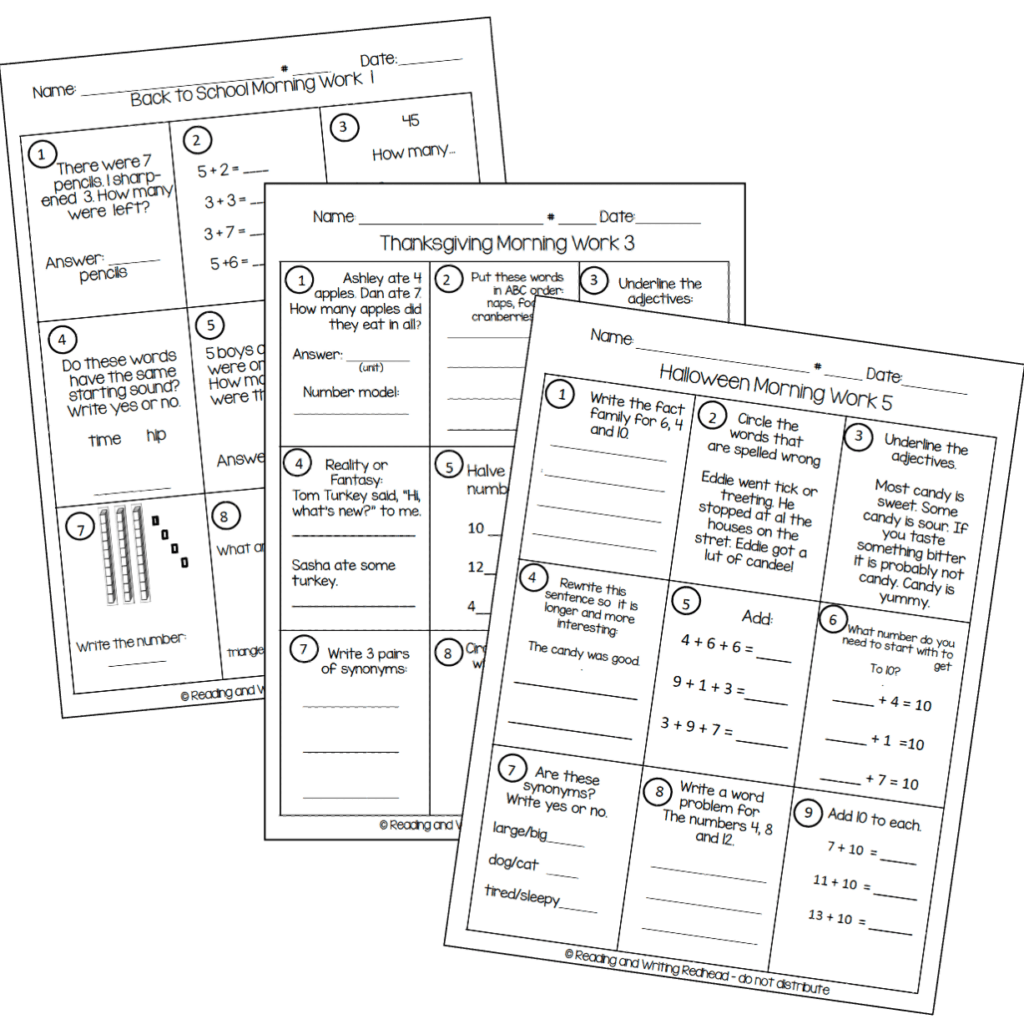
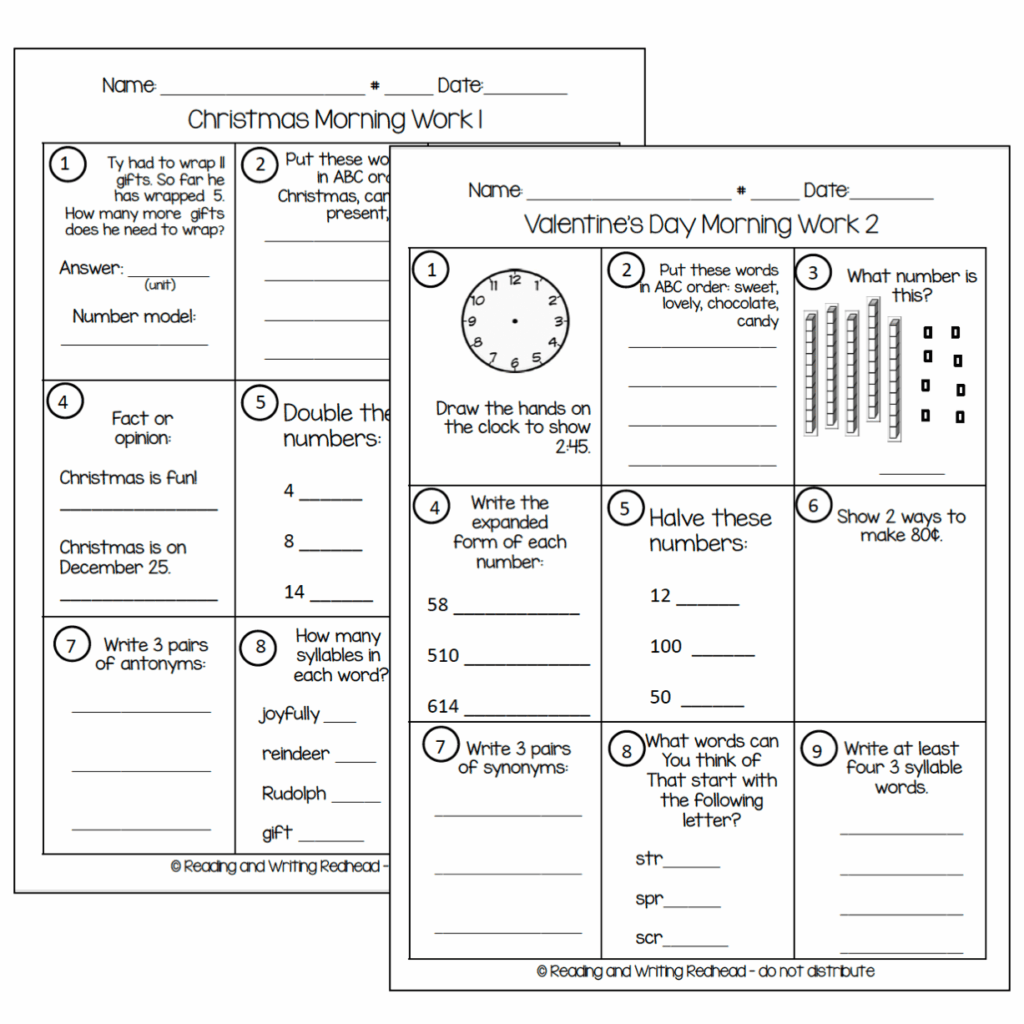
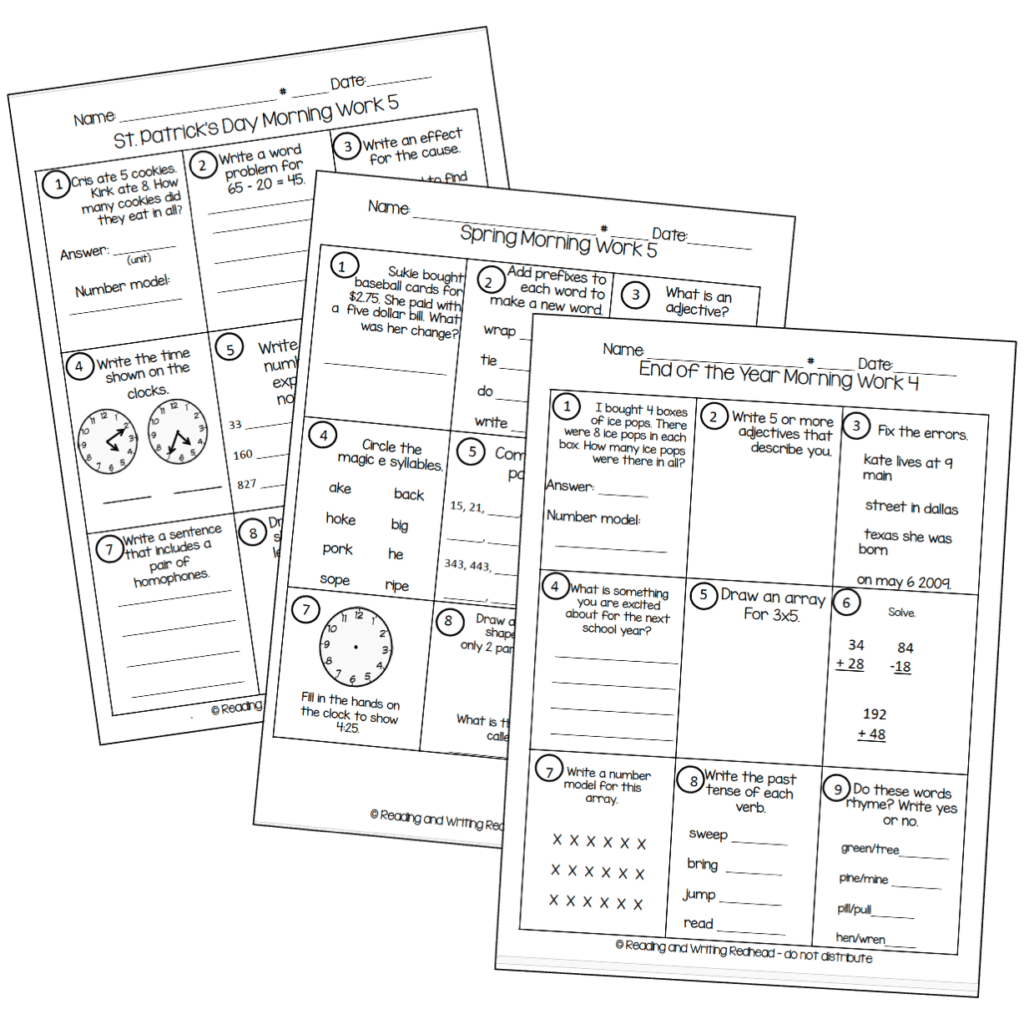
If you are a teacher who prefers an academic start, Morning Work or Bell-Ringers are the ideal solution. This method involves giving students a consistent, short, daily practice sheet—like a page from a spiral review product—that focuses on previously taught reading, writing, or math skills.
Since the format remains the same, 2nd Graders can easily complete the activity independently without interrupting your essential morning duties. This routine ensures that the first 10–20 minutes of the day are productive, providing valuable, low-stakes skills review that reinforces learning and keeps brains sharp.
Ready to Start Your Day with a Plan?
If the thought of prepping a different morning activity every day sounds exhausting, we have the ultimate solution for a seamless way to start the 2nd grade day. Check out the ready-made resource, Morning Work Practice: Money, Addition, Arrays, Facts/Opinions, Rhymes, Syllables, and More.
This comprehensive packet is designed specifically for 2nd Grade but easily works for 1st or 3rd, offering seasonal, skills-based practice for the entire school year, from Halloween right through to the End of the Year. It covers essential Math and ELA standards—from money and arrays to fact/opinion and rhyming—all in a predictable, easy-to-manage format.
[Click Here to Grab the Full Morning Work Pack on TPT!]
Benefits for Teachers
- Saves Time: It’s a low-prep, print-and-go resource with activities for every major season.
- Easy to Manage: The predictable format eliminates questions, freeing you up to take attendance, check notes, and handle individual student needs.
- Perfect for Subs: Clear answer keys and independent activities make it the ideal substitute plan for morning work.
- Standards-Aligned: Covers numerous CCSS skills, including addition, geometry, money, antonyms, and syllables.
Benefits for Students
- Builds Routine: A consistent daily format eliminates confusion and promotes independence from the moment they enter the classroom.
- Reinforces Skills: Provides valuable, low-stakes spiral review of key math and ELA concepts.
- Self-Correction: Answer keys allow students to check their own work, promoting responsibility and immediate feedback.
- Engaging Content: Activities are themed around holidays and seasons, keeping the practice fresh and fun throughout the year.
Take a look at some of the morning work worksheets included – remember, the format remains the same and offers a spiral review. They can be used year round – from back to school, to Halloween, Thanksgiving, Christmas, Valentine’s Day, Spring, St. Patrick’s Day, and end of the year. Answer keys are included!
Ready to make a difference in your students’ skills and make morning arrival much easier? Grab this resource and watch their skills soar!
Other blog posts you may want to check out:
- 6 Ways to Use Riddles to Enhance Your Teaching
- Boost History Skills Now: Kid Friendly Teaching Tips
- Empower Your Students: 10 Tips to Teach Telling Time and Clocks
- Super Sleuths: Uncovering Cause and Effect
If you want to save this blog post for later, pin this Pinterest ready image below!