Act Now – Empower Students with Writing Choice
Imagine a writing block where you actually have a second to breathe because every student is already working, pencils scribbling away. No one is staring blankly at the ceiling, and you haven’t heard “I’m done” after two minutes (or “I don’t know what to write”).
That’s the magic of giving kids a say in what they write. In 2nd and 3rd grade, these students are finally finding their voices—so why keep them boxed in with the same stale assignments? When we let them choose their own topics, writing stops being a “must-do” task and starts being something they actually get excited to share. Would you be willing to let their creativity run the show?
Pro-Tip: “choice” doesn’t mean “no structure.” 2nd and 3rd graders still need a clear “Must-Do” (like 15 minutes of quiet writing) before they get to the “May-Do” (sharing with a partner).
The “Choice Menu” or “Bingo Board”
Instead of one prompt, give them a grid of 6–9 options. This works perfectly for these grades because it provides a safety net for kids who get overwhelmed by “total freedom.”
- How it looks: A paper in their folder with boxes like “Write a letter to the principal,” “Create a comic strip about a squirrel,” or “Write instructions on how to make a PB&J sandwich.”
- The Win: Your students feel like they’re in control, but you’ve still guided them toward meaningful practice.
The “Heart Map”
This is a classic Writing Workshop staple. Students draw a large heart and fill the inside with people, places, hobbies, and memories they love.
- How it looks: When a student says, “I don’t know what to write about,” you simply point to their heart map taped inside their notebook.
- The Win: It builds a permanent “idea bank” so they never have to wait for a prompt from you.
Choice of Format (The “How,” not just the “What”)
Sometimes the topic is fixed (for example, you’re learning about magnets and you want a writing assignment that is related to the science unit), but the way they show their learning is up to them.
- How it looks: One student might write a traditional paragraph, another creates a “Top 10 Magnet Facts” list, and a third writes a fictional story about a character made of metal.
- The Win: It differentiates for different skill levels naturally.
Keep reading for more writing ideas!
Rotating “Writing Stations”
Set up different physical spots in the room that dictate the type of writing.
- How it looks: A “Mailbox Station” for letters, a “Story Station” with post cards or printed pictures from the internet for inspiration, and a “Research Station” with non-fiction books. Students choose which station to visit during independent writing time.
- The Win: Movement and variety keep engagement high for your students.
Offer “Product” or Format Choice
Instead of every student writing a standard paragraph or essay, allow them to choose the medium for their final piece. Think about Project-Based Learning (PBL) and Universal Design for Learning (UDL). For a single prompt, students could choose to create:
- A Digital Book using tools like Book Creator or Seesaw.
- A Comic Strip with speech bubbles.
- A Persuasive Letter to a real person (like the principal or a parent).
- A Script for a 30-second “news report” or podcast.
Ready to Go Activities from Teachers Pay Teachers
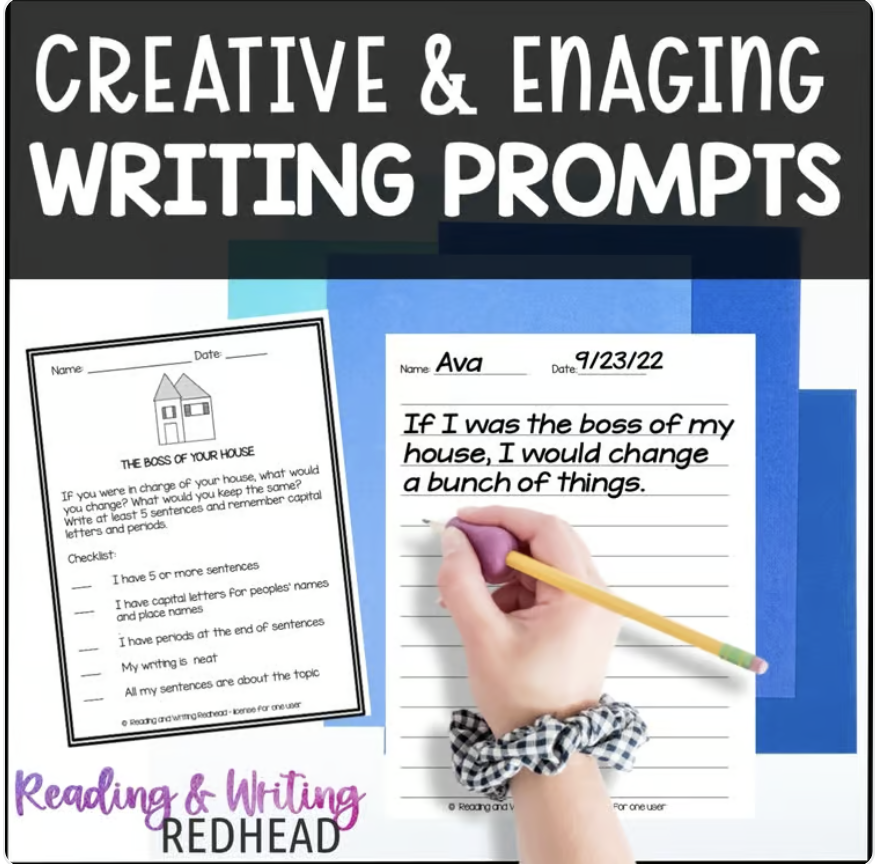
Ready to empower your students with more choice but need a ready-to-go jumping-off point? Check out my Writing Prompts collection. It’s packed with engaging options for narrative, informational, and opinion writing, all featuring student-friendly checklists, standard lined paper, and ‘Handwriting Without Tears’ style lines. It’s the perfect tool for fostering that sense of choice we’ve been talking about, without adding one more thing to your Sunday night to-do list!
Click on the cover to take a peek at it over on TPT.
Key Benefits of This Resource for Teachers:
- Zero Prep: This is a “print and go” resource, saving your hours of planning time while providing 7 ready-to-go prompts for your students!
- Seamless Differentiation: With multiple levels of support—including sentence starts and different lined paper options—you can easily tailor the same prompt to meet the needs of all of your students.
- Standards Aligned: All prompts and activities are directly aligned with CCSS W.2.1, W.2.2, and W.2.3, so you can be sure your daily writing practice provides the evidence of growth needed for portfolios and report cards.
Benefits For Students:
- Engaging Practice: The creative and unique writing prompts makes practicing writing fun and engaging.
- Confidence Building: The use of sentence starters as an option removes the intimidation of the “blank page,” helping students focus on their ideas rather than just how to start.
- Genre Mastery: Students gain fluency in three distinct writing styles—opinion, narrative, and informative—which are essential foundations for upper elementary writing. (plus friendly letter writing)
- Executive Functioning: Included self-assessment checklists help students monitor their own progress, teaching them to slow down, edit, and take pride in their finished work.
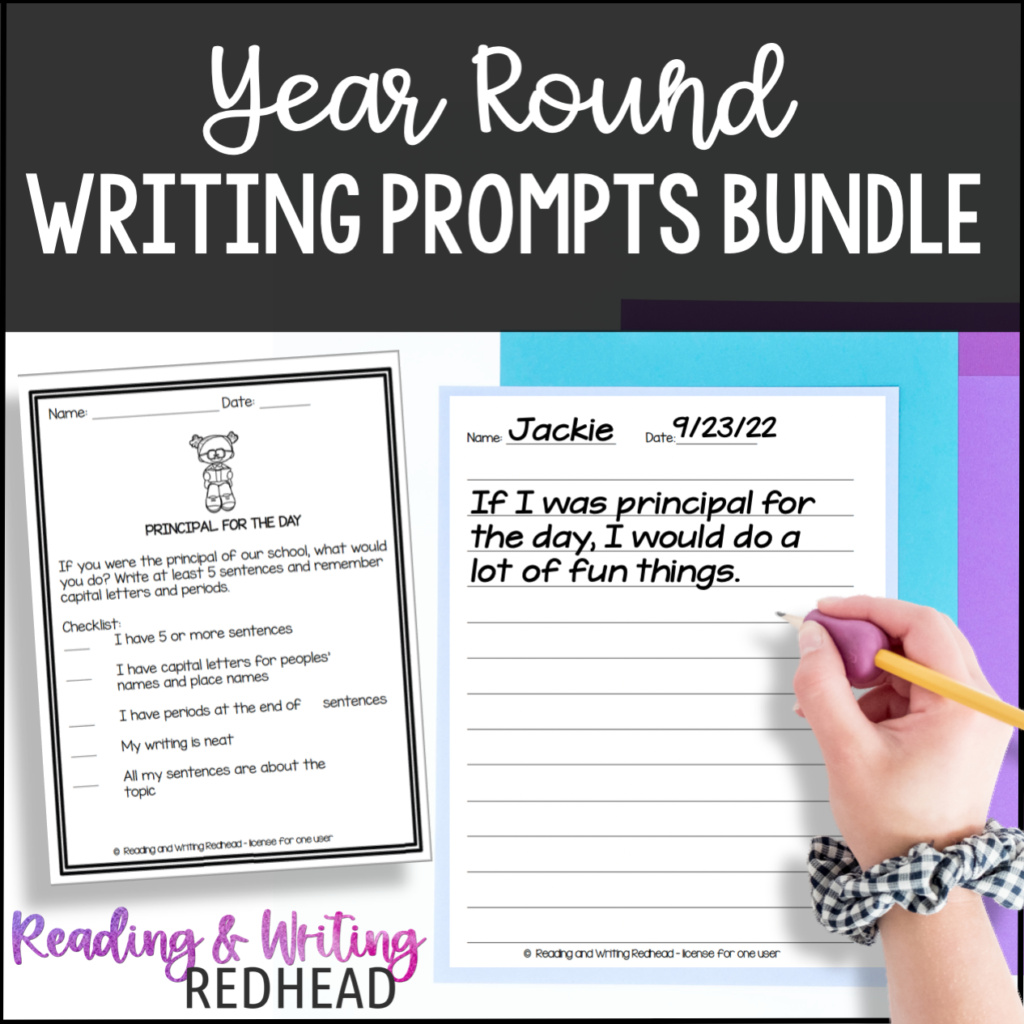
You can also get all 63 of the writing prompts and save $$ with the writing prompts bundle! It includes the original writing prompts and prompts with fall, Halloween, Thanksgiving, Christmas, Valentine’s Day, Hanukkah, Valentine’s Day, Winter, Spring, and St. Patrick’s Day!
Other blog posts you may want to check out:
- 5 Minute Magic: Building Phonemic Awareness
- 6 Ways to Use Riddles to Enhance your Teaching
- 10 Tips for Teaching Telling Time and Clocks
- Boost History Skills: Kid-Friendly Teaching Tips
If you want to save this for later, pin this image!