
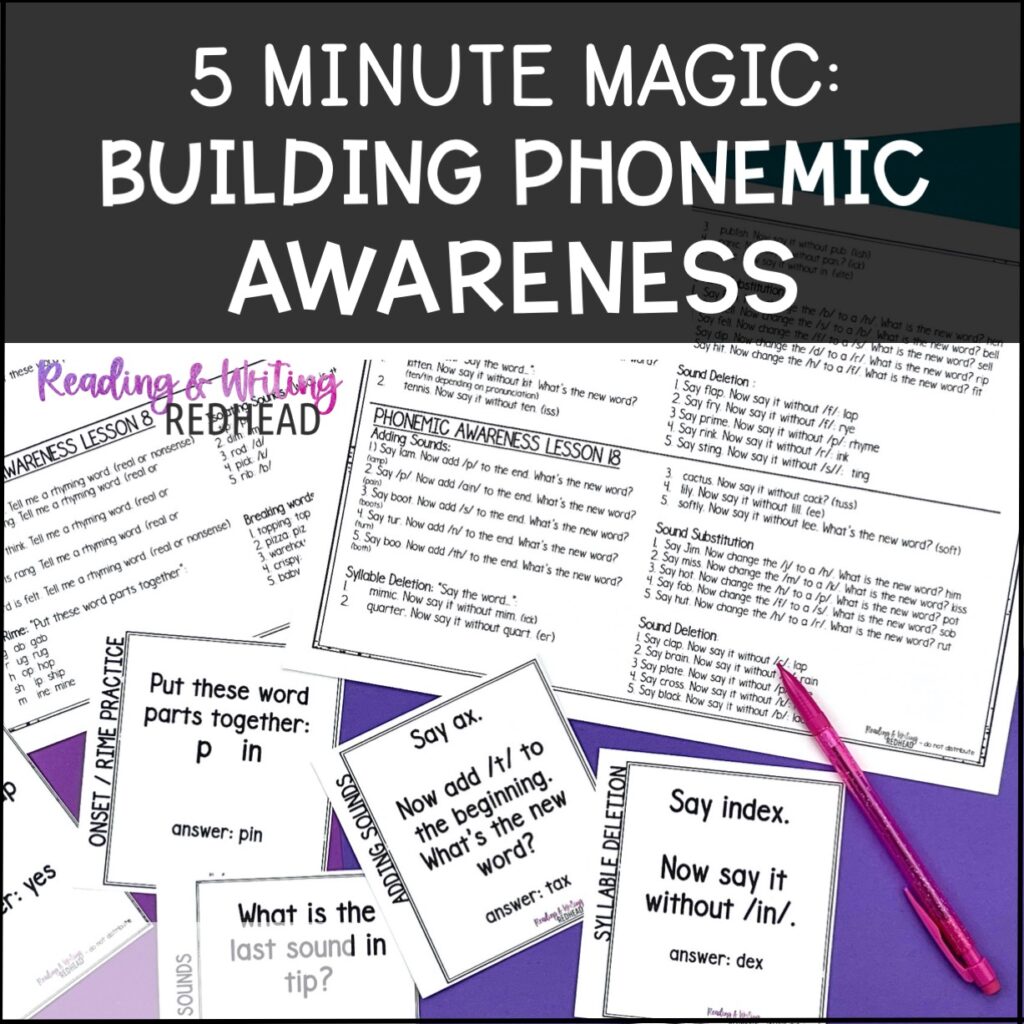
5 Minute Magic: Building Strategic Phonemic Awareness with Daily Routines
Are you looking for some phonemic awareness activities to help your students become great readers and writers? It is an important idea! Think of it like building a strong house – you need a solid foundation! When kids understand the sounds that make up words, reading becomes much easier.
What is Phonemic Awareness?
Before we get into some suggested phonemic awareness activities, let’s have a quick reminder of what it is. Phonemic Awareness is.
- Hearing the individual sounds in words: Like hearing the /c/, /a/, and /t/ in “cat.”
- Playing with those sounds: Putting them together, taking them apart, even changing them!
What Can Your Students Do with Sounds?
As kids grow their phonemic awareness, they learn to do the following;
- Noticing Sounds: This is like tuning into the sounds in words.
- Blending: When you say sounds like /d/ /o/ /g/ and kids put them together to say “dog.”
- Segmenting: When you say “dog” and kids can tell you the sounds: /d/, /o/, /g/.
- Changing Sounds (More Advanced!): This is where kids become real sound magicians!
- Deleting: Taking a sound out of a word. Like, “What’s ‘cat’ without the /c/?” (Answer: “at”).
- Adding: Putting a sound into a word.
- Substituting: Swapping one sound for another. Imagine you say, “Say ‘lot.’ Now change the /l/ sound to a /p/ sound. What’s the new word?” (Answer: “pot!”). This one is tricky but super helpful!
Think of it this way: Noticing sounds (blending and segmenting) are like the first steps. Changing sounds (deleting, adding, and substituting) are like taking bigger, more advanced steps!
Engaging Phonemic Awareness Activities
You don’t need a fancy program to help your students with sound awareness! I’d recommend as a reading specialist that you spend 5 minutes a day on activities like the following:
- Sound Detective Game (Blending): Say sounds slowly, like /s/ /u/ /n/. Ask your students, “What word am I trying to say?”
- Sound It Out! (Segmenting): Say a word like “bike.” Ask your students, “What sounds do you hear in ‘bike’?”
- First Sound Fun! (Isolating Initial Sounds): Hold up a picture of a “fish.” Ask, “What’s the very first sound you hear in ‘fish’?” (/f/)
- Middle Sound Magic! (Isolating Medial Sounds): For short words like “cup,” ask, “What’s the sound in the middle of ‘cup’?” (/u/)
- Last Sound Line-Up! (Isolating Final Sounds): Say “cat.” Ask, “What’s the last sound you hear in ‘cat’?” (/t/)
- Sound Swappers! (Deleting/Adding/Substituting):
- “What’s ‘top’ without the /t/?” (“op”)
- “Say ‘pig.’ Now say ‘pig’ but change the /p/ sound to a /b/ sound.” (“big”)
Make Learning Lively and Fun!
Learning about sounds doesn’t have to be boring! Get your kids moving and using their hands:
- Movement Sounds: As you say the sounds in a word, have students do an action for each sound (like a clap, stomp, or jump!). For “dog,” they could clap for /d/, clap for /o/, clap for /g/.
- Hidden Sound Hunt: Put small toys or objects (or pictures) in little bags or plastic eggs. Have students pull one out and say the sounds in the word. “What sounds do you hear in ‘car’?”
- “I Spy” Sounds: Play “I Spy” but instead of colors or objects, focus on beginning sounds. “I spy something that starts with the /b/ sound!”
- Sound Counters: Use small colorful items like pom-poms, LEGOs, or bingo chips. For each sound in a word, kids can push up (or slide to the right) a chip. So for “cat,” they put down three chips as they say /c/, /a/, /t/.
These activities will help your students become confident with sounds, which is a giant step towards becoming amazing readers and writers! Keep having fun with sounds, and watch your students’ reading superpowers grow!
Keep reading for more strategies!
Games and Activities
I love Think4Fun and their phonics and phonemic awareness games! This Sort the Sound! Game (exclamation mark included) is a fun game you could use as a reading center or teacher table activity to develop more phonemic awareness skills!

Teacher Created Resources and Edupress have this fun phonemic awareness card game called Splat! It’s a fun way for students to practice beginning and ending sounds.

Ready-to-Go Activities from Teachers Pay Teachers!
Wouldn’t it be so easy-peasy if you had ready-to-use phonemic awareness activities and resources from Teachers Pay Teachers? This resource makes teaching phonemic (and phonological awareness) easy and engaging.
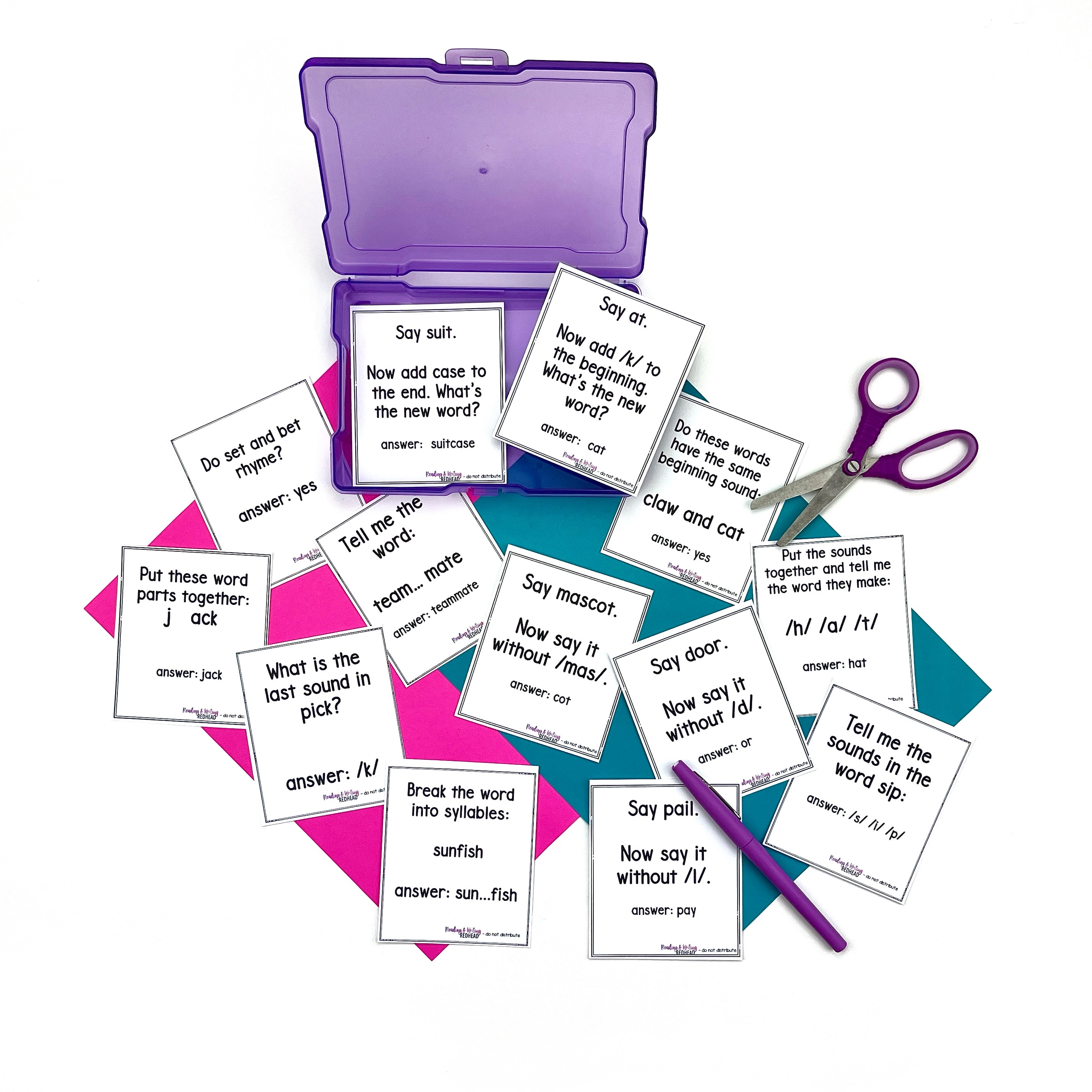
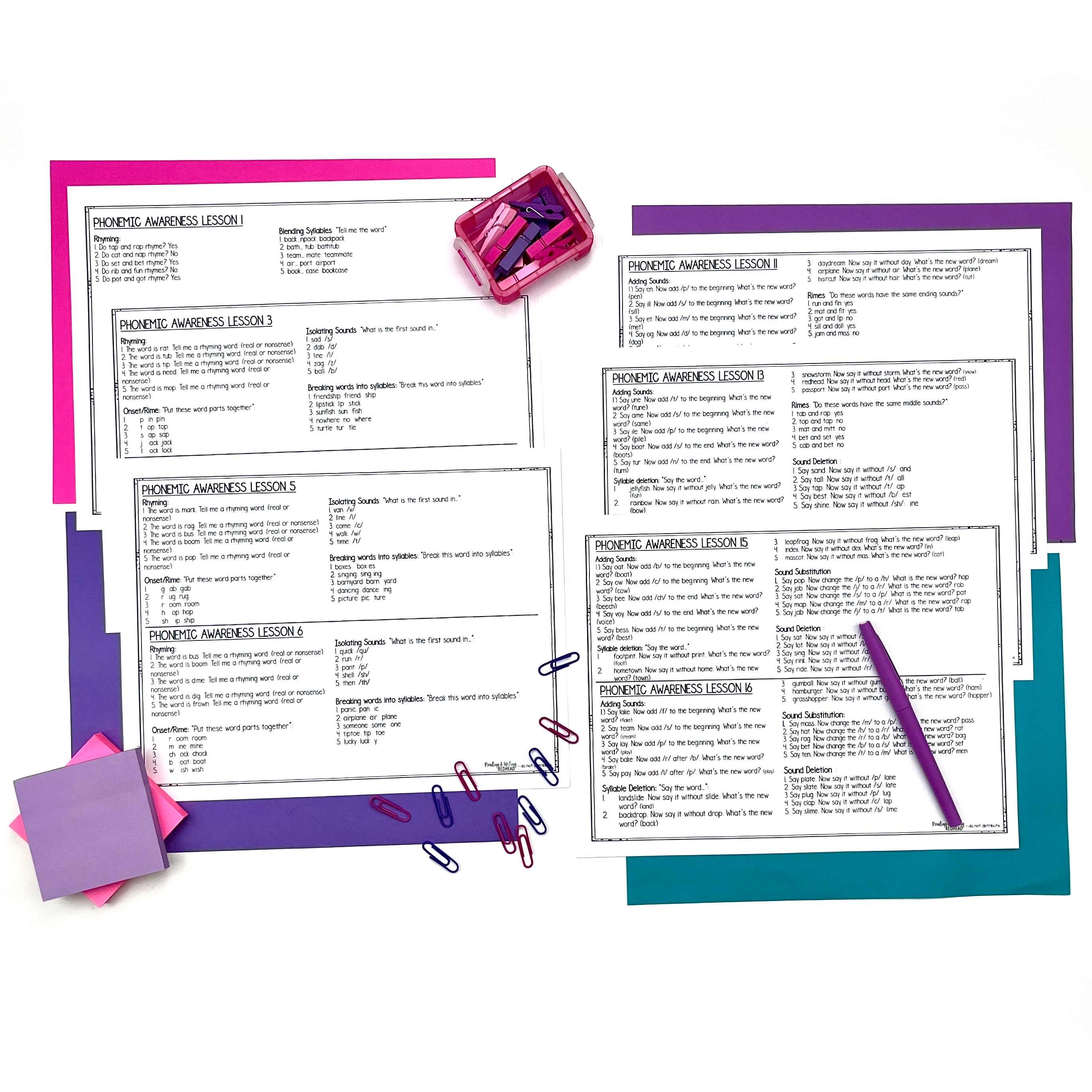
If you want everything you need at your fingertips and you don’t want to spend hundreds of dollars on a big curriculum, you can take a look at my new teacher led Phonemic Awareness activities! There are 30-36 task cards for each skills (80 pages or so) plus 20 lesson plans!

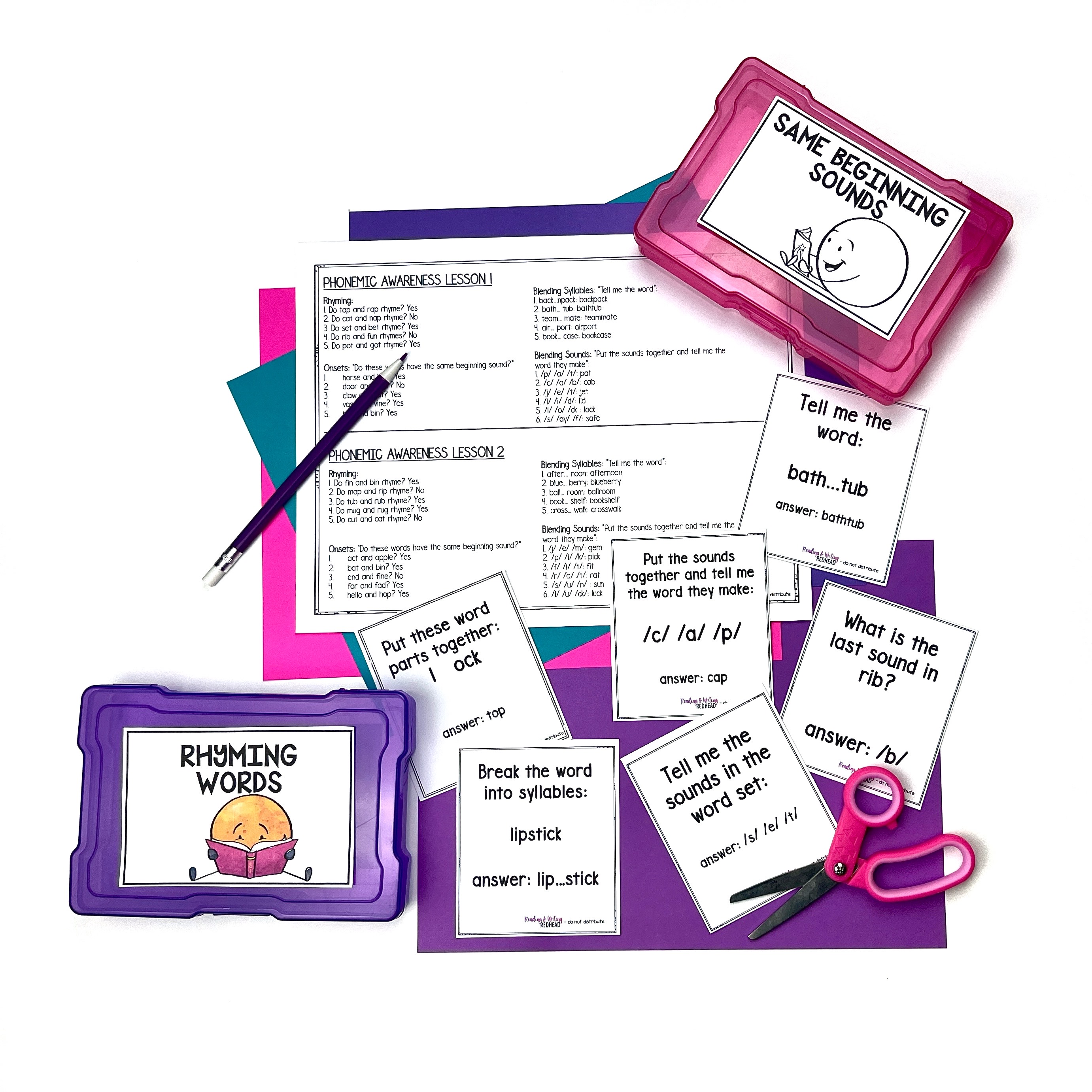
Ready to make a difference in your students’ skills? Grab this resource and watch their skills soar!
Check out the Phonological Awareness Bundle!
Boost your students’ reading skills with the comprehensive bundle of task cards! And save almost 15% by grabbing this resource.
Covering everything from phoneme deletion to syllables, this resource offers targeted practice to support your Science of Reading instruction. With over 900 task cards and differentiated activities, you’ll have everything you need to help your students master these essential skills. Perfect for small groups or independent work. Check it out to see how it would help you and your students.
And Peek at Phonological Awareness Bingo
Phonological Awareness Bingo will engage your students in essential PA skills. With seven different bingo boards, your students will have plenty of opportunities to practice rhyming, syllables, phoneme deletion, and more.
Key Benefits of This Resource
- Aligned with the Science of Reading: Provides targeted practice of essential skills.
- Engaging and Fun: Bingo games make learning exciting and interactive.
- Differentiated Instruction: Suitable for students of all levels.
- Easy to Use: Perfect for small groups, independent work, or with teacher assistants.
How to Use Phonological Awareness Bingo
This resource is simple to implement in your classroom. Simply print the bingo boards, provide markers (like bingo chips, coins, or mini erasers), and start playing! You can also use this resource as a warm-up activity, center activity, or independent practice.
Download the bingo resource today !
Other blog posts you may want to check out:
- Science of Reading: Success with Phonics in Small Groups
- Mastering Phonics in Grades K-2
- Capitalization Made Easy: Practical Strategies for Young Writers
- Super Sleuths: Uncovering Cause and Effect
If you want to save this blog post for later, pin this Pinterest ready image below!
Do you have any other fun phonemic awareness activities? Share your ideas!



